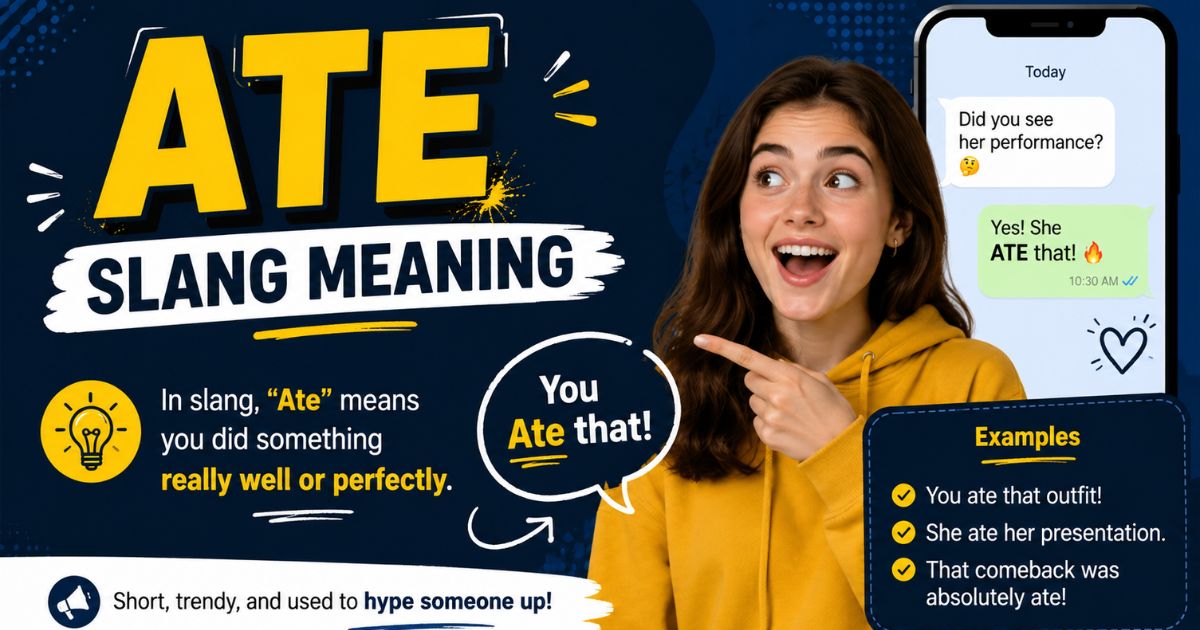

If you’ve scrolled through TikTok comments or your group chat and seen someone say “she ate,” you probably paused for a second. Ate has nothing to do with food here. It’s one of the biggest compliment words in internet slang right now, showing up in captions, comment sections, and everyday texts to celebrate everything from a killer outfit to a flawless performance.
Once you know it, you’ll spot it everywhere, and understanding where it came from makes it even more fun to use. This guide breaks down exactly what “ate” means, how it shifts across platforms like TikTok, Instagram, and WhatsApp, how to use it in real conversations, and when it’s best to skip it altogether.
Ate Meaning in Text
In text messages, “ate” is a compliment. It means someone did something extremely well, whether that’s an outfit, a performance, a comeback in an argument, or even a well-written paragraph.
If a friend sends you a photo in a new outfit and you reply “you ATE,” you’re saying they look amazing. It’s short, punchy, and carries way more energy than “you look nice.”
Quick definition: Ate = did something impressively, flawlessly, or with style.
Ate Slang Meaning
The slang meaning of “ate” flips the literal verb “to eat” into a compliment. Instead of describing food consumption, it describes someone consuming a moment, a look, or a challenge and dominating it.
Common variations include:
- Ate that – emphasises the specific action
- Ate and left no crumbs – did it so perfectly there’s nothing left to criticise
- Ate down – a stronger, more intense version popular in African American English
What Does Ate Mean in Chat?
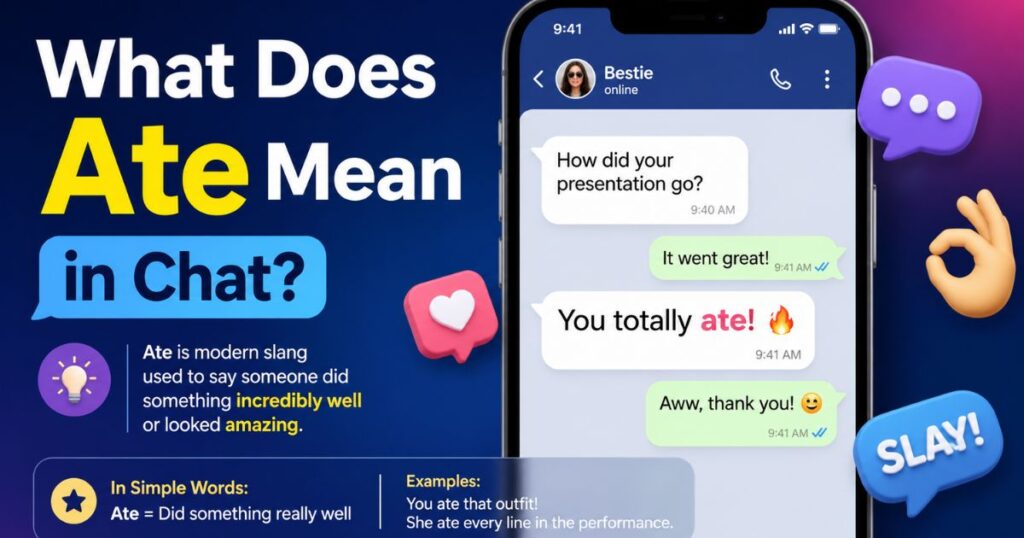
In chat apps and comment sections, “ate” works as a one-word reaction. You don’t need a full sentence. Someone posts a video, and the comments simply say “ATE” or “she ate 🔥.”
It’s fast, low-effort, and instantly understood by anyone familiar with internet culture, which makes it perfect for chat environments where speed matters.
What Does Ate Mean in Slang Ticktock
On Ticktock specifically, “ate” is used constantly under dance videos, outfit transitions, and lip-sync clips. A caption like “she ATE this trend” tells viewers the creator nailed the challenge better than most. It’s become one of Ticktock’s signature approval terms, alongside words like “slay” and “served.”
Ate Meaning on Instagram, Ticktock, and Whats App
The word shifts slightly depending on the platform.
On Instagram, “ate” usually appears in comments under photos, reels, or stories. It’s a quick way to hype up someone’s post without writing a paragraph.
Ticktock
Ticktock is where “ate” gets the most exposure. It shows up in captions, comment threads, and even as a standalone reply to viral clips.
Whats App
In Whats App chats, “ate” is more personal since conversations are usually between friends or small groups. Someone might send a voice note or photo, and a friend replies “you ate for that one,” keeping the tone casual and supportive.
Is “Ate” an Acronym, Short Form, or Something Else?
“Ate” is not an acronym or abbreviation. It’s the past tense of the verb “eat,” repurposed as slang. There’s no hidden meaning behind individual letters, unlike terms like “BARB” or “ID.” Its power comes from context, not letters.
Tone & Context Variations
The same word can shift meaning depending on tone and delivery.
Funny Tone
“Bro ate that burger review like it was a Michelin star meal 😂” used playfully, often with humour about someone going overboard.
Sarcastic Tone
“Oh she really ATE huh” (said after someone messes up) flips the compliment into gentle mockery.
Romantic Tone
“You ate with that outfit tonight, I can’t stop staring” used to compliment a partner’s look or effort.
Angry Tone
Rarely used in anger, but occasionally sarcastic anger: “He really ate my patience today” a modern twist meaning someone drained your patience.
Playful Tone
“Not you eating that exam 😭 teach us your ways” light teasing mixed with genuine praise.
Real Chat Examples (Natural Conversations)
Here’s how “ate” shows up in real texting situations.
Example 1 A: just posted my new hair B: girl you ATE, run to the shop and thank them
Example 2 A: did you see her dance solo B: she ate and left no crumbs for
Example 3 A: I bombed my presentation today B: nah stop, you actually ate that
Example 4 A: rate my fit for tonight B: 10/10 you ate
Example 5 A: bro just roasted the teacher in class B: he ATE 😭 no chill
Example 6 A: I made dinner for the first time B: okay chef you really ate this one
Example 7 A: watch this clip of my cousin singing B: SHE ATE. send this to everyone
Example 8 A: I finally finished my portfolio B: you ate, this is actually so clean
Example 9 A: my dog wore a tiny hoodie today B: he ate more than most humans tbh
Example 10 A: check my new tattoo B: bro ATE with this design
Example 11 A: I clapped back at that comment B: you ate her up no crumbs left
Example 12 A: final grades are in, I got straight A’s B: okay genius, you really ate this semester
Grammar & Language Role
Part of Speech
“Ate” functions as a verb in slang use, just like in standard English, but it’s used intransitively (without needing an object) far more often. “She ate” works fine on its own.
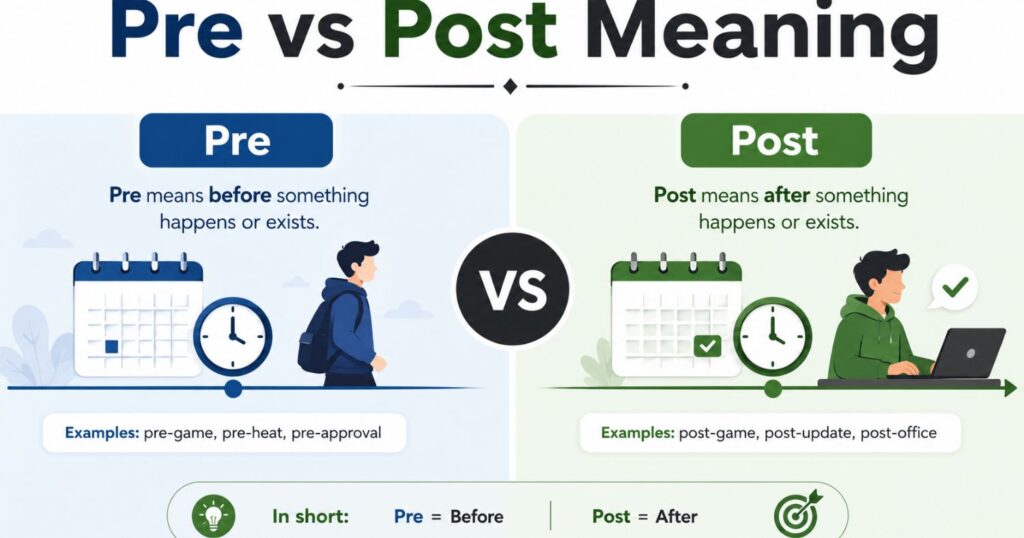
Read Me:Pre vs Post Meaning
Sentence Position
It usually appears right after a subject: “You ate,” “She ate,” “They ate.” It can also stand completely alone as a reaction.
Can It Replace a Full Sentence?
Yes. A single word, “ATE,” in a comment section is understood as a complete reaction, similar to how “same” or “mood” function.
Tone Impact
Capitalising the word (“ATE”) or adding emphasis on punctuation increases enthusiasm. Lowercase “ate” feels calmer, almost dry, but still positive.
Formal vs Informal Use
“Ate” is strictly informal. It belongs in texting, social media, and casual speech, not in essays, resumes, or professional emails.
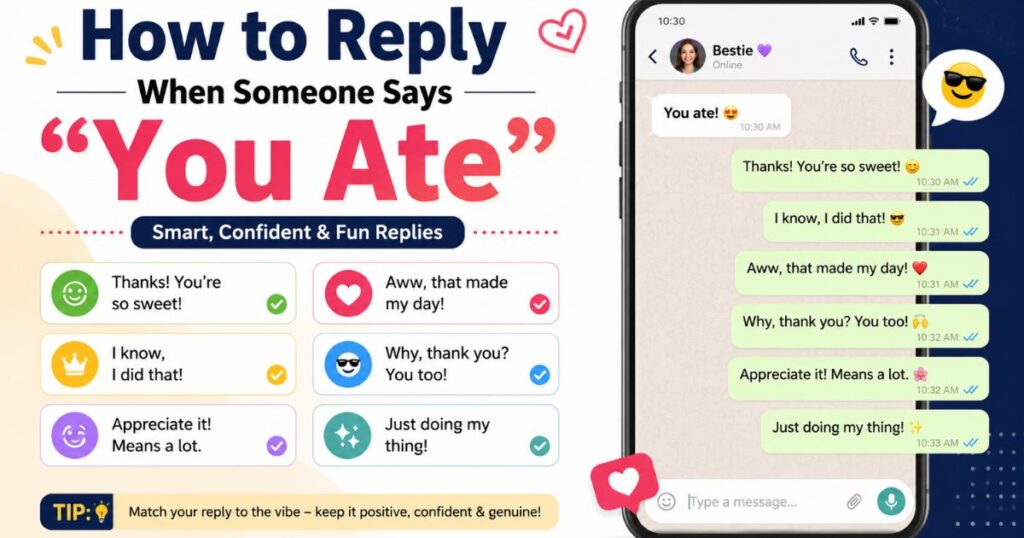
How to Reply When Someone Says “You Ate”
What Does Ate Mean in Slang Urban
According to slang communities like Urban Dictionary, “ate” simply confirms someone “did that,” meaning they performed excellently. Knowing this helps you reply naturally.
Funny Reply
“I know, I know, hold your applause 😂”
Serious Reply
“Thank you, I really worked hard on it.”
Flirty Reply
“Only for you 😉”
Neutral Reply
“Appreciate that!”
Comparison Table With Similar Slang
| Slang Term | Meaning | Common Platform | Tone |
| Ate | Did something impressively | TikTok, Instagram | Positive, hype |
| Slayed | Looked or performed amazingly | TikTok, Twitter/X | Positive, confident |
| Served | Delivered with style and flair | Instagram, drag culture origin | Positive, stylish |
| Snapped | Did something unexpectedly great | TikTok, Twitter/X | Positive, surprise |
| Ate down | Stronger, more intense version of ate | TikTok, chat | Positive, emphatic |
Who Uses This Term?
Age Groups
“Ate” is most popular among Gen Z and younger millennials, roughly ages 13 to 28, though it spreads to older users through social media exposure.
Regional Use
It originated in Black and LGBT+ ballroom culture in the United States and has since spread globally through social media, especially in English-speaking countries.
Platforms Where It’s Most Common
Ticktock leads usage, followed by Instagram comments, Twitter/X, and casual group chats on Whats App or i Message.
Origin & Internet Culture Insight

TikTok Influence
TikTok’s caption and comment culture accelerated “ate” from niche slang into mainstream vocabulary, especially through dance and fashion content.
Meme Culture
Memes helped cement phrases like “ate and left no crumbs,” turning the term into a recognizable internet catchphrase rather than a one-off comment.
Fast Typing Culture
Short slang like “ate” fits perfectly into fast-paced typing environments where users want quick, expressive reactions without long explanations.
Is “Ate” Rude or Inappropriate?
Is It a Bad Word?
No. “Ate” is not offensive or a curse word. It’s a compliment.
Can It Be Misinterpreted?
Occasionally, if used sarcastically without clear context, someone unfamiliar with the slang might read it as mocking. Tone and surrounding text usually clear this up.
Should You Use It in School or Work?
Avoid it in formal school assignments or workplace emails. It’s fine in casual chats with classmates or coworkers you’re friendly with, but it doesn’t belong in professional writing.
Experience-Based Insight
Anyone active on TikTok or Instagram over the past few years has likely seen “ate” used dozens of times without a formal definition attached. Its meaning is learned through repeated exposure and context, which is exactly how most internet slang spreads. Understanding its ballroom and LGBTQ+ roots also adds respect to how the term is used today, since it carries real cultural history rather than being a random meme word.
Conclusion
“Ate” has grown from niche ballroom slang into one of the most widely used compliments across TikTok, Instagram, and everyday texting. It’s short, expressive, and instantly signals approval without needing extra words. Whether it’s dropped in a comment section, texted after a friend’s big moment, or used to hype up an outfit, the term carries real cultural weight behind its casual, modern feel.
Now that you know what “ate” means, where it came from, and how to use it naturally across different tones and platforms, you can drop it into your next chat with confidence. Just remember to keep it in casual spaces like group chats and social comments, since its informal energy is exactly what makes it work so well.