
You spot “WFH” in a text, a work email, or a TikTok caption, and for a second you pause. Is it slang? A workplace term? Something else entirely? The letters show up so often now that most people gloss right over them, yet plenty of readers still land on a search bar wondering exactly what the term means and whether it changes depending on where they see it.
This guide clears up the confusion in plain language. You’ll get the real definition, a look at where the term came from, and a breakdown of how it shows up differently across texts, social media, and job listings. Real examples and quick comparisons make it easy to use WFH correctly the next time it comes up in conversation.
What Does WFH Mean?
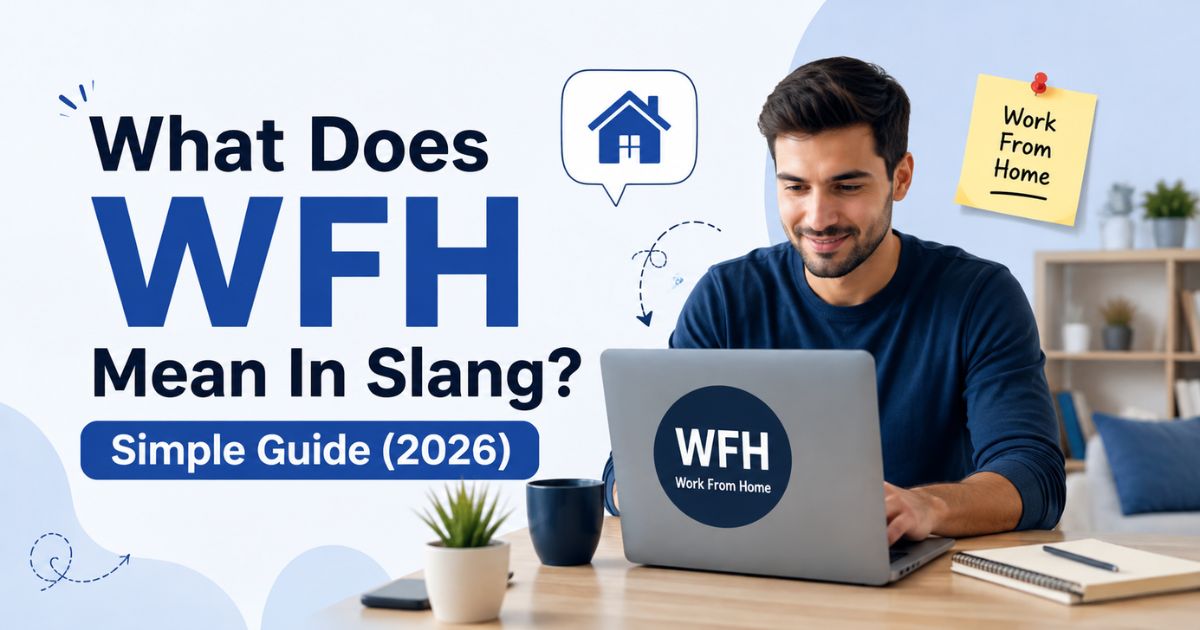
WFH stands for “Work From Home.” It describes a situation where someone completes their job duties from their house instead of commuting to an office.
The term functions as both a noun and a verb in casual writing. Someone might say “I’m WFH today” (adjective-style) or “I’m going to WFH this week” (verb-style). Either way, the core meaning stays the same: remote work from a home setting.
WFH isn’t slang in the traditional sense, since it doesn’t carry a hidden or coded meaning. It’s closer to a workplace abbreviation that became so common it now feels like everyday vocabulary. People use it in emails, group chats, social captions, and casual conversation alike.
What makes WFH interesting is how naturally it crossed over from corporate speak into pop culture. Most workplace acronyms stay stuck in office memos.
WFH escaped that box. It now shows up in memes, dating app bios, and even song lyrics, all while keeping its original, straightforward meaning intact. That consistency is part of why so many people search for confirmation of what it means. They already suspect the answer, but the sudden flood of joke definitions and alternate meanings online makes them want to double-check.
Origin and History of “WFH”
The abbreviation existed in office culture long before it became a household term. Companies used it internally for scheduling and attendance tracking as early as the 2000s.
The real turning point came in 2020. Global lockdowns forced millions of employees out of offices and into home setups almost overnight. “WFH” moved from internal memos to everyday conversation because people needed a fast way to describe their new normal.
By the time offices started reopening, WFH had already settled into permanent use. Hybrid schedules, freelance work, and remote-first companies kept the term relevant, and it shows no sign of disappearing.
Language usually needs a real cultural shift to stick around this long, and remote work provided exactly that. Before 2020, working from home was the exception. A parent staying home with a sick child, a freelancer between office jobs, or an employee working around a home repair might use the phrase occasionally.
After 2020, it became a default work style for entire industries, especially tech, marketing, customer support, and finance. The abbreviation simply kept pace with how often people needed to say it.
What Does WFH Mean In Text
In texting, WFH keeps its original meaning: working from home. Someone typing “WFH today, can’t make lunch” is simply letting a friend or coworker know their location and availability, not hinting at anything else.
Texting tends to strip WFH down to its simplest use: a quick status update. There’s rarely any deeper subtext behind it in a personal message.
How “WFH” Is Used on Different Platforms
WFH shows up differently depending on where you see it. Here’s a quick breakdown:
| Platform | Common Use | Example |
| Text messages | Quick status update | “WFH today, call me later” |
| Formal schedule notice | “I’ll be WFH on Thursday” | |
| Slack/Teams | Availability marker | “WFH ⚡ back at 2pm” |
| Lifestyle/aesthetic caption | “WFH desk setup ☕” | |
| TikTok | Relatable content theme | “POV: WFH for 3 years straight” |
| Professional schedule reference | “Working remotely (WFH) this week” | |
| Job listings | Employment type descriptor | “WFH position, fully remote” |
Each platform keeps the core meaning intact. What changes is tone. Professional platforms use WFH as a neutral fact. Social platforms often turn it into a lifestyle theme, complete with jokes about staying in pajamas or forgetting how office small talk works.
On TikTok specifically, WFH has become a genre of its own. Creators film “day in my life” content, share desk setup tours, or poke fun at the awkward parts of remote work, like joining a call on mute for five minutes straight. Instagram leans more visual, with aesthetic home office photos tagged #WFH pulling steady engagement. LinkedIn keeps things closer to the original workplace meaning, usually paired with availability updates or discussions about remote work policy.
WFH in Texting vs. Real Life
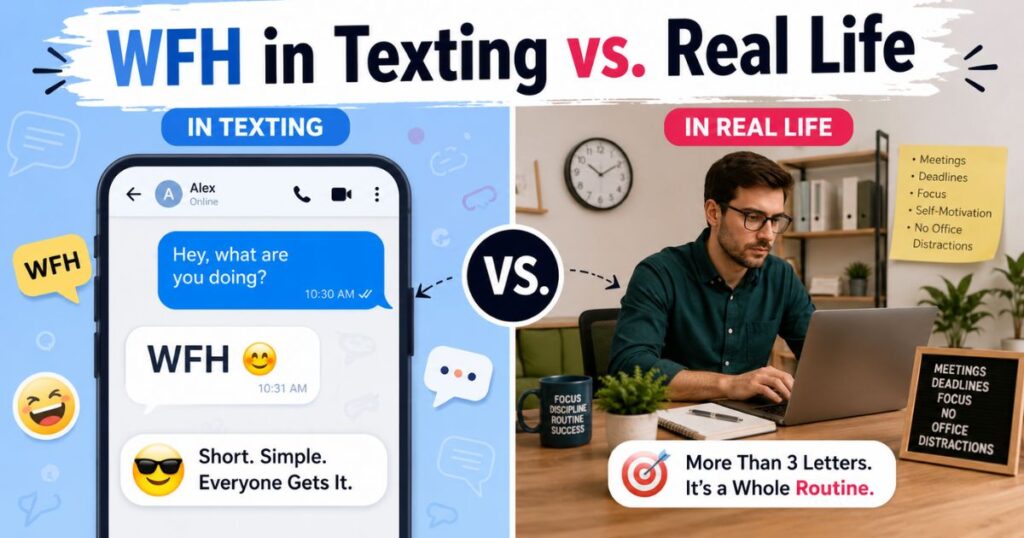
There’s a small gap between how WFH sounds in a text and what it actually looks like day to day.
In texting:
- Feels casual and quick
- Often implies flexibility or free time
- Used as a short, breezy update
In real life:
- Usually means a full workday, just done remotely
- Doesn’t mean less work or fewer responsibilities
- Often includes video calls, deadlines, and the same output expected in-office
This gap is where most confusion starts. A text that says “WFH, we should hang out” can create a wrong impression that the person is free all day, when they may actually have back-to-back meetings.
Also Read This:Uhm Meaning in Text
WFH Meaning Urban Dictionary
Search “WFH” on Urban Dictionary and you’ll find the standard “Work From Home” definition alongside a few joke entries, including crude alternate meanings that get upvoted for humor rather than accuracy.
These alternate entries aren’t how the term is used in everyday conversation. In actual texts, emails, and workplace chats, WFH refers to remote work, full stop. The joke definitions exist mostly for comedic value on the site itself.
Examples of “WFH” in Sentences
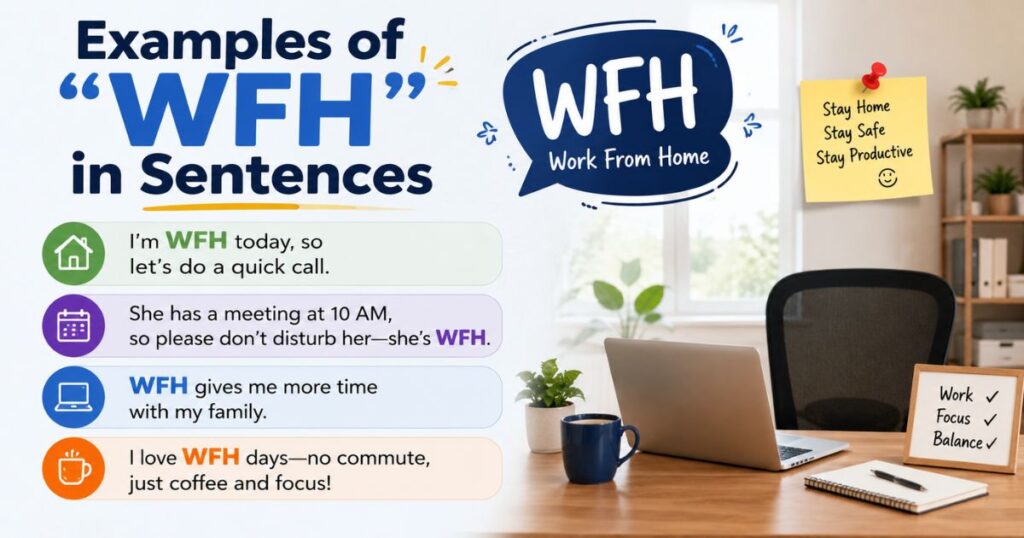
Seeing the term in context makes it easier to use correctly. Here are a few natural examples:
- “I’m WFH tomorrow, so ping me on Slack instead of stopping by my desk.”
- “Our whole team is WFH this Friday for the company-wide remote day.”
- “She’s been at WFH since March and says her productivity has actually improved.”
- “Can we reschedule? I’m WFH and my internet is acting up.”
- “The job listing says WFH with occasional office visits required.”
Notice that WFH almost always pairs with a day, schedule detail, or work-related update. It rarely stands alone without context.
Variations and Related Slang
WFH belongs to a wider family of workplace and remote-work shorthand. Knowing these related terms helps you understand conversations faster.
| Term | Meaning |
| WFA | Work From Anywhere |
| RTO | Return To Office |
| OOO | Out Of Office |
| EOD | End Of Day |
| ASAP | As Soon As Possible |
| FWIW | For What It’s Worth |
| Hybrid | Mix of remote and in-office work |
| Remote-first | Company culture built around remote work by default |
These abbreviations often appear together. A single message might read: “WFH today will send the report EOD back to the RTO schedule next week.”
Is “WFH” Safe for Kids?
Yes, WFH is completely safe and appropriate for all ages. It’s a standard workplace abbreviation with one clear meaning: working from home.
Parents, teachers, and students can use the term without concern. It carries no hidden sexual, offensive, or inappropriate meaning in normal use. The only alternate definitions come from joke entries on user-generated slang sites, and they don’t reflect how the term is actually used in conversation, schools, or workplaces.
WFH Meaning In Job
In job listings and HR contexts, WFH describes an employment arrangement where the employee works remotely instead of at a physical office location.
You’ll commonly see it paired with terms like “fully remote,” “hybrid WFH,” or “WFH flexibility.” Employers use it to quickly communicate work arrangements to candidates scanning job boards. It’s now a standard filter option on many job search platforms, right alongside salary range and job type.
When to Use (and Avoid) “WFH”
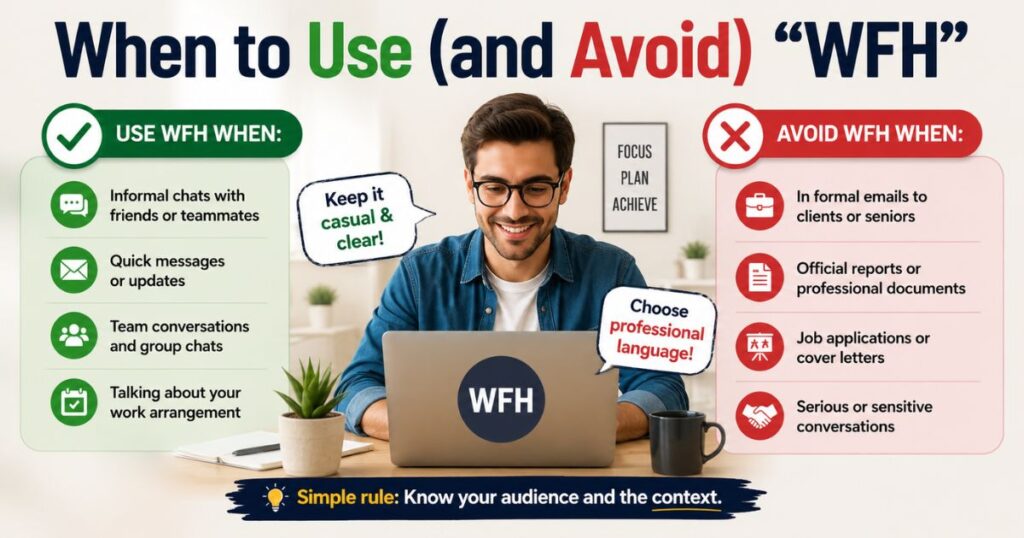
WFH works well in most casual and semi-professional settings, but a few situations call for the full phrase instead.
Good times to use WFH:
- Texting friends or coworkers about your schedule
- Slack, Teams, or internal chat updates
- Social media captions or casual posts
- Quick calendar notes
Better to spell it out:
- Formal emails to clients or external partners
- Legal documents or employment contracts
- Official company policies
- Communication with people unfamiliar with workplace shorthand
When in doubt, spelling out “working from home” once at the start of a formal message keeps things clear, and you can shift to WFH afterward if needed.
Conclusion
WFH simply means “Work From Home.” It started as an internal office shorthand, grew into a defining term of the remote work era, and now shows up everywhere from text messages to job listings. The meaning stays consistent across platforms, even if the tone shifts from professional to playful.
Once you know the context, using WFH correctly becomes second nature. Whether you’re updating a coworker on Slack, scanning a job posting, or scrolling through a WFH desk setup on Instagram, you’ll now know exactly what’s being communicated, and you can use the term with the same confidence as everyone else typing it.