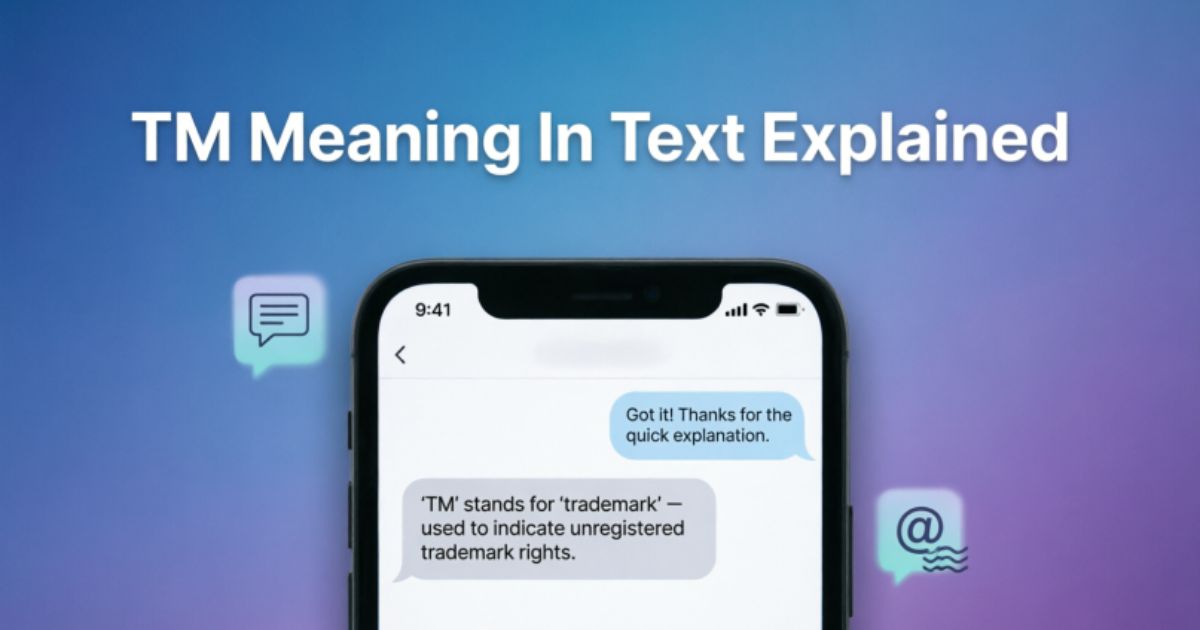

Texting is full of short codes that save time, and TM is one of the most common. You have probably seen it in a caption, a comment, or a quick message from a friend, and wondered what it actually means. The tricky part is that TM does not always mean the same thing twice.
This guide breaks down every common meaning of TM, from “trust me” to “tomorrow” to “trademark.” You will also learn how to spot the right meaning from context, how TM is used across different apps, and how to reply when someone sends it to you.
TM in text usually means “trust me.” It is a short way to tell someone you are being honest or serious about what you just said. TM can also mean “tomorrow” or “trademark,” depending on the situation. The real meaning always depends on the message around it.
| Meaning | Common Use | Example |
| Trust Me | Texting, social media | “This movie is so good, tm.” |
| Tomorrow | Planning, scheduling | “See you at 5?” |
| Trademark | Business, legal writing | “Nike TM” |
What Does TM Mean In Text?
TM is a short abbreviation used in texting and online chats. It saves time and effort when typing on a phone. Most people use it to mean “trust me,” especially when they want to sound convincing.
TM can shift meaning based on who is texting and what they are talking about. A friend planning a hangout may use TM to mean “tomorrow.” A business post may use TM to mean “trademark.” Context is the key that unlocks the correct meaning.
This is common with short text abbreviations. Letters get reused for different phrases because they are quick to type. Readers learn to figure out the meaning from the sentence around it.
Origin And Evolution Of TM
Text abbreviations became popular when phones had small keyboards and limited character counts. People needed shortcuts to type faster. TM was one of many short forms that saved keystrokes.
“Trademark” as TM has existed for a long time in business and legal writing. It marks a brand name or logo as officially protected. This use came before texting slang existed.
The texting version of TM, meaning “trust me,” grew later with the rise of mobile messaging and social media. As people chatted more casually, informal phrases turned into letter codes. TM became one of those everyday shortcuts.
Over time, the meaning of TM expanded even further. Younger users added “tomorrow” as another common use. This shows how slang keeps changing as new generations text differently.
Psychological And Emotional Meaning Of TM
When someone types “trust me,” they often want to add weight to their words. TM does the same job in a shorter form. It can show confidence, honesty, or a wish to be taken seriously.
People sometimes use TM to soften a bold claim. Saying “this show is amazing, tm” feels less like bragging and more like a friendly tip. It builds a small bond of trust between the sender and the reader.
TM used to mean “tomorrow” carries a different emotional tone. It is neutral and practical. It simply helps with planning without adding any personal feeling.
Communication Function Of TM
TM works as a quick trust signal in texting. Instead of writing a full sentence, the sender uses three letters to get the same point across. This keeps conversations fast and casual.
In group chats, TM can also work as a scheduling tool. Friends texting about plans often use TM to avoid typing “tomorrow” every time. This keeps chats short and easy to scan.
In business or legal writing, TM works differently. It marks ownership of a brand name. This function has nothing to do with texting tone and everything to do with legal protection.
Cultural And Generational Context Of TM
Younger texters, especially teens and young adults, use TM mostly to mean “trust me.” It fits fast-paced chats on apps like Snapchat and Instagram. It matches a casual, confident texting style common among this age group.
Older texters or professionals may lean toward using TM as “tomorrow,” especially in scheduling texts or emails. This use feels more neutral and practical, fitting a work or planning context.
In business writing across most age groups, TM still means “trademark.” This meaning has stayed consistent for decades and does not follow generational texting trends.
Why TM Became Popular
TM became popular because it is short, simple, and easy to type. Typing three letters is faster than typing a full phrase. This matters a lot in fast conversations or when texting on the go.
Social media also helped spread TM as slang.
Captions, comments, and stories often use short abbreviations to fit character limits or keep a casual tone. TM fit naturally into this style of writing.
Another reason TM spread widely is that it works in many situations. Since it can mean multiple things, people started using it in different contexts, which helped it stick around in everyday texting.
Semantic Core Meaning Of TM
At its core, TM signals either honesty, timing, or ownership. These three ideas are very different, but they all share the same short abbreviation.
- Honesty: “Trust me” adds sincerity to a statement.
- Timing: “Tomorrow” refers to a future date or plan.
- Ownership: “Trademark” protects a brand or product name.
Understanding which core meaning applies depends completely on the topic of the conversation.
Most Common TM Meaning In Text (Deep Dive)
The most common meaning of TM in everyday texting is “trust me.” This is especially true in casual chats, social media captions, and comment sections. People use it after sharing an opinion, a recommendation, or a personal experience.
For example, someone might text, “This restaurant is worth the wait, tm.” Here, TM adds a personal guarantee to the statement. It tells the reader that the sender genuinely believes what they said.
TM used this way often appears at the end of a sentence. This placement makes it feel like a final stamp of honesty. It is rarely used at the start of a message when it means “trust me.”
This meaning has grown so common that many texters instantly think of “trust me” first when they see TM, unless the context clearly points to scheduling or business use.
Meaning Based On Context
The meaning of TM changes completely depending on the sentence. Reading the full message, not just the abbreviation, is the best way to understand it correctly.
| Sentence Example | Likely Meaning |
| “This song slaps, tm.” | Trust me |
| “Let’s meet tomorrow morning.” | Tomorrow |
| “The logo has a TM symbol.” | Trademark |
| “Tm, I’m not lying.” | Trust me |
| “Homework is due tm.” | Tomorrow |
If the sentence talks about time, dates, or plans, TM likely means “tomorrow.” If it talks about opinions, feelings, or convincing someone, TM likely means “trust me.” If it appears near a logo or brand name, TM means “trademark.”
How TM Is Used In Real Conversations
In real texting, TM often appears in short, casual sentences. People do not usually explain what TM means because they expect the reader to understand from context or common use.
Some real-life examples include:
- “This app update is actually good, tm.”
- “Can we push the meeting to tm?”
- “Bro this burger is insane, tm.”
- “I’ll send the file this morning.”
These examples show how the same abbreviation fits smoothly into very different types of messages, without needing extra explanation.
TM Meaning On Different Platforms
TM does not always mean the same thing on every app. Each platform has its own texting culture, which can shape how TM is used.
Snapchat On Snapchat, TM is mostly used to mean “trust me,” especially in captions or replies to snaps. It fits Snapchat’s casual and personal tone.
On Instagram, TM appears often in comments and captions, mostly meaning “trust me.” It is used to add sincerity to opinions about photos, outfits, or recommendations.
WhatsApp On WhatsApp, TM is more likely to mean “tomorrow,” especially in planning or scheduling messages between friends, family, or coworkers.
TikTok On TikTok, TM usually means “trust me,” often used in comments reacting to videos or giving quick advice.
Work Chats In work chats or emails, TM almost always means “tomorrow.” Professional messages rarely use slang meanings like “trust me,” so context stays practical and scheduling focused.
Hidden Or Risky Meanings Of TM
TM does not usually carry hidden or harmful meanings. It is not linked to secret codes or inappropriate slang in common use. Most of its meanings are straightforward and easy to understand once the context is clear.
The only real risk is misunderstanding. If someone reads TM as “trademark” in a casual chat, or as “trust me” in a business email, the meaning of the whole message can feel confusing or even awkward.
Also Read This: TW Meaning in Text
Because of this, it helps to always double check the surrounding words before assuming which meaning applies.
Variations And Forms Of TM
TM sometimes appears in slightly different forms depending on the sender’s texting style. These variations usually still carry the same core meanings.
- tm
- TM
- Tm
- trust me (fully written)
- tmr or tmrw (for tomorrow)
- TM symbol (™) used in branding
Some people prefer typing “tmr” or “tmrw” instead of “tm” when they specifically mean “tomorrow,” which helps avoid confusion with the “trust me” meaning.
TM Vs Similar Slang
TM is often confused with other short texting abbreviations. Comparing them side by side makes the differences clearer.
| Abbreviation | Meaning | Difference From TM |
| TMR / TMRW | Tomorrow | More specific, less likely to mean “trust me” |
| IMO | In my opinion | Focuses on personal opinion, not honesty |
| FR | For real | Emphasizes seriousness, similar tone to TM |
| NGL | Not gonna lie | Also signals honesty, but phrased differently |
While TMR and TM can both mean “tomorrow,” TMR is almost never confused with “trust me.” This makes TMR a clearer choice when someone specifically means the next day.
How To Decode The Correct Meaning
Decoding TM correctly is simple once you follow a few steps. Instead of guessing, look at the full sentence and the topic of the conversation.
- Check if the message talks about time or plans. If yes, TM likely means “tomorrow.”
- Check if the message shares an opinion or personal experience. If yes, TM likely means “trust me.”
- Check if the message is near a logo, brand, or legal text. If yes, TM likely means “trademark.”
- Look at the platform. Casual apps often lean toward “trust me,” while work chats often lean toward “tomorrow.”
Following these simple checks removes most of the confusion around TM.
How To Respond To TM
Replying to TM depends on which meaning fits the message. A calm, natural reply keeps the conversation flowing smoothly.
If TM means “trust me,” a simple reply like “okay, I trust you” or “haha alright” works well. If TM means “tomorrow,” replying with a time or a confirmation, such as “sounds good, see you then,” fits naturally.
If TM refers to a trademark in a professional context, a reply usually involves acknowledging the brand name or continuing the formal discussion without slang.
Common Misunderstandings About TM
One common misunderstanding is assuming TM always means “trust me,” even in scheduling conversations. This can lead to confusion when someone is actually asking about a date or time.
Another misunderstanding happens in professional settings.
Some readers may not realize that TM in a legal or branding context has nothing to do with texting slang at all.
A third misunderstanding involves tone. Some readers may think TM sounds insincere or overused, when in most cases, it is simply a quick way to add sincerity to a message.
Regional And Cultural Usage Of TM
In many English-speaking regions, “trust me” as TM is common in youth texting culture, especially in the United States, United Kingdom, and other Western countries. It fits informal digital communication styles used by teens and young adults.
In business and legal writing worldwide, TM as “trademark” remains a consistent and universally recognized symbol. This meaning does not change much across cultures, since it follows international branding standards.
The “tomorrow” meaning of TM is common in everyday texting across many regions, especially where quick planning messages are common between friends, family, and coworkers.
Conclusion
TM is a small abbreviation, but it carries several very different meanings depending on how and where it is used. Most of the time, it means “trust me,” especially in casual chats, comments, and social media captions. It can also mean “tomorrow” when someone is talking about plans or scheduling something.
Understanding TM is really about reading the full message rather than just the letters themselves. The topic, the tone, and the platform all give strong clues about which meaning applies. A casual comment on social media points toward “trust me,” while a message about times or dates points toward “tomorrow.” Once you get used to spotting these small clues, decoding TM becomes almost automatic, and you will rarely misread it again.
One thought on ““TM Meaning In Text Explained: Trust Me, Tomorrow, and More””