

You were scrolling through a profile bio or a comment section, and there it was. Three letters. DNI. No explanation, no context clue, just those letters sitting there like they expect you to already know.
So you paused. Maybe you reread the sentence around it, hoping it would suddenly make sense. It didn’t. That is exactly why you are here now.
The good news is that DNI is not some secret code meant to confuse you. It is a common piece of internet shorthand, and once you understand it, you will start noticing it everywhere. Bios, tweets, fan pages, group chats, all of it.
This guide breaks down exactly what DNI means, where it comes from, how people actually use it, and why it matters more than you might think.
What Does DNI Mean In Text?
DNI stands for “Do Not Interact.” It is a phrase people use to tell others, in a short and blunt way, to stay away from their content, their posts, or their profile.
When someone writes DNI in their bio or under a post, they are setting a boundary. They are saying that certain people, or sometimes anyone at all, should not comment, like, follow, or message them.
It started as a way for people to protect their online space without writing out a long paragraph every time. Instead of explaining their reasons in detail, they just add DNI and let the letters do the talking.
Here is a quick breakdown of the meaning:
| Letter | Stands For |
| D | Do |
| N | Not |
| I | Interact |
That is the core definition. But the way people apply it changes a lot depending on where you see it, which is why the next few sections matter just as much as this one.
What does DNI mean twitter
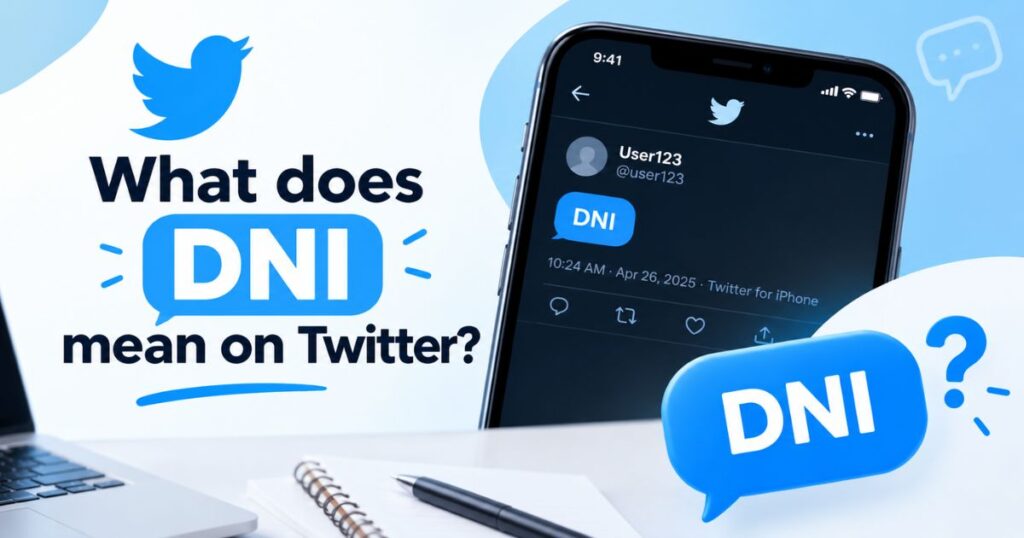
Twitter, now known as X, is probably the platform where DNI shows up the most. It is extremely common in bios, especially among people who post fan content, art, opinions, or anything that tends to attract a lot of replies.
On Twitter, DNI usually comes with a list right after it. Someone might write “DNI if you are under 18” or “DNI if you support [a certain belief].” The letters set the rule, and the list explains who the rule applies to.
People on Twitter use DNI for a few common reasons:
- To keep minors away from mature content
- To avoid interacting with people who hold opposing views
- To protect themselves from harassment or unwanted attention
- To filter out spam accounts or bots
- To create a safer space around sensitive topics like mental health or personal struggles
It is worth knowing that DNI lists on Twitter are not enforced by the platform itself. There is no button that blocks someone automatically because they fit the criteria. It relies entirely on people reading the bio and respecting the request. Some people take this seriously, others ignore it, which leads to a lot of the confusion we will cover later in this article.
Simple Meaning (In Plain, Easy Words)
Let’s strip away all the internet culture and slang for a second. In the simplest terms possible, DNI means this:
“Please leave me alone online.”
That’s it. Someone is asking you not to engage with their posts, their profile, or their content. They are not asking for a debate. They are not looking for a reaction. They just want to be left out of your interactions.
Think of it like a sign on a door that says “Do Not Enter.” You don’t need a long explanation to understand what that sign wants from you. DNI works the exact same way, just for the internet instead of a physical space.
Where Is DNI Used?
DNI is not limited to one single app. It has spread across almost every major platform where people interact publicly.
Here are the most common places you will see it:
- Twitter/X bios – Often paired with a list of who should avoid the account
- Instagram bios and story replies – Used to filter followers or block certain topics
- TikTok comments and bios – Common among creators who want to avoid certain audiences
- Discord server rules – Used to explain who should not join specific channels or servers
- Fan communities – Especially common in fandoms where opinions can get heated
- Personal blogs and forums – Used in author notes or profile sections
The platform changes, but the meaning stays the same. Wherever you see DNI, someone is drawing a line and asking others to respect it.
Why Do People Use DNI?
People don’t add DNI to their profiles just for fun. There is almost always a real reason behind it, even if that reason is not stated directly.
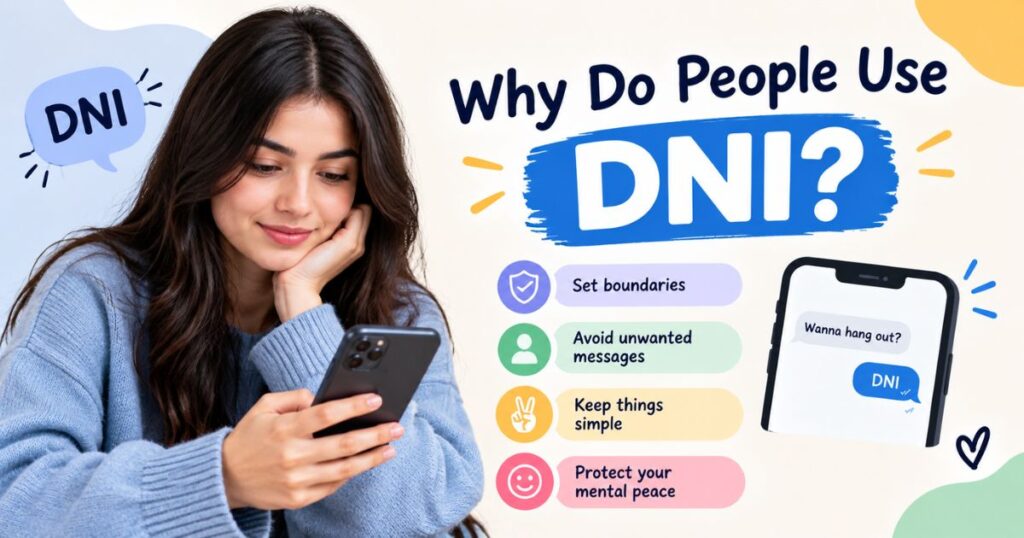
The main goal is protection. The internet can be a messy place, and not every interaction is friendly. DNI gives people a way to set expectations before anything negative even happens.
Some of the most common reasons people use DNI include:
- Avoiding harassment – Blocking unwanted attention before it starts
- Filtering age groups – Keeping younger users away from mature or sensitive content
- Protecting mental health – Avoiding conversations about topics that are triggering or exhausting
- Steering clear of drama – Preventing arguments with people who hold very different opinions
- Keeping fan spaces positive – Filtering out people who might bring negativity into a fandom
In a way, DNI works like a digital boundary. It is the online version of saying “this conversation is not for you.” It gives people a small sense of control in spaces that can otherwise feel open to anyone and everyone.
What does dni mean in text urban dictionary
If you search DNI on slang websites like Urban Dictionary, you will find definitions that mostly line up with what has already been explained here. Most entries describe DNI as “Do Not Interact,” used to tell specific people to avoid someone’s content or profile.
Also Read This: KMS Meaning in Text Explained
However, there is something important to keep in mind. Sites like Urban Dictionary rely on user submissions. That means definitions can vary slightly, and sometimes they reflect a very specific community’s use of the term rather than the general meaning.
A few things you might notice across different slang definitions:
- Some entries focus heavily on fandom use, especially in anime or fan-fiction communities
- Some mention DNI lists that include very specific and sometimes unusual criteria
- Some definitions lean more sarcastic or joking, especially in meme-based posts
The core meaning rarely changes. What changes is the tone and the context people attach to it. So while slang dictionaries are a helpful starting point, they should not be treated as the only source of truth.
Real-Life Examples Of DNI (With Explanations)
Seeing DNI used in real examples makes the meaning click much faster than definitions alone. Here are a few common situations.
Example 1: A Twitter bio
“Artist, 22. DNI if you are under 16 or a proship.”
This tells visitors two clear rules. People under 16 should not follow or interact, and people who support certain controversial fan content should also avoid the account.
Example 2: An Instagram comment
Someone comments under a post: “I thought you had a DNI policy for people like me?”
This shows DNI being referenced casually, almost like a running joke, but it still points back to the original boundary the poster set.
Example 3: A Discord server description
“This is a safe space for fan discussions. DNI if you are here to argue or troll.”
Here, DNI is used to protect the tone of the community rather than target a specific group of people.
Example 4: A TikTok bio
“18+ only. Minors DNI.”
Short, direct, and impossible to misread. This is one of the clearest and most common uses of the term.
Each of these examples shows the same core idea. Someone is setting a boundary, and DNI is the shorthand they use to communicate it quickly.
DNI vs Similar Terms (Comparison Table)
DNI is not the only boundary-setting abbreviation floating around online. It helps to see how it compares to a few similar terms.
| Term | Meaning | Common Use |
| DNI | Do Not Interact | Asking people not to engage with content or profile |
| DNF | Do Not Follow | Asking specific people not to follow an account |
| BLOCK | Direct action | Actually removing someone’s ability to interact |
| MUTE | Silencing content | Hiding someone’s posts without them knowing |
| NSFW | Not Safe For Work | Warning about mature or explicit content |
| TW | Trigger Warning | Warning about sensitive topics before they appear |
The biggest difference between DNI and something like BLOCK is that DNI is a request, not an enforced action. Nothing technically stops someone from interacting anyway. It relies on trust and respect rather than a platform feature.
When Should You Use DNI?
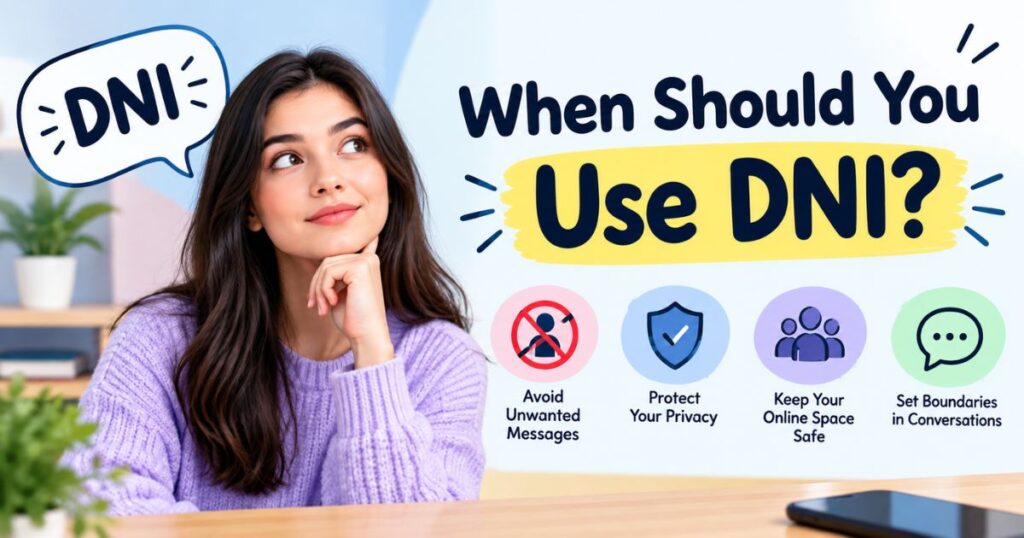
DNI is not something everyone needs to use, but it can be helpful in certain situations. If your content attracts a specific type of unwanted attention, or if you simply want a clearer boundary online, DNI can be a useful tool.
Good situations to consider using DNI include:
- You post mature or sensitive content that is not meant for younger audiences
- You have dealt with harassment from a specific group or type of user
- You want to protect a space meant for a particular community
- You are stepping away from a topic and don’t want to be pulled back into debates about it
When using DNI, clarity matters a lot. A vague DNI without explanation can confuse people rather than help them. It is usually more effective to pair it with a short, specific reason, like “DNI if you are under 18” instead of just posting the letters alone with no context.
Common Misunderstandings About DNI
Even though DNI seems simple, there are a few misunderstandings that come up often.
One common mistake is thinking DNI works like an automatic block. It does not. It is a request based on trust, not a technical restriction. Someone can still comment or follow, even after seeing a DNI notice.
Another misunderstanding involves tone. Some people assume DNI is always aggressive or hostile. In reality, it is often used calmly, simply as a way to manage who engages with certain content.
There is also confusion between DNI and similar terms like DNF. Because they look alike and often appear in similar bios, people sometimes mix up their meanings. Remembering that DNI focuses on interaction as a whole, while DNF focuses only on following, helps avoid that mix-up.
Finally, some people take DNI personally, even when it is not aimed at them specifically. Most DNI lists target certain behaviors or beliefs, not random individuals, so it helps to read the full context before assuming it applies to you.
Final Thoughts
DNI might look confusing the first time you come across it, but its meaning is actually simple once explained. It stands for “Do Not Interact,” and it is used across social media as a quiet but clear way to set personal boundaries online. Whether it shows up in a Twitter bio, a TikTok caption, or a Discord server, the goal is always the same, to let people know who should avoid engaging with certain content.
Understanding DNI helps you navigate online spaces with more awareness. It reminds you that behind every profile and post, there is a real person deciding how they want to be treated. Even though DNI is not enforced by any platform, respecting it shows basic digital courtesy, and that small habit can make online interactions a little kinder for everyone involved.

One thought on “What Does DNI Really Mean In Text? Meaning Explained Here!”