
You see it in a comment, a DM, or a caption. Someone writes “he’s my type” or “that’s type shii” and the meaning shifts depending on where you’re reading it. “Type” is one of those small words that carries a lot of weight in modern texting, and getting it wrong can make a reply land completely off.
This guide breaks down every common meaning of “type” in slang, how it shows up across TikTok, Snapchat, and regular texting, and how to reply naturally when someone uses it on you.
Meaning & Explanation of “Type” in Slang
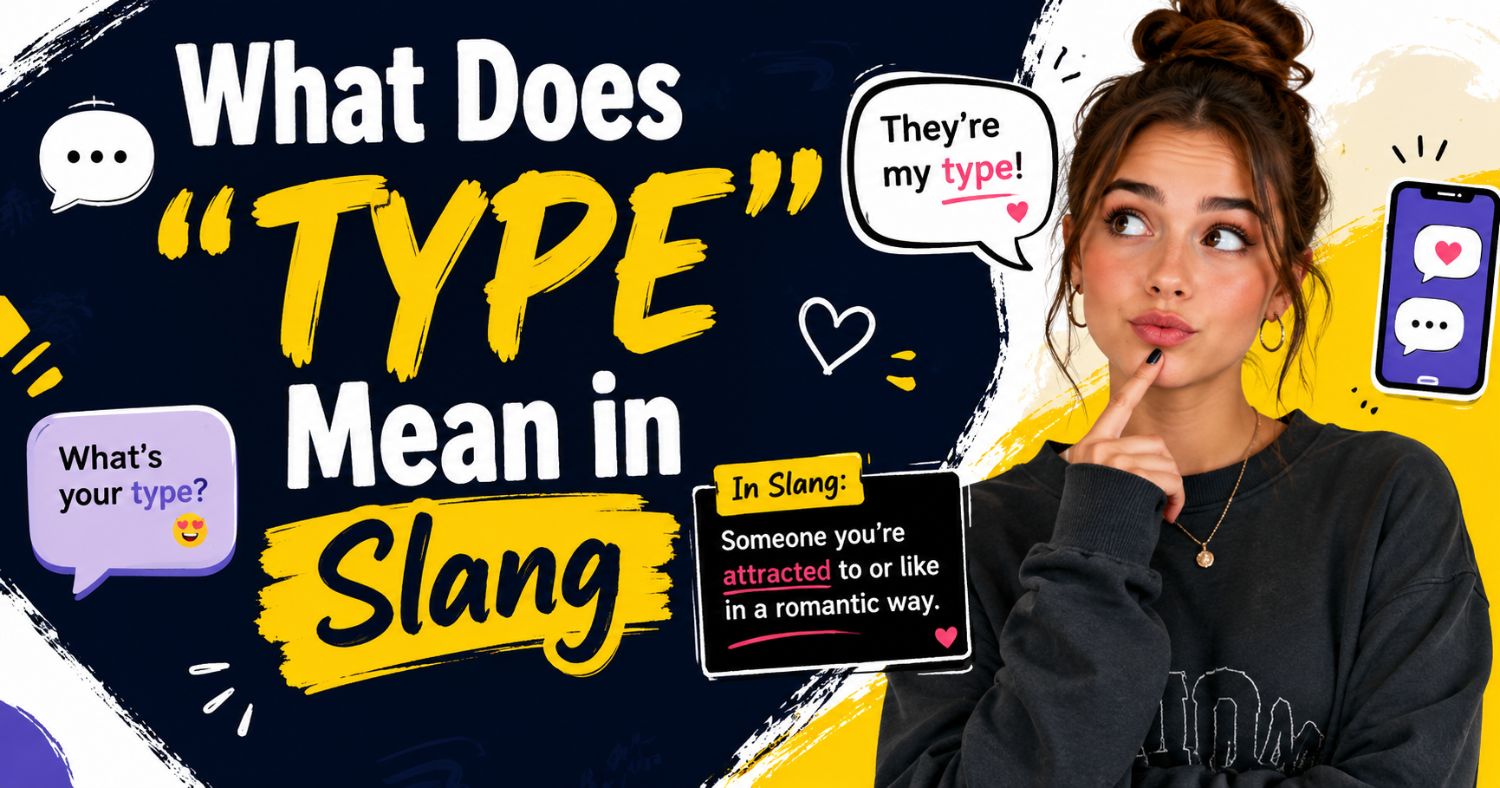
At its core, “type” describes a category of person, style, or thing that someone prefers. It usually points to attraction, but it stretches beyond romance too.
- “He’s my type” means he matches what you find attractive, physically or personality-wise.
- “Not my type” means someone or something doesn’t fit your usual preference.
- “Type of energy” describes a vibe or attitude rather than a person.
- “Type shii” or “type shit” is a separate, more general phrase meaning “that kind of thing” or strong agreement.
The word itself isn’t new. What changed is how casually it gets dropped into chats, comments, and captions, almost always without a full sentence around it.
Unlike acronyms such as WYD or NGL, “type” is a real English word that slang culture simply repurposed. That’s part of why it feels natural even to people outside Gen Z circles. The slang layer just narrows the meaning down to preference, attraction, or reaction, depending on the sentence around it.
Tone & Context Variations
“Type” doesn’t carry one fixed tone. It flexes with punctuation, emojis, and where it’s used.
- Flirty tone: “You’re literally my type 😏” signals attraction or interest.
- Casual tone: “Quiet type” or “chill type” just describes personality, no romance involved.
- Dismissive tone: “Not my type” politely shuts down interest without being harsh.
- Hype tone: “That’s type shii” reacts to something impressive or relatable.
The same word can flirt, describe, or reject, so context and delivery matter more than the word alone.
Real Chat Examples
Seeing “type” in real conversations makes the meaning click faster than any definition.
Friend group chat: A: Do you like him? B: Kinda. He’s giving me my type ngl.
Flirty DM: A: Not gonna lie, you’re exactly my type. B: Yeah? Tell me more 👀
Casual comment: A: This song hits differently. B: For this type shii goes hard.
Polite rejection: A: We should link up sometime. B: You’re sweet but honestly not my type.
What Does Type Mean in Slang Urban Dictionary
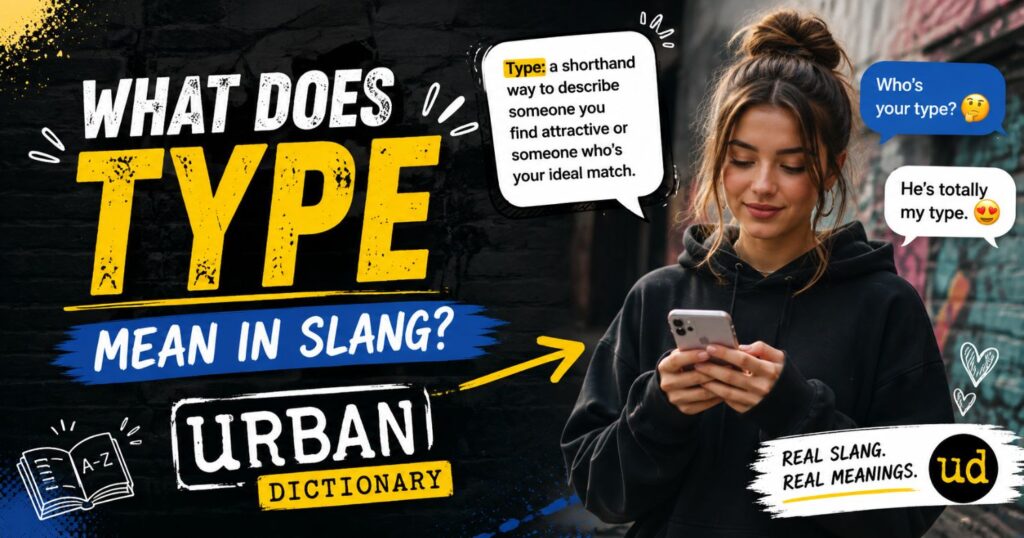
In Urban Dictionary, “type” is generally defined as the specific kind of person someone finds attractive, covering looks, personality, or overall vibe. Some entries stretch the word further to describe general categories, like “the type of person who always shows up late.”
Also Read This:EMP Meaning in Text
The crowd-sourced definitions line up with everyday usage: it’s flexible, informal, and leans heavily on personal preference rather than a strict rulebook meaning.
Grammar & Language Role
Grammatically, “type” functions as a noun describing a category. In slang usage it almost always pairs with a possessive pronoun.
| Structure | Example | Function |
| Possessive + type | “my type,” “his type” | Describes personal preference |
| Type + of + noun | “type of energy,” “type of guy” | Describes a broader category |
| Type + shii/shit | “type shii,” “that type shit” | Expresses agreement or reaction |
It rarely stands alone as a full sentence. Most of the time it needs a pronoun or a following phrase to make sense, which is why “type” by itself in a text can feel like a fragment waiting for the rest of the sentence.
How to Reply When Someone Says “Type”
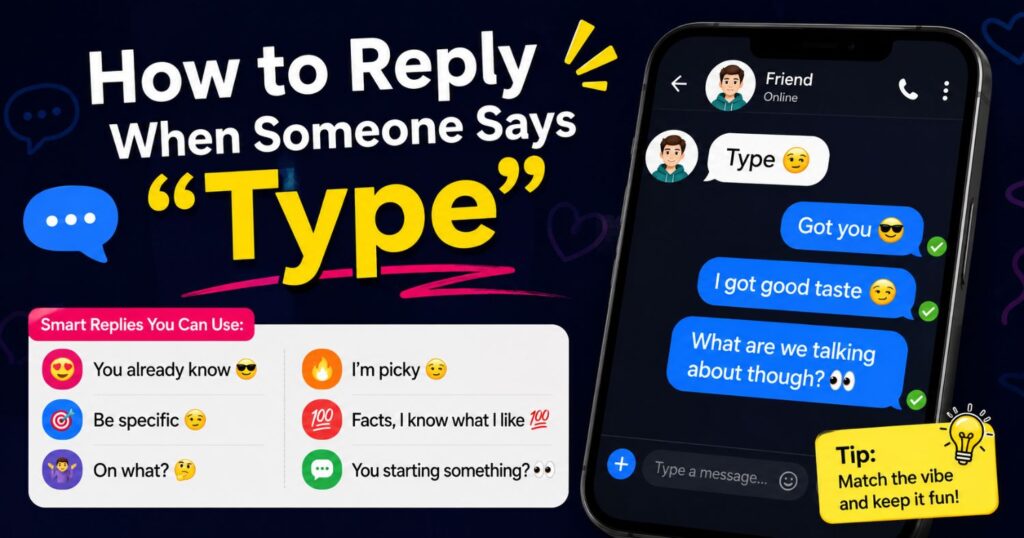
A reply depends entirely on what kind of “type” comment you received.
- If it’s flirty: Match the energy or ask a light follow-up, like “oh yeah? What makes me your type.”
- If it’s a rejection: Keep it short and move on, like “all good, no worries.”
- If it’s a hype reaction (“type shii”): Respond with agreement or a similar reaction, like “fr it’s giving that energy.”
- If it’s ambiguous: Ask directly. A simple “wym by that” clears up confusion fast.
Reading the tone of the rest of the conversation before replying avoids awkward mismatches.
Comparison Table: Type vs Other Slang Terms
| Term | Core Meaning | Typical Use |
| Type | Preferred kind of person or thing | Attraction, personality, category |
| Vibe | General feeling or energy | Describing mood or atmosphere |
| Rizz | Charisma or flirting skill | Describing someone’s ability to attract |
| Main character | Center-of-attention energy | Describing confidence or self-focus |
| Type shii | General agreement or reaction | Reacting to relatable content |
These terms overlap in Gen Z conversation but stay distinct in meaning, so swapping one for another can change what you’re actually saying.
Who Uses This Term?
“Type” spans age groups, but usage style differs.
- Gen Z: Uses it constantly in dating talk, TikTok captions, and reaction comments, often paired with “energy” or “vibes.”
- Millennials: Use “my type” casually but rarely add the newer variations like “type shii.”
- Older generations: Tend to use it literally, describing personality categories without the slang layer.
It shows up most on TikTok, Snapchat, Instagram comments, and regular text threads between friends or potential partners.
Gamers use a related version too, describing character builds or playstyles as a “healer type” or “tank type,” which shows how far the word has stretched beyond dating slang into general category talk.
What Does Type Shii Mean on Snapchat
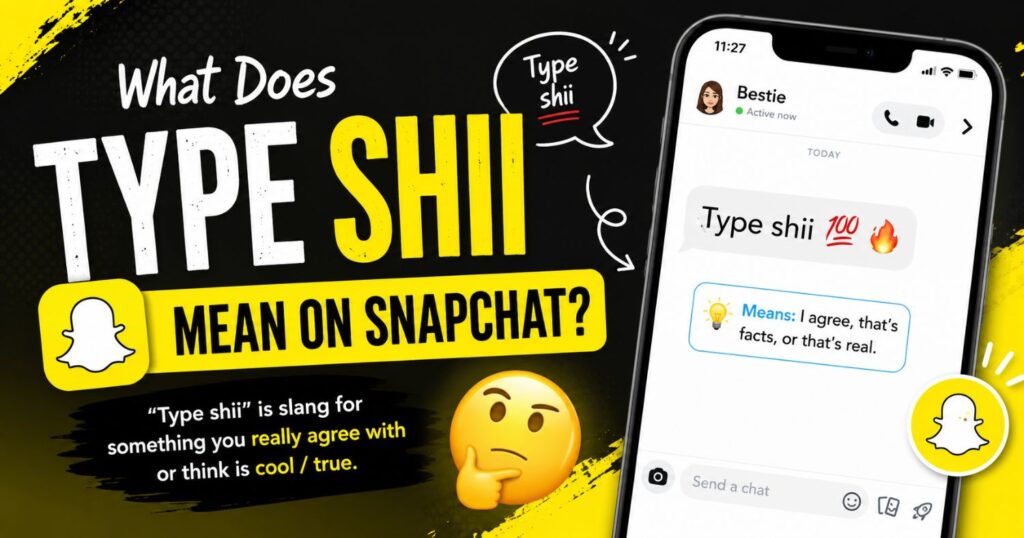
“Type shii” (sometimes spelled “type shi”) is a separate phrase from “my type.” It’s a stylized version of “type shit,” commonly used on Snapchat and TikTok to react to something relatable, impressive, or exactly what someone wanted.
- “That’s the type ship I need right now” means that’s exactly what someone wants or likes.
- The double “i” spelling is a stylistic choice common on Snapchat, partly to soften the word “shit.”
- It can also express mild frustration, as in “tired of this type shii,” depending on tone.
Snapchat’s disappearing message format makes short reactive phrases like this especially common, since users type fast and casually.
Origin & Internet Culture Insight
“Type” as attraction slang has roots going back to everyday English, but “type shii” traces more directly to African American Vernacular English (AAVE), which has shaped a large share of modern internet slang.
The phrase gained traction online around 2020 and 2021, spreading through TikTok captions, Twitter replies, and Snapchat chats before becoming standard Gen Z vocabulary.
Dating apps also reinforced the attractive meaning of “type,” since profiles and swiping culture made the word a shorthand for preference in looks and personality.
Reality TV and dating shows helped too, with contestants regularly describing their “type” on camera long before the phrase became a texting staple. Once TikTok picked it up, editing trends and caption formats turned “type” into a quick, expressive tag rather than a full explanation.
Safety & Appropriateness
“Type” in its standard meaning is completely clean and safe for casual or even semi-professional conversations. “Type shii” leans more informal because it stylizes a curse word, so it fits better in texting between friends than in workplace chats or formal writing.
Neither phrase carries offensive meaning on its own, but tone and context still matter, especially in flirty exchanges with people you don’t know well.
Conclusion
The word will keep showing up in comments, captions, and group chats precisely because it does so much work in so few letters. Whether someone is describing a crush, reacting to a video, or just naming a vibe, “type” adapts to the moment without needing extra explanation, which is exactly why it has stuck around this long in everyday texting.
If you’re still unsure how to respond the next time it pops up, the safest move is to read the sentence around it before reacting. A “type” comment tied to a compliment usually calls for a playful reply, while one tied to a reaction post just needs simple agreement.