
You saw “jsp” in a text or a comment and now you are stuck. It looks random. It could be a typo. But it is not. JSP is a real piece of internet slang, and once you know what it stands for, you will start noticing it everywhere, from Snapchat captions to Instagram comments to quick group chat replies.
The good news is that JSP is not complicated once you understand the context clues around it. This guide breaks down every meaning of JSP, where it came from, and how to use it the right way, so you never have to pause mid conversation and wonder what someone actually meant.
What Does JSP Mean?
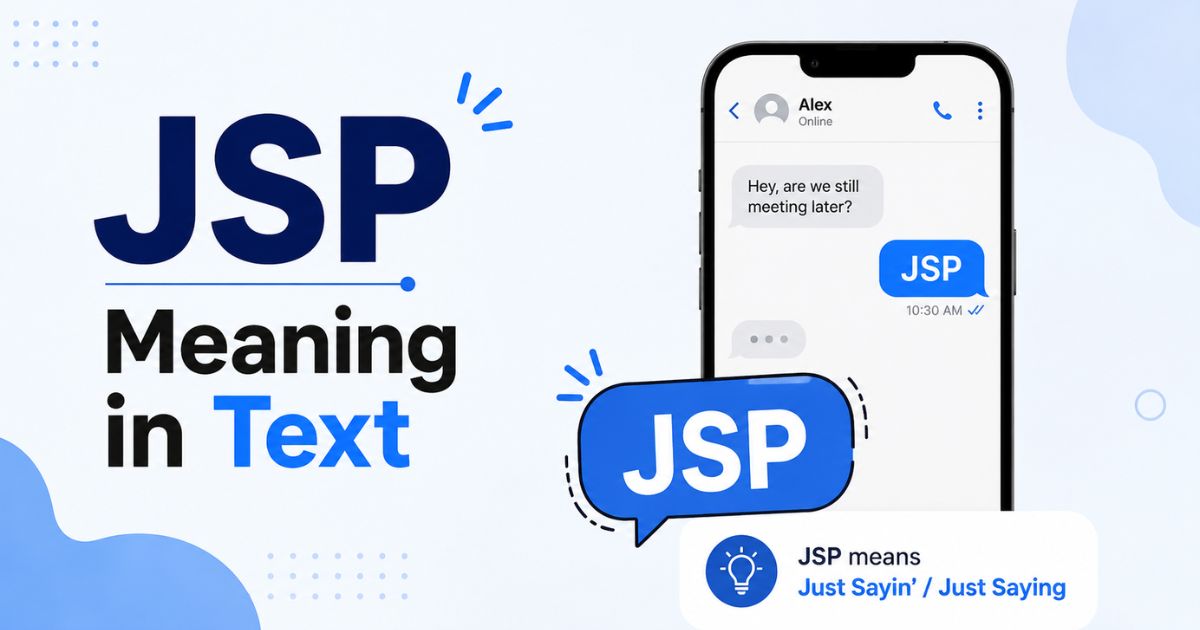
JSP is short for “Just Playing.” People use it right after a joke, a tease, or a sarcastic line. It tells the other person that nothing serious was meant. Think of it as a written version of a wink.
The letters can also stand for a few other things depending on where you see them. Here is a quick breakdown.
| Meaning | Where You See It | What It Signals |
| Just Playing | Texting, Snapchat, Instagram DMs | The message was a joke, not a real complaint |
| Just Saying (Period) | Twitter/X, casual chats | A blunt opinion said without extra emotion |
| Je sais pas (I don’t know) | French speakers, bilingual chats | The person genuinely has no answer |
| JavaServer Pages | Web development, coding forums | A Java based tool for building dynamic websites |
Most of the time, if you are chatting with friends and someone drops “jsp” after teasing you, they mean “just playing.” The other meanings only show up in very specific settings, and the surrounding words usually make it obvious which one applies.
Origin and History of “JSP”
Text slang exists because typing strips away tone. When you talk face to face, your friend can tell a joke is a joke just by your smile or your voice. A text message does not have that. A sentence that sounds funny out loud can look mean on a screen.
To fix this problem, people started adding short tags after jokes. “Just kidding” became JK. “Laughing out loud” became LOL. “Just playing” followed the same pattern and became JSP. It grew out of the same need: stop a joke from being taken the wrong way.
JSP picked up speed on messaging apps and group chats where quick back and forth banter is normal. It became especially popular with younger texters who wanted a softer alternative to JK. While JK can feel like it shuts down the joke completely, JSP keeps a lighter, more playful feeling in the conversation.
Outside of English slang, JSP already had a life of its own. In France, “je sais pas” is a common spoken shortcut for “je ne sais pas,” meaning “I don’t know.” French speakers write it as jsp in casual texts the same way English speakers write idk.
And in the tech world, JSP has stood for JavaServer Pages since the late 1990s, long before texting slang existed. Java developers still use this term today when building websites that need to change content on the fly.
What does jsp mean on instagram
On Instagram, JSP almost always keeps its texting meaning of “just playing.” You will see it show up in comments after a joke, in DMs after some friendly teasing, or in captions where someone wants to make a bold statement feel less serious. For example, someone might comment “you look like you woke up 5 minutes ago jsp” under a friend’s selfie. It is a way to poke fun without sounding rude.
Some Instagram users, especially those with international followers, also use JSP in its French sense. If someone asks a question in the comments and the reply is just “jsp,” it likely means “I don’t know,” especially if the profile or audience is French speaking.
How “JSP” Is Used on Different Platforms
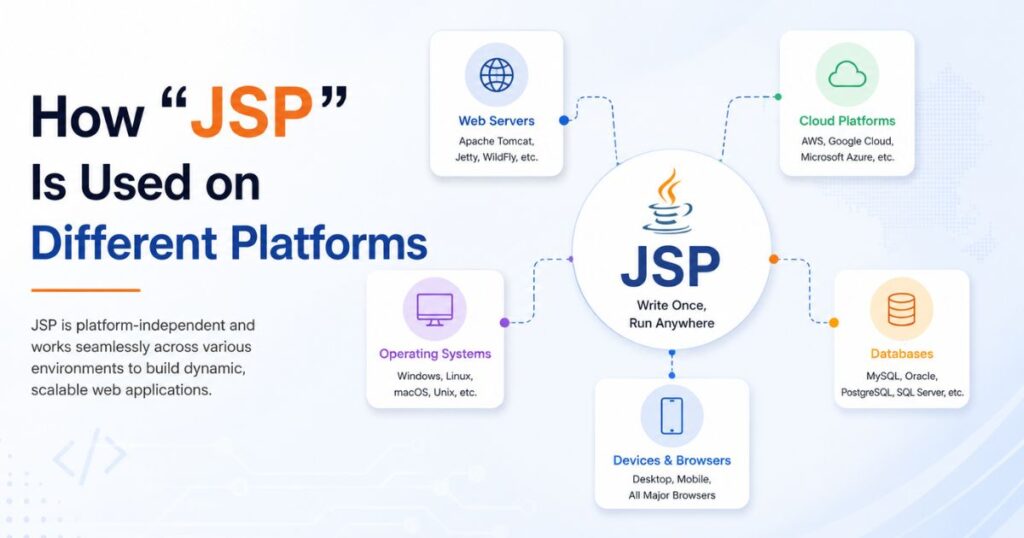
Slang does not behave the same way on every app. JSP shifts slightly depending on where you find it.
- Snapchat: JSP shows up after playful snaps or captions, almost always meaning “just playing.” Snapchat’s fast, informal style makes this the most common use.
- Instagram: Used in comments and DMs, mostly to mean “just playing,” occasionally “I don’t know” in French speaking circles.
- Twitter/X: Here JSP leans more toward “just saying.” People drop it at the end of an opinion to sound less pushy or argumentative.
- Discord: Gamers use JSP quickly during matches, often shortened even further to mean they lost track of something or someone in the game.
- TikTok comments: Mostly “just playing,” used to soften a joke about a video or a creator.
The table below sums up the platform patterns.
| Platform | Most Common Meaning | Typical Use Case |
| Snapchat | Just Playing | Softening a joke in a snap or chat |
| Just Playing | Teasing comments, playful captions | |
| Twitter/X | Just Saying | Adding an opinion without sounding harsh |
| Discord | Just Playing / confusion | Gaming banter, quick reactions |
| TikTok | Just Playing | Comment sections under funny videos |
JSP in Texting vs. Real Life
JSP lives almost entirely in text form. Nobody says “J-S-P” out loud in a normal conversation. If someone wanted to say the same thing verbally, they would just say “I’m just playing” or “I’m just kidding” in full.
This is actually true for most internet abbreviations. They exist to save time while typing, not to replace spoken language. Saying the letters out loud instead of the full phrase would sound strange, almost robotic, and most people would not even understand what you meant without context.
In texting, JSP works because it is fast and low effort. You can add it to the end of any message in one second. In real life, tone of voice already does the job that JSP does in text, so there is no real need for the abbreviation.
Also Read This:WGFT Meaning: What It Really Means in Texts & Chats
What does js mean in text
JS is a shorter cousin of JSP. It usually means “just saying,” used the same way people use JSP to soften an opinion or comment. The difference is subtle: JS tends to carry less playful energy and more of a flat, matter of fact tone. Someone might text “you should probably apologize, js” to share an opinion without sounding like they are picking a fight. JS can also stand for JavaScript in coding contexts, so again, context decides the meaning.
Examples of “JSP” in Sentences
Seeing JSP used in real conversations makes it much easier to understand. Here are some everyday examples.
- “You really thought I forgot your birthday? jsp, happy birthday!”
- “Your cooking still needs work jsp 😂”
- “I’m not mad, jsp with you”
- “That outfit is a bold choice jsp”
- “jsp but you type really slow”
Notice how each sentence pairs JSP with a slightly teasing comment. Without JSP, some of these lines could come across as genuinely rude. With it, the reader understands right away that it is all in good fun.
Here is one using the “just saying” sense instead:
- “We should probably leave soon, traffic gets bad after 5, jsp”
And one using the French sense:
- “Tu vas où ce soir? jsp encore” (Where are you going tonight? I don’t know yet)
Variations and Related Slang
JSP belongs to a small family of abbreviations that all do a similar job: softening tone or adding a joking signal in text.
| Slang | Meaning | Tone |
| JK | Just Kidding | Cancels out a statement completely |
| JSP | Just Playing | Keeps playful energy, softer than JK |
| JS | Just Saying | Adds an opinion casually |
| LOL | Laughing Out Loud | Shows amusement |
| IDK | I Don’t Know | Direct, no playful tone |
| TBH | To Be Honest | Introduces a blunt opinion |
These terms often show up together in the same conversation. Someone might type “you snore so loud lol jsp” combining two soft signals at once to keep the mood light.
What does JSP mean from a girl
JSP does not change meaning based on who sends it. When a girl sends JSP, it carries the exact same meaning as when anyone else sends it: usually “just playing.” The confusion some people have comes from trying to read extra meaning into a simple abbreviation.
If a girl teases you and follows it with JSP, she is telling you not to take the comment seriously. It is not flirting code and it does not hint at hidden feelings. The safest way to read it is at face value: she was joking around.
That said, tone still matters. JSP paired with a laughing emoji feels light and friendly. JSP with no emoji at all, especially after a pointed comment, can feel a little more serious or even slightly sarcastic. Reading the whole message, not just the abbreviation, always gives the clearest picture.
Is “JSP” Safe for Kids?
JSP is harmless slang. It does not carry any hidden meaning tied to anything inappropriate, and it does not need any special explanation for a parent to feel comfortable with it. Kids and teens use it constantly in group chats and on apps like Snapchat and Instagram.
The one thing worth teaching kids is that tone still matters even with JSP attached. Adding JSP after a genuinely hurtful comment does not automatically make that comment okay.
The abbreviation works best for light teasing between friends, not for comments that could actually hurt someone’s feelings. Parents can use JSP as a small teaching moment: humor is fine, but it should never come at someone else’s expense.
When to Use (and Avoid) “JSP”
JSP fits naturally into casual, friendly conversations. It does not belong everywhere.
Good times to use JSP:
- Texting close friends or family
- Group chats with an established joking dynamic
- Social media comments meant to be lighthearted
- Right after a playful tease, to keep things friendly
Times to avoid JSP:
- Work emails or professional Slack messages
- Conversations with people who do not know the abbreviation
- Serious or emotional conversations
- Formal writing of any kind
Using JSP in the wrong setting can come across as unprofessional or confusing. A coworker who has never seen the term might think you made a typo or, worse, might not realize you were joking at all. When in doubt, stick to the full phrase “just playing” in any setting where slang could cause a misunderstanding.
Final Thoughts
JSP is a small abbreviation that solves a real problem: text messages do not carry tone the way spoken words do. Whether it means “just playing,” “just saying,” or something else entirely depends on where you see it and who sent it, but in the vast majority of everyday chats, it simply means someone was joking around and does not want you to take their words too seriously.
Learning slang like JSP makes texting easier and helps avoid awkward misunderstandings with friends. Keep it for casual chats, read the tone of the full message before reacting, and skip it in professional settings. Once you get comfortable spotting JSP in context, you will never have to pause and wonder what it means again.