
You are scrolling through a group chat and someone drops “igu” out of nowhere. No context. No explanation. Just three letters sitting there like you are supposed to know what they mean.
You are not alone. IGU is one of those texting terms that looks small but carries more than one meaning. It shows up in casual chats, on Snapchat streaks, in TikTok comment sections, and sometimes in totally unrelated places like construction forums. This guide breaks down every real meaning of IGU, shows you how to spot which one is being used, and gives you the confidence to reply without sounding lost.
Start Here: The Two IGU Meanings
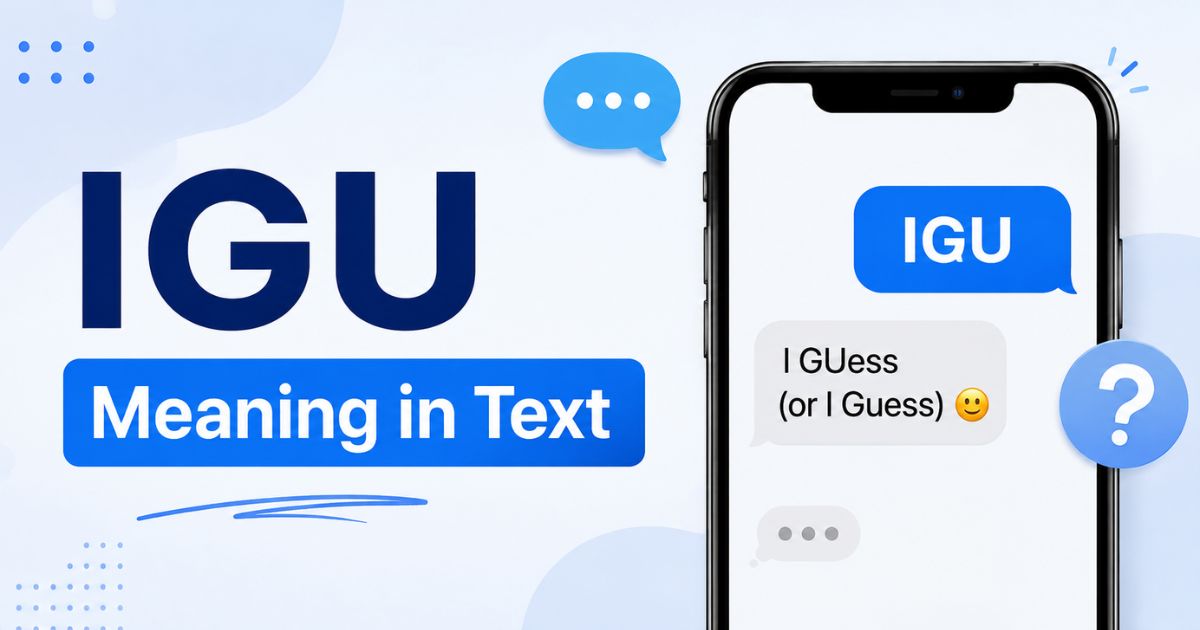
IGU mainly stands for two different things, and the gap between them is huge. The first and most common meaning is “I got you.” People use this to promise support, confirm a favor, or reassure someone that they have their back. The second meaning is “I give up,” used when someone feels tired, frustrated, or ready to stop trying at something.
Here is a quick side by side look at both meanings.
| Meaning | Tone | Common Use Case |
| I got you | Supportive, warm | Promising help, confirming plans, backing someone up |
| I give up | Tired, frustrated | Quitting a task, losing motivation, ending an argument |
Both meanings are short forms of longer phrases, and both fit naturally into fast texting. That is exactly why they get confused so often. The letters are identical, but the emotional weight behind them is almost opposite.
Knowing both meanings exist is step one. Step two is learning how to figure out which one someone actually means when you see it on your screen.
How to Tell Which One IGU Is

Context is everything with IGU. The words around it, the emoji attached, and the tone of the conversation all point you toward the right meaning. You rarely need to guess blindly because texting conversations almost always give small clues.
Start by looking at what came right before the message. If your friend just asked for a ride, money, or help with something, and you reply “igu,” you almost certainly mean “I got you.” If the conversation is about a hard test, a breakup, or a task that is not working out, “igu” more likely means “I give up.”
A few quick signals to check:
- Question before the message: If someone asked for help, IGU usually means support.
- Frustration in the chat: If someone is venting or struggling, IGU often means giving up.
- Emoji attached: A muscle emoji or thumbs up points to support. A crying or exhausted emoji points to quitting.
- Punctuation: “igu!!” with excitement leans supportive. “igu…” with trailing dots leans toward giving up.
Igu meaning from a girl
There is no different definition of IGU based on gender. A girl texting “igu” means the exact same thing as a guy texting it. What can change is the tone she brings to it.
Girls in many friend groups use “igu” as a quick, caring reply to confirm they will help with something, like covering a shift, lending an outfit, or showing up for emotional support. The phrase carries the same two meanings for everyone. What shifts is only the surrounding conversation style, not the actual definition.
IGU Real Examples That Show the Difference
Seeing IGU in real sentences makes the meaning click faster than any definition alone. Below are natural examples pulled from common texting situations.
Examples meaning “I got you”:
- “Can you pick me up at 6?” “igu, be there soon”
- “I really need someone to cover my Sunday shift.” “igu, don’t stress”
- “Don’t tell anyone what I said.” “igu, your secret is safe”
Examples meaning “I give up”:
- “I’ve tried this math problem five times.” “same, igu”
- “She’s not replying to any of my texts.” “honestly igu at this point”
- “I keep failing this level in the game.” “igu, deleting it”
Notice how the sentence right before “igu” tells you everything. A request or a promise points to support. A complaint or a struggle points to quitting.
Does the Sender’s Gender Change the IGU Meaning?
No, the gender of the person sending the text does not change what IGU stands for. This question comes up a lot because slang terms sometimes carry different weight depending on who says them, but IGU is not one of those terms. The definition stays fixed for everyone.
What does change slightly is how often each meaning gets used across different social circles. Some friend groups lean heavily on the supportive meaning because their texting culture revolves around encouragement and quick check-ins. Other groups use the frustrated meaning more, especially in gaming chats or study group threads where people are working through tough tasks together.
So instead of asking who is texting, focus on what they are texting about. That single detail solves the mystery almost every time.
IGU on Snapchat and TikTok

Snapchat and TikTok both have their own texting rhythm, and IGU fits naturally into both platforms. On Snapchat, IGU often shows up in snap captions or chat replies tied to streaks, favors, or quick daily check-ins. Someone might snap “need a streak save” and get back a simple “igu.”
Also Read This:Geeking Mean in Slang
TikTok comment sections use IGU a bit differently. Since comments are public and often reply to a video’s content, IGU there usually reacts to something relatable in the video, like a creator talking about giving up on a diet, a workout, or a hobby. In that setting, “igu” almost always means “I give up,” since it mirrors the frustration or humor in the clip.
| Platform | Common IGU Meaning | Typical Setting |
| Snapchat | I got you | Private chats, streak talk, quick favors |
| TikTok | I give up | Public comments reacting to relatable content |
| Text messages | Both, depending on context | Personal conversations |
Igu meaning text snapchat
Inside a private Snapchat conversation, “igu” leans strongly toward “I got you.” Snapchat chats tend to be personal, one on one, and built around quick favors between close friends, which naturally fits the supportive meaning more often than the frustrated one.
IGU vs. Similar Terms
IGU is not the only short phrase floating around that expresses support or surrender. A few other terms overlap in meaning or letters, and knowing the difference helps you avoid mixing them up.
| Term | Meaning | Difference from IGU |
| IGY | I got you | Basically identical to IGU’s supportive meaning, less common |
| IG | I guess | Casual agreement, not the same as either IGU meaning |
| GG | Good game | Used to end something, closer to giving up in tone |
| IDGAF | I don’t give a… | Stronger, more dismissive than “I give up” |
The key thing to remember is that IGU carries two very specific meanings, while most similar terms only carry one. That double meaning is what makes IGU unique and also what makes it slightly trickier to read at first glance.
The Window Industry IGU (Separate Thing Entirely)
Here is a twist that catches a lot of people off guard. IGU also stands for “Insulated Glass Unit” in the construction and window manufacturing industry. This has absolutely nothing to do with texting slang.
An insulated glass unit is a type of window made of two or more glass panes with a sealed air or gas filled space between them. This design helps with insulation, energy efficiency, and noise reduction in homes and buildings. If you search “IGU” on Google outside of a texting context, you will likely find window company websites explaining this exact term.
Quick breakdown of this meaning:
- Full form: Insulated Glass Unit
- Industry: Construction, windows, home improvement
- Purpose: Better insulation and energy savings
- Common in: Window replacement services, building specs, contractor quotes
If you ever see “IGU” in an email from a contractor or on a home improvement website, this is almost certainly the meaning at play, not the texting slang version.
How to Reply When Someone Sends You IGU
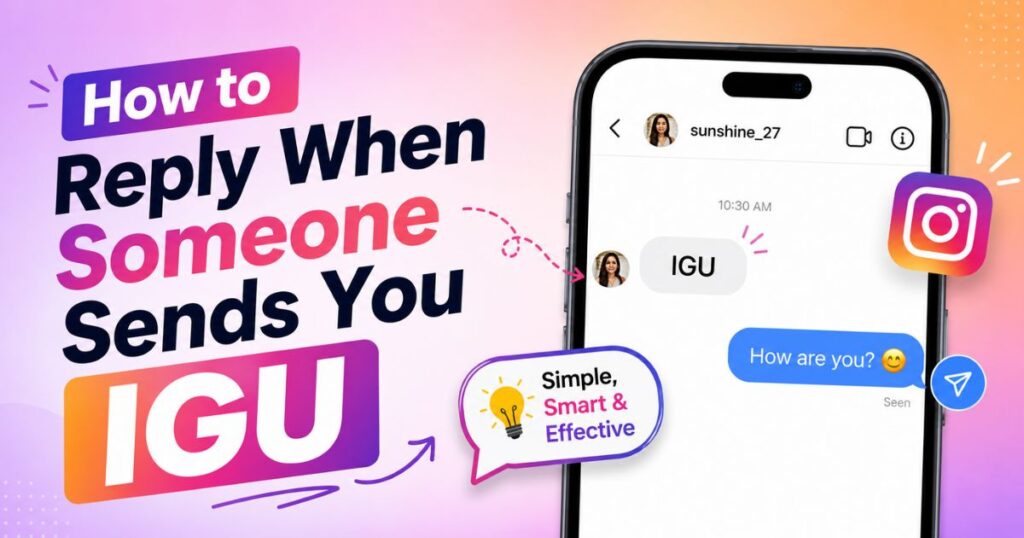
Replying to IGU is easy once you know which meaning fits. If someone sends “igu” in response to a favor or request, a simple thank you or confirmation works perfectly. Something like “thank you, appreciate it” keeps the conversation warm and moves things along.
If someone sends “igu” out of frustration, the best reply usually offers encouragement rather than just accepting the defeat. A message like “don’t give up yet, you’re close” or “want help with it?” shows support without dismissing their feelings.
Here are a few ready to use replies for both situations:
When IGU means support:
- “Appreciate you, thank you!”
- “You’re the best, see you soon”
- “Knew I could count on you”
When IGU means giving up:
- “Don’t quit yet, let’s figure it out”
- “It happens, take a break and try again”
- “Want me to help you with it?”
Matching your reply to the right meaning keeps the conversation smooth and avoids any awkward mismatched energy.
What Actually Happens in Real Conversations
In real texting life, IGU rarely causes confusion once you are actually inside the conversation. The surrounding messages almost always make the meaning obvious within a second or two. Confusion usually only happens when someone sees the word “igu” completely out of context, like in a screenshot shared without the full conversation attached.
Group chats tend to use the supportive meaning more often because group settings usually involve coordinating plans, favors, and check ins. One on one chats, especially between close friends venting about school, work, or relationships, lean more toward the “I give up” meaning.
Texting culture also evolves fast, so new short forms of “igu” sometimes appear, like “igu fr” (I got you for real) or “ong igu” (on god, I give up), which stack extra emphasis onto whichever meaning fits the moment.
Final Thoughts
IGU is a small term that carries real weight depending on the conversation around it. Whether it means “I got you” or “I give up,” the context clues in the chat almost always point you to the right answer. Pay attention to what came before the message, the emoji used, and the overall tone, and you will rarely misread it.
Outside of texting, remember that IGU also has a completely different life in the construction world as an insulated glass unit. Keeping both worlds separate in your mind will save you from confusion if you ever come across the term outside a casual chat. With this guide, you now have everything you need to read, use, and reply to IGU with total confidence.
Frequently Asked Questions
What does IGU mean in texting?
IGU usually means either “I got you” or “I give up,” depending on the context of the conversation.
How do I know which IGU meaning someone is using?
Check the message right before it. Requests point to support, while frustration points to giving up.
Does IGU mean something different on Snapchat?
Not officially, but Snapchat chats lean more toward “I got you” since they are usually personal and favor based.
Is IGU used differently by girls and guys?
No, the meaning stays the same for everyone. Only the conversation tone around it can feel different.
What does IGU mean outside of texting?
In construction and window industries, IGU stands for Insulated Glass Unit, a type of energy efficient window.