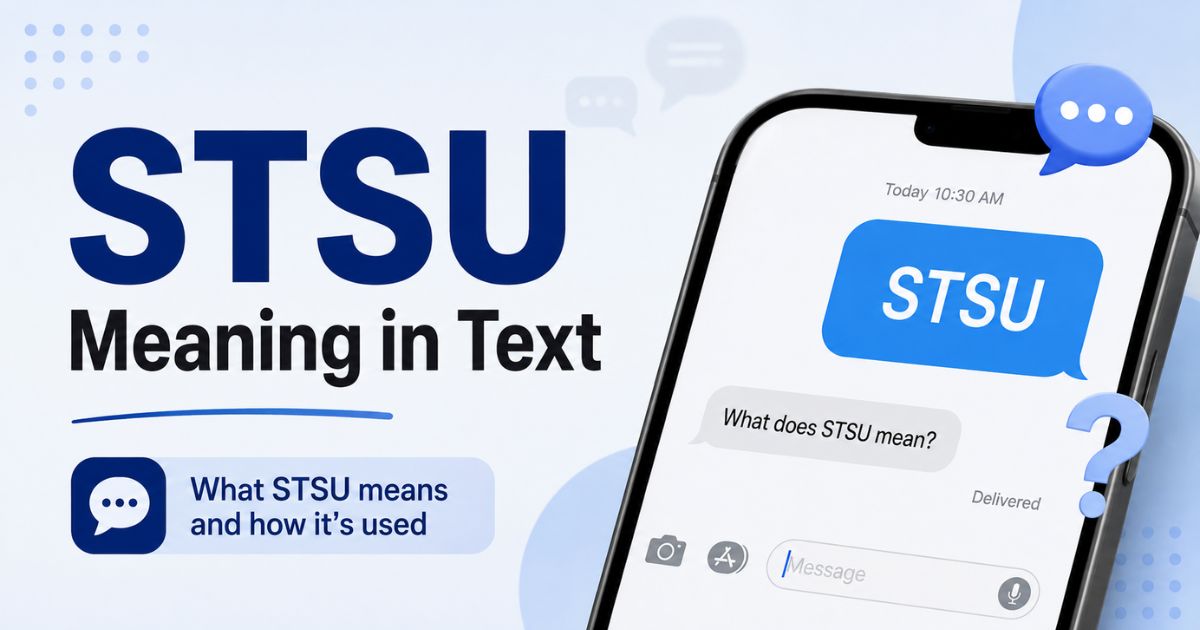

If you spend any time in group chats or scrolling through comment sections, you have probably seen random letters that make no sense at first. STSU is one of those abbreviations that seems to pop up everywhere once you start noticing it. It shows up in reactions to gossip, playful teasing between friends, and even under viral videos, leaving a lot of people wondering what it actually stands for and why everyone suddenly knows how to use it.
This guide covers everything you need to know about STSU, from its full meaning to how it changes depending on the app you see it on. You will learn where the term likely came from, how tone shapes its meaning, and how it compares to similar slang like STFU and WYLL. By the end, you will be able to spot STSU in the wild and know exactly how to respond.
New letters show up in your group chat one week, and by the next week everyone is using them like they always existed. STSU is one of those terms. If you saw it pop up in a message and felt confused, you are not alone. This guide breaks down everything you need to know about STSU, from its full form to how people actually use it on WhatsApp, Instagram, TikTok, and Snapchat.
What Does STSU Mean in Text?
STSU is a short way of telling someone to stop talking, usually in a blunt or playful way. It shows up most often in fast-moving chats where people do not want to type out a full sentence. Instead of writing “please stop talking,” someone just drops four letters and moves on.
The tone behind STSU depends heavily on who sends it. Between close friends, it often reads as a joke. Between strangers or in a heated argument, it can feel much sharper. Context always matters more than the letters themselves.
Here is a quick snapshot of how STSU behaves in conversation:
| Feature | Detail |
| Type | Internet slang abbreviation |
| Common tone | Blunt, sarcastic, or playful |
| Used mostly by | Teens and young adults |
| Common platforms | WhatsApp, Instagram, TikTok, Snapchat |
| Formality level | Very informal |
STSU Full Form
STSU stands for “Shut The S*** Up.” It is a rougher cousin of the more common STFU, though many people use both terms almost the same way. Some softer versions of the phrase, like “Stop Talking, Shut Up,” also float around online, but the mild profanity version is the one people use most.
Because it contains a mild swear word, STSU tends to show up more in casual texting between friends than in public comments or professional spaces. People rarely spell it out in full. The abbreviation itself has almost become its own word, separate from the phrase it came from.
What Is the Slang Meaning of STSU?
In slang terms, STSU means “be quiet” or “stop talking right now.” It carries more punch than a simple “shush” because of the language behind the letters. People send it when they want a fast, no-nonsense way to end a rant, interrupt a joke, or react to something surprising.
The slang meaning shifts based on delivery. A friend might type STSU after you say something funny, almost like a compliment in disguise. Someone annoyed might type it to shut down a conversation completely. Reading the mood of the chat helps you figure out which version you are dealing with.
Common situations where STSU pops up:
- Reacting to a shocking piece of gossip
- Telling a friend to stop teasing you
- Responding to an unbelievable story
- Shutting down an argument that is going nowhere
- Playfully hyping someone up after a bold claim
Where Did STSU Come From?
Like most internet abbreviations, STSU grew out of texting culture, where speed matters more than spelling everything out. It follows the same pattern as older slang like STFU, which has been around since early internet forums and chat rooms. As texting moved to smartphones and then to apps like Snapchat and Instagram, people kept shortening phrases to save time and thumb effort.
There is no single moment or platform where STSU was “invented.” Instead, it spread the way most slang does, through group chats, comment sections, and short-form video captions. Once enough people started using it, it became part of the shared vocabulary that younger internet users recognize instantly.
Why Has STSU Become Popular?
STSU fits perfectly into how people communicate today. Messages need to be short, punchy, and quick to type on a phone screen. A four-letter abbreviation does the job of a full sentence in a fraction of the time.
Short-form video culture also plays a big role. Comment sections under TikTok and Instagram clips move fast, and users often react in shorthand rather than full sentences. STSU fits right into that rhythm. It says a lot with very little effort, which is exactly what modern digital conversation rewards.
A few reasons behind its rise:
- Faster typing on mobile keyboards
- Strong reaction value in comment sections
- Popularity of similar abbreviations like STFU and IDC
- Heavy use among Gen Z on social apps
- Easy to understand once you have seen it once
How Is STSU Used in Real Conversations?
STSU usually appears as a quick reaction rather than the start of a conversation. It often follows something surprising, funny, or annoying. People rarely explain themselves after typing it. The letters are meant to carry the whole message.
Here are a few real-style chat examples:
Example 1 Friend 1: “I just got asked out by the guy from my chem class.” Friend 2: “wait STSU no way”
Example 2 Friend 1: “you would not believe what happened at work today” Friend 2: “STSU tell me right now”
Example 3 Friend 1: “I’m never speaking to you again” Friend 2: “STSU you say that every week”
In each case, STSU adds emotion and speed to the reply. It rarely stands alone without some kind of follow-up message.
STSU Meaning on WhatsApp
On WhatsApp, STSU usually shows up in personal or group chats between friends and family who already know each other’s texting style. Because WhatsApp conversations tend to be more private than public social feeds, the tone often leans playful rather than harsh.
Group chats with siblings, close friends, or classmates are common places to spot it. Someone shares a wild update, and the group responds with a flood of reactions, STSU being one of the quickest ways to show shock or disbelief.
STSU Meaning on Instagram
Instagram comment sections move fast, and STSU fits right into that pace. You will often see it under posts where someone shares exciting news, a plot twist, or a bold opinion. Commenters use it to react instantly without typing a long reply.
In Instagram DMs, the meaning stays close to the general slang definition, meaning “stop talking” or “no way, tell me more.” The exact tone usually depends on the emojis or punctuation placed next to it.
STSU Meaning on TikTok
TikTok comment sections are full of short reactions, and STSU is a regular one. Viewers drop it under videos that reveal something unexpected, dramatic storytimes, or relatable moments that hit close to home.
Because TikTok comments are public, the STSU used here often leans playful and expressive rather than genuinely angry. Creators sometimes even lean into it, pinning comments that use popular slang like STSU to boost engagement.
STSU Meaning on Snapchat
Snapchat conversations are usually private and closer to real-time chatting, similar to texting. STSU on Snapchat often pops up in response to a Snap that shares surprising news or a funny moment. Because Snaps disappear quickly, replies tend to be short, and STSU fits that fast back-and-forth style perfectly.
Snapchat streaks and daily chats between close friends also create a casual environment where blunt slang like STSU feels normal rather than rude.
Does STSU Always Mean “Be Quiet”?
Not exactly. While the literal meaning is “stop talking,” the way people actually use STSU has expanded beyond that. Many times, it works more like an exclamation of shock than a genuine request for silence.
| Situation | Likely Meaning |
| After shocking news | “No way, really?” |
| During playful teasing | “Stop joking around” |
| In a heated argument | “Be quiet, seriously” |
| Under a dramatic video | “I can’t believe this” |
Tone, punctuation, and relationship between the people involved all shape the real meaning behind the message.
What STSU Does NOT Mean
STSU is not a formal phrase, and it is not meant for professional or polite settings. It also does not always signal real anger, even though the words behind the abbreviation sound harsh. People new to slang sometimes assume STSU is always aggressive, but that is not accurate in most everyday chats.
Also Read This:IGU Meaning in Text
STSU also does not mean the same thing as agreement or approval. It is a reaction, not a statement of fact. Mixing it up with terms that mean “I agree” or “that’s true” can lead to confusing replies.
Don’t Confuse STSU with WYLL
STSU and WYLL look nothing alike, but new slang learners sometimes mix up abbreviations that appear in similar chat situations. WYLL stands for “What You Look Like,” a phrase used when someone asks for a photo or description of another person, often in dating apps or new online friendships.
STSU is a reaction to something said. WYLL is a request for visual information. The two terms serve completely different purposes, even though both are common in casual online chats.
| Term | Meaning | Common Use |
| STSU | Stop talking / no way | Reacting to news or gossip |
| WYLL | What you look like | Asking about appearance |
Similar Slang Terms and Related Abbreviations
Slang terms like STSU rarely exist alone. Several related abbreviations carry a similar tone or purpose. Knowing a few of these helps you understand modern texting culture as a whole.
- STFU: A stronger, more direct version of “stop talking”
- IDC: “I don’t care,” used to brush off a topic
- NGL: “Not gonna lie,” used before an honest opinion
- FR: “For real,” used to confirm something is true
- SMH: “Shaking my head,” used to show disbelief or disappointment
These terms often appear together in the same conversations, especially among younger users who text quickly and casually.
How to Reply When Someone Says STSU
Replying to STSU depends entirely on the context of the conversation. If it was sent as a shocked reaction, the best response is usually more detail about whatever caused the surprise. If it was sent in a joking or teasing tone, playing along keeps the conversation light.
A few natural ways to respond:
- “I know, right? Let me explain.”
- “lol I’m serious though”
- “wait it gets worse”
- “okay okay I’ll stop”
Reading the emoji or punctuation attached to the original STSU message usually gives a strong clue about which direction to take your reply.
Should You Use STSU?
Whether you should use STSU depends on who you are talking to and how well you know them. Among close friends who already text casually, it fits naturally into the conversation. In professional messages, formal emails, or conversations with people you do not know well, it is best avoided.
Because STSU contains a mild swear word in its full form, some people prefer softer alternatives like “no way” or “stop it” in situations where they want to keep things polite. Knowing your audience matters more than knowing the slang itself.
Is STSU Still Popular?
STSU remains active in casual texting circles, especially among teens and young adults. While slang trends shift quickly, abbreviations tied to strong reactions tend to stick around longer than random phrases, since they serve a clear and repeatable purpose in conversation.
New slang terms will keep appearing, but STSU has settled into a familiar spot within everyday digital communication, much like STFU did years before it.
STSU in Gen-Z Slang Culture

Gen Z communication leans heavily on short reactions, sarcasm, and quick abbreviations. STSU fits right into that pattern alongside terms like FR, NGL, and SMH. It reflects a broader shift toward texting that mirrors real spoken conversation rather than formal writing.
This slang culture values speed and emotional honesty over polished grammar. STSU works well within that value system because it delivers a strong reaction in almost no time at all.
Tips for Understanding Internet Slang
Learning internet slang gets easier once you know a few general rules. Most abbreviations follow patterns based on common phrases, so breaking down the letters often reveals the meaning.
Helpful tips include:
- Look at the full sentence around the abbreviation for context
- Check who sent it and how well you know them
- Notice any emojis or punctuation attached to the message
- Search unfamiliar terms rather than guessing
- Remember that tone changes meaning more than the words alone
Common Mistakes People Make About STSU
Many people assume STSU always means anger, when in reality it often signals excitement or disbelief. Others confuse it with unrelated abbreviations that sound similar or appear in the same type of chat.
Frequent mistakes include:
- Assuming STSU is always rude or hostile
- Using it in formal or professional messages
- Mixing it up with STFU without noticing the tone difference
- Ignoring the context clues around the message
- Overusing it until it loses its impact in conversation
Conclusion
STSU may look like a random string of letters at first glance, but it holds a clear place in modern texting culture. It works as a fast reaction, a playful jab, or a genuine request to stop talking, all depending on who sends it and how. Once you understand the context clues around it, decoding STSU becomes second nature, just like the dozens of other abbreviations that fill everyday online conversations.
The next time STSU shows up in your messages, you will already know what to look for. Check the tone, check the platform, and check who sent it, and the real meaning will usually be clear within seconds. Slang like this keeps changing, but learning how to read it once makes every future term a little easier to figure out.