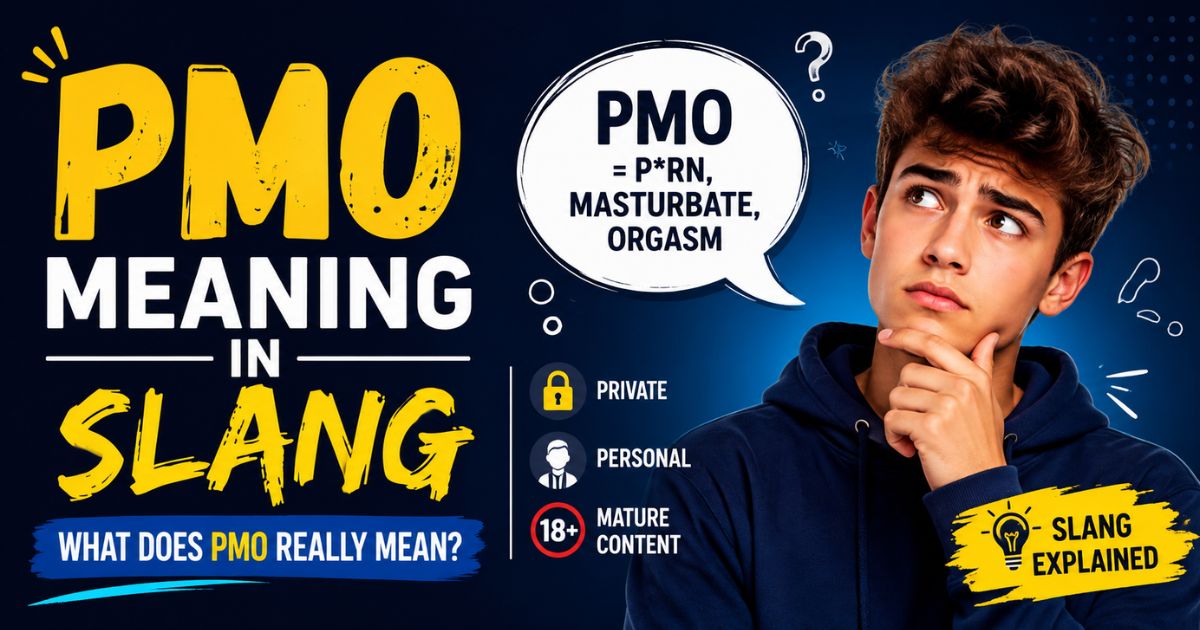

PMO is a short internet term that shows up everywhere online, from text messages to comment sections. It stands for two very different phrases, and the meaning depends completely on the sentence around it.
The first meaning is “piss me off.” People use this version when something annoys them or gets under their skin. The second meaning is “put me on,” which is used when someone wants to be introduced to something new, like a song, a show, an app, or an opportunity.
These two meanings have nothing in common except the letters. That is why reading the full sentence matters so much. A quick glance at PMO alone will not tell you what someone means. You need the words around it.
Here is a simple breakdown of both meanings:
| Meaning | Full Phrase | Common Use |
| Meaning 1 | Piss me off | Expressing annoyance or frustration |
| Meaning 2 | Put me on | Asking to be introduced to something |
Origin and History of “PMO”
PMO started as a basic texting shortcut, the same way people shortened other everyday phrases to save time. “Piss me off” is an older phrase that has been part of casual English speech for decades. Turning it into an acronym was a natural step once texting became the main way people talked to friends.
“Put me on” has roots in slang tied to music and street culture. It originally meant helping someone get noticed or giving them a chance, like an artist getting “put on” by a bigger name. Over time, people started using the phrase more loosely, asking friends to put them on to new music, shows, or trends.
Social media sped up how fast both versions spread. Once PMO started trending on apps like TikTok and Twitter, it became a normal part of everyday online language for teens and young adults across the country.
Slang like this usually spreads in stages. First, a small group of people starts using a shortcut in private messages. Then it shows up in public comments and captions, where more people see it and start copying it. Finally, it has becomeWhat Does PMO Mean In Slang? Detailed Explanation
What Does PMO Mean?
PMO is a short internet term that shows up everywhere online, from text messages to comment sections. It stands for two very different phrases, and the meaning depends completely on the sentence around it.
The first meaning is “piss me off.” People use this version when something annoys them or gets under their skin. The second meaning is “put me on,” which is used when someone wants to be introduced to something new, like a song, a show, an app, or an opportunity.
These two meanings have nothing in common except the letters. That is why reading the full sentence matters so much. A quick glance at PMO alone will not tell you what someone means. You need the words around it.
Here is a simple breakdown of both meanings:
Meaning Full Phrase Common Use
Meaning 1 Piss me off Expressing annoyance or frustration
Meaning 2 Put me on Asking to be introduced to something
Origin and History of “PMO”
PMO started as a basic texting shortcut, the same way people shortened other everyday phrases to save time. “Piss me off” is an older phrase that has been part of casual English speech for decades. Turning it into an acronym was a natural step once texting became the main way people talked to friends.
“Put me on” has roots in slang tied to music and street culture. It originally meant helping someone get noticed or giving them a chance, like an artist getting “put on” by a bigger name. Over time, people started using the phrase more loosely, asking friends to put them on to new music, shows, or trends.
Social media sped up how fast both versions spread. Once PMO started trending on apps like TikTok and Twitter, it became a normal part of everyday online language for teens and young adults across the country.
Slang like this usually spreads in stages. First, a small group of people starts using a shortcut in private messages. Then it shows up in public comments and captions, where more people see it and start copying it. Finally, it has become common enough that people use it without thinking twice, the same way “lol” or “omg” became second nature years ago. PMO followed this same path, moving from small friend groups to a term that shows up across the entire internet.
What makes PMO interesting is that it never fully separated into two different acronyms. Most slang terms with double meanings eventually split, with each meaning getting its own shortcut. PMO stayed as one term, which means readers always have to rely on context instead of memorizing a single fixed definition.
How “PMO” Is Used on Different Platforms
PMO shows up a little differently depending on where you see it. Each platform has its own style of using the term, but the two core meanings stay the same everywhere.
On TikTok, PMO often appears in captions or comments when someone reacts to something frustrating in a video. It also pops up when creators ask followers to “put me on” to new sounds or trends.
On Instagram, people use PMO in captions, story replies, and comment threads. It fits naturally into short, casual replies where full sentences feel unnecessary.
On Snapchat, PMO usually shows up in quick chats between friends, especially when venting about something small that happened during the day.
In gaming chats and group chats, PMO often flies fast during live conversations. Gamers might type it when a teammate makes a mistake, or when they want someone to share a new game recommendation.
Casual online forums and comment sections use PMO the same way, though the pace is usually slower than live chats. People type it as a quick reaction while scrolling, without needing to explain their whole thought. Because typing speed matters so much in these spaces, short terms like PMO fit naturally into how people talk online.
A quick platform snapshot:
TikTok: reactions, captions, trend requests
Instagram: comments, story replies
Snapchat: private one-on-one venting or hype messages
Group chats: fast-paced back and forth, both meanings used often
Gaming chats: frustration during matches, or requests for new game suggestions
PMO in Texting vs. Real Life
PMO lives mostly in written conversation. It rarely comes up out loud, since most people just say “that’s annoying” or “put me on to that” instead of spelling out letters in speech.
In texting, PMO works well because it is fast and casual. Friends use it in group chats, direct messages, and comment sections without needing to explain themselves further.
In real life conversations, people almost never say “P-M-O” as actual letters. If someone does say it out loud, it is usually as a joke or because they are quoting something they saw online.
This makes PMO a text-first term. It fits naturally into typing but feels out of place in spoken conversation, especially with people who are not familiar with newer slang.
Examples of “PMO” in Sentences
Seeing PMO used in real examples makes both meanings much easier to understand. Below are sentence examples for each version.
Examples using “piss me off”:
“It’s raining again and I have no umbrella, this really pmo.”
“When people chew loud next to me, it pmo so bad.”
“My wifi keeps cutting out and it’s starting to pmo.”
Examples using “put me on”:
“You have to pmo to that new show everyone’s talking about.”
“Pmo to some good study playlists, I’m bored of mine.”
“She pmo’d me to this restaurant and now it’s my favorite spot.”
Context clues usually make the meaning obvious. Words like “annoying,” “mad,” or “so tired of” point to the first meaning. Words like “recommend,” “show me,” or “put me on to” point to the second.
Variations and Related Slang
PMO has a few related phrases and shortcuts that build on the original meanings. Knowing these makes it easier to follow fast-moving conversations online.
“PMO to” is one of the most common variations. It almost always connects to the “put me on” meaning, as in “pmo to your favorite artist” or “pmo to a good recipe.” Adding “to” makes the request clearer, since it points directly to what someone wants to be introduced to.
Other related slang includes plain phrases like “put me on” and “you gotta put me on,” which mean the same thing without shortening to letters. On the frustration side, people sometimes use “irks me” or “gets on my nerves” as close alternatives to the “piss me off” meaning of PMO.
Is “PMO” Safe for Kids?
This depends on which meaning is being used. The “put me on” version is completely harmless. It simply means asking for a recommendation, and there is nothing inappropriate about it.
The “piss me off” version contains mild profanity, since the full phrase includes a swear word. Parents who prefer their kids avoid casual swearing might want to be aware of this meaning specifically.
For younger kids, it is worth explaining that PMO can mean two things, and one version uses language that is not exactly polite. Older teens are usually already familiar with both meanings from social media and their friend groups.
When to Use (and Avoid) “PMO”
PMO works well in casual settings. It fits naturally into texts with friends, comments on social media, and relaxed group chats where slang is already common.
It does not belong in professional, academic, or formal writing. Emails to teachers, cover letters, work messages, and school assignments should stick to clear, standard English instead.
A simple guide for when to use PMO:
Good times to use it:
Texting friends
Social media captions and comments
Casual group chats
Gaming chats with people you know well
Times to avoid it:
Emails to teachers or bosses
School essays or reports
Job applications
Formal or professional conversations
Sticking to this general rule keeps communication appropriate no matter who is reading it.
Final Thoughts
PMO is a flexible slang term with two meanings that depend entirely on context. Whether someone is venting about something annoying or asking to be introduced to something new, the sentence around PMO usually makes the intended meaning clear within seconds.
Understanding both versions helps avoid confusion, especially in fast-paced texting or comment sections where slang changes quickly. Once you know the pattern, spotting the correct meaning becomes second nature.
Frequently Asked Questions
What does PMO mean in slang?
PMO usually means either “piss me off” or “put me on,” depending on the context of the sentence.
What does PMO mean in texting?
In texting, PMO is a quick way to express frustration or to ask someone for a recommendation.
What does PMO mean on TikTok?
On TikTok, PMO often appears in captions or comments reacting to something annoying or asking to be shown a new trend.
What does PMO mean on Snapchat?
On Snapchat, PMO is typically used in casual chats between friends, either to vent or to ask for a suggestion.
Is PMO a bad word?
PMO itself is not a bad word, but the “piss me off” meaning includes mild profanity within its full phrase.
What does “PMO to” mean?
“PMO to” means “put me on to,” which is a request for someone to share or recommend something.
How do you know which meaning of PMO is intended?
Check the words around it. Frustration words point to “piss me off,” while recommendation words point to “put me on.” common enough that people use it without thinking twice, the same way “lol” or “omg” became second nature years ago. PMO followed this same path, moving from small friend groups to a term that shows up across the entire internet.
What makes PMO interesting is that it never fully separated into two different acronyms. Most slang terms with double meanings eventually split, with each meaning getting its own shortcut. PMO stayed as one term, which means readers always have to rely on context instead of memorizing a single fixed definition.
How “PMO” Is Used on Different Platforms
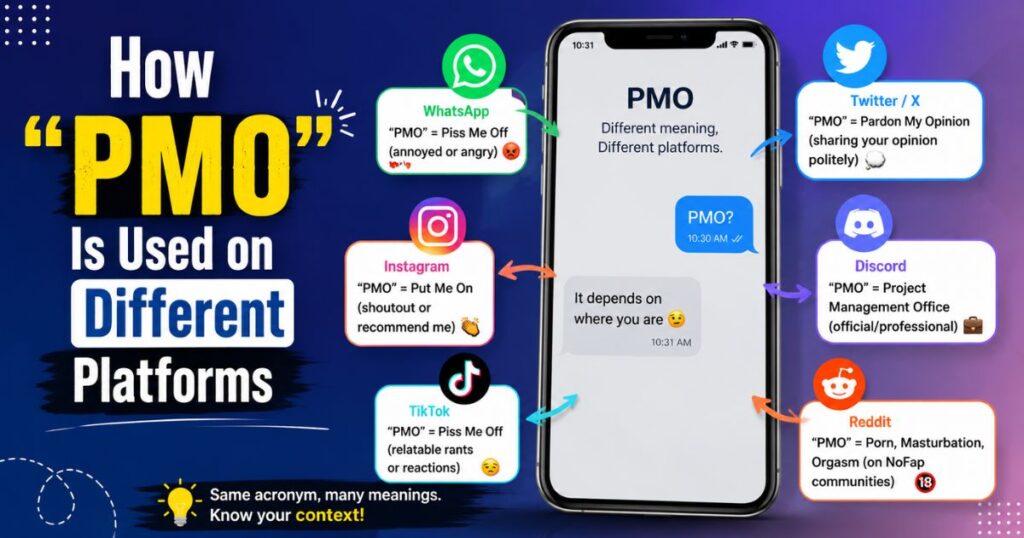
PMO shows up a little differently depending on where you see it. Each platform has its own style of using the term, but the two core meanings stay the same everywhere.
On TikTok, PMO often appears in captions or comments when someone reacts to something frustrating in a video. It also pops up when creators ask followers to “put me on” to new sounds or trends.
On Instagram, people use PMO in captions, story replies, and comment threads. It fits naturally into short, casual replies where full sentences feel unnecessary.
Also Read This:STSU Meaning in Text
On Snapchat, PMO usually shows up in quick chats between friends, especially when venting about something small that happened during the day.
In gaming chats and group chats, PMO often flies fast during live conversations. Gamers might type it when a teammate makes a mistake, or when they want someone to share a new game recommendation.
Casual online forums and comment sections use PMO the same way, though the pace is usually slower than live chats. People type it as a quick reaction while scrolling, without needing to explain their whole thought. Because typing speed matters so much in these spaces, short terms like PMO fit naturally into how people talk online.
A quick platform snapshot:
- TikTok: reactions, captions, trend requests
- Instagram: comments, story replies
- Snapchat: private one-on-one venting or hype messages
- Group chats: fast-paced back and forth, both meanings used often
- Gaming chats: frustration during matches, or requests for new game suggestions
PMO in Texting vs. Real Life
PMO lives mostly in written conversation. It rarely comes up out loud, since most people just say “that’s annoying” or “put me on to that” instead of spelling out letters in speech.
In texting, PMO works well because it is fast and casual. Friends use it in group chats, direct messages, and comment sections without needing to explain themselves further.
In real life conversations, people almost never say “P-M-O” as actual letters. If someone does say it out loud, it is usually as a joke or because they are quoting something they saw online.
This makes PMO a text-first term. It fits naturally into typing but feels out of place in spoken conversation, especially with people who are not familiar with newer slang.
Examples of “PMO” in Sentences
Seeing PMO used in real examples makes both meanings much easier to understand. Below are sentence examples for each version.
Examples using “piss me off”:
- “It’s raining again and I have no umbrella, this really pmo.”
- “When people chew loud next to me, it pmo so bad.”
- “My wifi keeps cutting out and it’s starting to pmo.”
Examples using “put me on”:
- “You have to pmo to that new show everyone’s talking about.”
- “Pmo to some good study playlists, I’m bored of mine.”
- “She pmo’d me to this restaurant and now it’s my favorite spot.”
Context clues usually make the meaning obvious. Words like “annoying,” “mad,” or “so tired of” point to the first meaning. Words like “recommend,” “show me,” or “put me on to” point to the second.
Variations and Related Slang
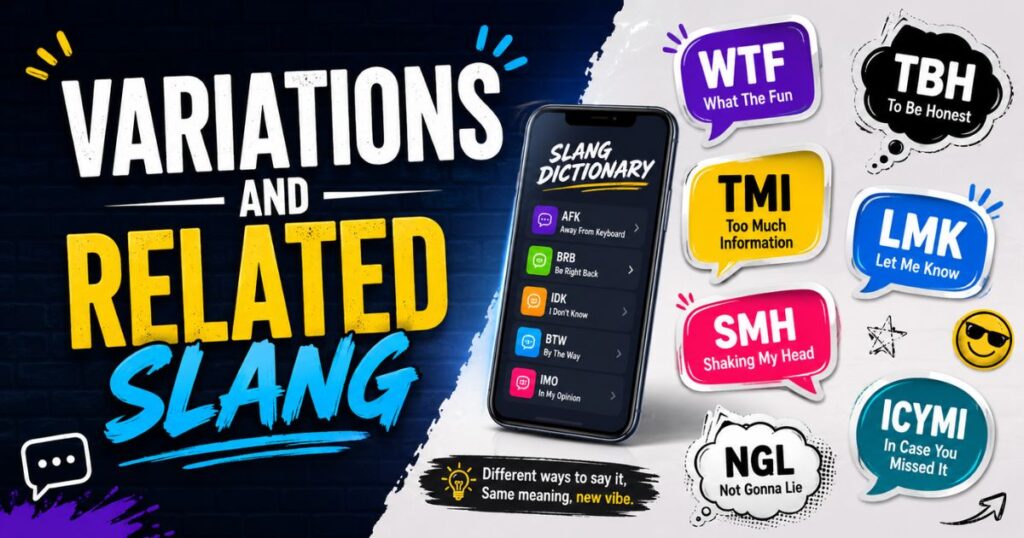
PMO has a few related phrases and shortcuts that build on the original meanings. Knowing these makes it easier to follow fast-moving conversations online.
“PMO to” is one of the most common variations. It almost always connects to the “put me on” meaning, as in “pmo to your favorite artist” or “pmo to a good recipe.” Adding “to” makes the request clearer, since it points directly to what someone wants to be introduced to.
Other related slang includes plain phrases like “put me on” and “you gotta put me on,” which mean the same thing without shortening to letters. On the frustration side, people sometimes use “irks me” or “gets on my nerves” as close alternatives to the “piss me off” meaning of PMO.
Is “PMO” Safe for Kids?
This depends on which meaning is being used. The “put me on” version is completely harmless. It simply means asking for a recommendation, and there is nothing inappropriate about it.
The “piss me off” version contains mild profanity, since the full phrase includes a swear word. Parents who prefer their kids avoid casual swearing might want to be aware of this meaning specifically.
For younger kids, it is worth explaining that PMO can mean two things, and one version uses language that is not exactly polite. Older teens are usually already familiar with both meanings from social media and their friend groups.
When to Use (and Avoid) “PMO”
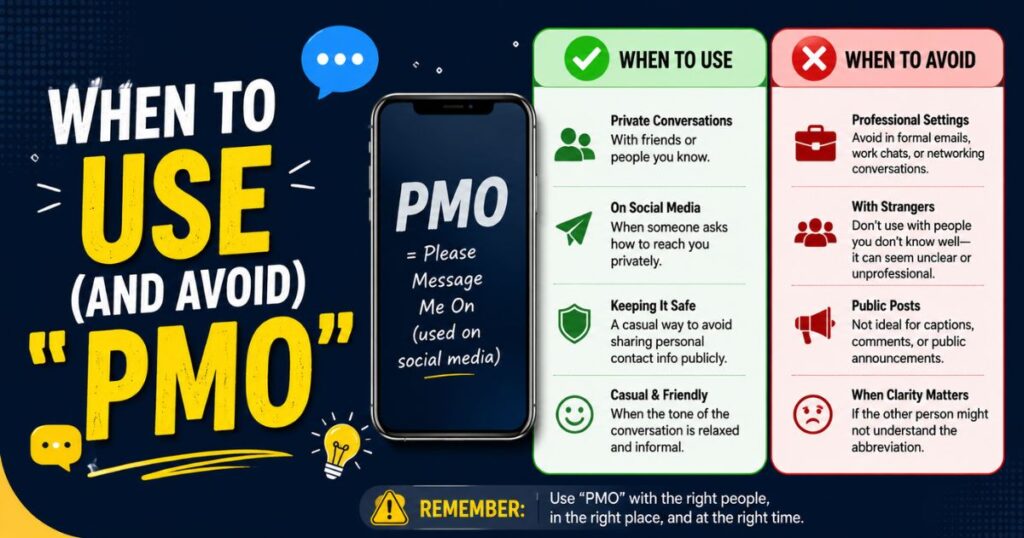
PMO works well in casual settings. It fits naturally into texts with friends, comments on social media, and relaxed group chats where slang is already common.
It does not belong in professional, academic, or formal writing. Emails to teachers, cover letters, work messages, and school assignments should stick to clear, standard English instead.
A simple guide for when to use PMO:
Good times to use it:
- Texting friends
- Social media captions and comments
- Casual group chats
- Gaming chats with people you know well
Times to avoid it:
- Emails to teachers or bosses
- School essays or reports
- Job applications
- Formal or professional conversations
Sticking to this general rule keeps communication appropriate no matter who is reading it.
Final Thoughts
PMO is a flexible slang term with two meanings that depend entirely on context. Whether someone is venting about something annoying or asking to be introduced to something new, the sentence around PMO usually makes the intended meaning clear within seconds.
Understanding both versions helps avoid confusion, especially in fast-paced texting or comment sections where slang changes quickly. Once you know the pattern, spotting the correct meaning becomes second nature.