
If you have ever received a text that simply said “idm,” you were probably left puzzled for a moment. This small abbreviation shows up constantly in casual conversations, group chats, and social media comments, yet many people still hesitate over its exact meaning.
In most everyday conversations, IDM stands for “I Don’t Mind.” It is a relaxed, low-effort way of expressing indifference or easy agreement. Someone might use it when a friend asks where to eat, what movie to watch, or what time to meet up. Instead of typing a full sentence, they simply reply with “idm,” signaling that any option works fine for them.
This abbreviation belongs to a broader family of internet shorthand designed to speed up digital conversation. Much like “idc” (I don’t care) or “idk” (I don’t know), IDM allows people to respond quickly without sounding dismissive or cold. It carries a tone of flexibility rather than apathy, which is precisely why it has become so common among younger texters and chat users.
Full Form, Stands For & Short Meaning of IDM
The most widely accepted full form of IDM in texting culture is “I Don’t Mind.” This phrase reflects a neutral, agreeable stance. When someone says they don’t mind, they are essentially handing over the decision to the other person while confirming that they have no strong preference either way.
Here is a quick breakdown of the term:
| Element | Detail |
| Abbreviation | IDM |
| Full Form | I Don’t Mind |
| Tone | Neutral, agreeable, easygoing |
| Common Usage | Texting, group chats, social media comments |
| Similar Terms | IDC (I Don’t Care), IDK (I Don’t Know) |
It is worth noting that IDM can occasionally stand for other phrases depending on the industry or platform, something explored later in this article. However, in everyday chat and texting, “I Don’t Mind” remains the dominant and most recognized meaning by a wide margin.
The short meaning boils down to one simple idea: flexibility. Whenever IDM appears in a casual message, the sender is usually saying, “I’m fine with whatever you decide.”
Origin, History & First Known Use of IDM
Like many chat abbreviations, IDM did not emerge from a single dramatic moment. Instead, it grew naturally out of the shorthand culture that developed alongside early instant messaging platforms and mobile texting in the late 1990s and early 2000s.
During this period, character limits on SMS messages pushed users toward brevity. Phrases that required typing on cramped keypads were shortened wherever possible. “I don’t mind” fit naturally into this abbreviation trend, joining a long list of compressed expressions such as “brb,” “lol,” and “ttyl.”
As texting evolved into instant messaging apps and later into social media direct messages, IDM traveled along with it. Teenagers and young adults, who were the earliest and most enthusiastic adopters of texting slang, kept the abbreviation alive and gradually normalized it across broader online communities.
There is no single credited inventor of IDM, since abbreviations like this typically arise organically from shared usage rather than formal coining. Its staying power comes from its usefulness: it captures a very common sentiment (mild agreement or indifference) in just three characters.
How People Use IDM in Daily Conversations
In daily texting, IDM usually appears as a quick response to a question involving choices. It rarely starts a conversation; instead, it functions as a reply that keeps the discussion moving without adding friction.
Typical situations where people use IDM include:
- Deciding where to eat or what to order
- Choosing a movie, show, or activity with friends
- Agreeing to a meeting time or location
- Responding to minor scheduling questions
- Signaling openness during group decision-making
A few natural examples:
- “Should we get pizza or burgers?” — “idm, you choose.”
- “Want to watch a comedy or a thriller?” — “idm either is good.”
- “Can we meet at 6 or 7?” — “idm, whatever suits you.”
Notice how IDM often pairs with a short follow-up phrase like “you choose” or “either is good.” This softens the response and makes it feel warmer rather than dismissive.
IDM meaning in phone
When people search for “IDM meaning in phone,” they are usually asking about how the term appears specifically in text messages sent through a mobile phone, rather than through an app-based chat. The meaning does not change based on the device. Whether typed through SMS, iMessage, or a standard Android messaging app, IDM still means “I Don’t Mind.”
Phone-based texting was actually where this abbreviation first took hold, thanks to limited character allowances and the effort involved in typing on small keypads. Even today, with full touchscreen keyboards, the habit persists because brevity remains valued in fast-paced conversations.
One small distinction: on phones, IDM sometimes appears without punctuation or capitalization at all, reflecting the very informal, quick nature of SMS communication compared to more structured writing.
IDM Meaning Across WhatsApp, Instagram, TikTok & Snapchat
The meaning of IDM stays consistent across nearly every major platform, though the tone and usage style can shift slightly.
| Platform | Typical Usage | Tone |
| Quick replies in personal or group chats | Casual, friendly | |
| Comments or DMs replying to polls or suggestions | Light, conversational | |
| TikTok | Comment sections reacting to creator questions | Playful, brief |
| Snapchat | Fast replies to disappearing messages | Very informal, instant |
On WhatsApp, IDM meaning stays true to “I Don’t Mind,” often used in group chats when deciding plans among friends or family.
On Instagram, especially in comments or story replies, IDM can appear when someone is agreeing with a suggestion posted by a creator or friend, such as responding to “Which outfit should I wear?”
On TikTok, comment sections frequently use IDM when creators ask viewers to pick between two options, and viewers want to show they are easygoing about the outcome.
On Snapchat, where messages disappear quickly and speed matters most, IDM works as an efficient way to respond without slowing down the exchange.
Different Meanings of IDM in Other Fields
While “I Don’t Mind” dominates casual texting, IDM carries entirely different meanings in professional and technical contexts. Recognizing these alternate meanings helps prevent confusion, especially in specialized conversations.
| Field | Meaning of IDM |
| Software | Internet Download Manager (a popular download accelerator tool) |
| Music | Intelligent Dance Music, an electronic music genre |
| Business | Identity Management (in some corporate or IT contexts) |
| Data & Analytics | Integrated Data Management |
| Finance | Sometimes used for Investment/Debt Management in niche contexts |
For example, someone discussing computer software might say, “I use IDM to download large files faster,” referring to Internet Download Manager. Meanwhile, an electronic music fan might mention “IDM” while talking about experimental, beat-driven tracks associated with the Intelligent Dance Music genre.
Also Read This: MYF Meaning in Text
Context almost always makes the intended meaning clear. In a text message between friends, IDM nearly always means “I Don’t Mind.” In a technical or professional setting, it likely refers to something entirely different.
Common Confusions, Mistakes & Wrong Interpretations
Even though IDM is fairly straightforward, a few common mix-ups occur, especially among people newer to internet slang.
Frequent points of confusion include:
- Mistaking IDM for IDK: Since both begin with “I D,” some readers confuse “I Don’t Mind” with “I Don’t Know.” The meanings differ significantly; one shows indifference, the other shows lack of information.
- Reading IDM as rude or dismissive: Without context, a short reply like “idm” can seem cold. In reality, it usually reflects genuine flexibility rather than disinterest.
- Assuming it always means indifference toward the person, not the topic: IDM refers to indifference about the choice being discussed, not about the relationship or conversation itself.
- Confusing it with technical meanings: Someone unfamiliar with slang might assume a tech-related meaning applies inside a casual chat, leading to unnecessary confusion.
To avoid these mistakes, pay attention to surrounding context, the platform being used, and the relationship between the people chatting.
Similar Terms, Alternatives & Related Slang
IDM belongs to a broader group of texting abbreviations that express agreement, indifference, or a relaxed attitude. Knowing these related terms helps build a fuller picture of casual digital communication.
Common alternatives include:
- IDC — I Don’t Care
- IDK — I Don’t Know
- NVM — Never Mind
- W/e or Whatevs — Whatever
- Ok either way — A fuller phrase carrying the same meaning as IDM
- Your call — Placing the decision back on the other person
While these terms overlap in tone, subtle differences exist. IDC can sound slightly more detached, almost bordering on disinterest, while IDM tends to feel warmer and more cooperative, since it implies genuine openness rather than a lack of concern.
Idm meaning in chart
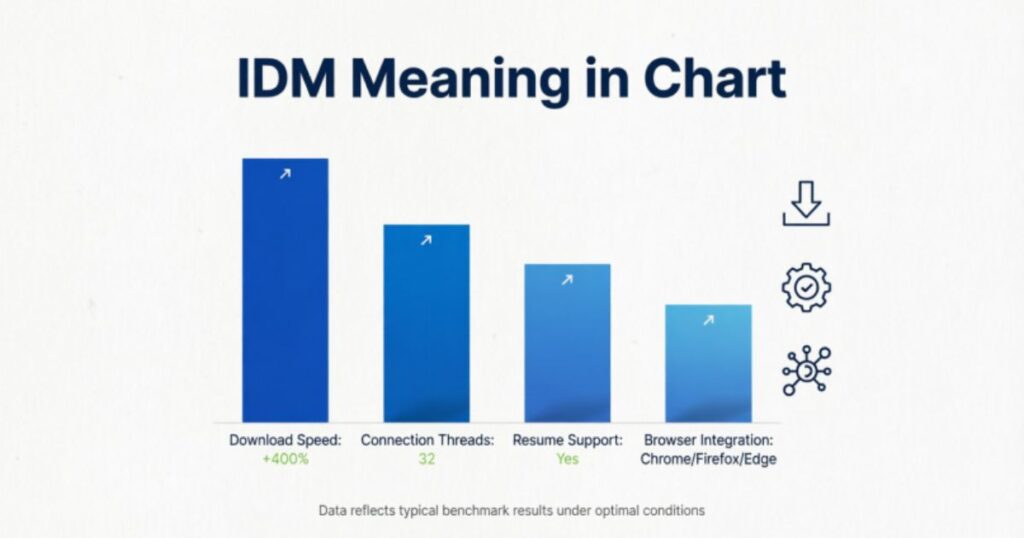
When people search “IDM meaning in chart,” they are often referring to slang reference charts, abbreviation guides, or texting glossaries that list common internet terms alongside their meanings. In such charts, IDM is almost universally listed as “I Don’t Mind,” placed alongside similar entries like IDC and IDK.
These charts are commonly used by:
- Parents trying to understand their children’s messages
- Teachers researching classroom communication trends
- New social media users learning digital slang
- Content creators building glossary-style guides
In most reputable slang charts, IDM appears with a simple definition, an example sentence, and sometimes a tone indicator showing whether the term feels formal, casual, or playful. This consistency across charts reinforces just how standardized the “I Don’t Mind” meaning has become.
Examples of IDM in Real Chat Situations
Seeing IDM used in realistic conversation snippets makes its meaning much easier to grasp.
Example 1: Deciding plans Friend: “Movie night at mine or yours?” You: “idm, yours is closer though.”
Example 2: Food choices Friend: “Sushi or tacos tonight?” You: “idm, both sound great.”
Example 3: Group chat scheduling Group member: “Can everyone do Saturday at noon?” You: “idm, works for me.”
Example 4: Social media comment Creator: “Should I post more travel content or food content?” Commenter: “idm honestly, love both!”
Example 5: Casual disagreement resolution Friend: “You always pick where we go.” You: “Not true, idm this time, you pick.”
These examples highlight how IDM smooths over small decisions, keeping conversations light and cooperative rather than tense or indecisive.
How to Reply When Someone Says IDM
When someone responds with “idm,” the conversation ball lands back in your court. Since they have expressed openness, the most natural next step is to make a decision or offer a suggestion.
Helpful ways to respond include:
- Making a choice yourself: “Okay, let’s go with tacos then.”
- Offering another option to narrow things down: “Alright, how about we flip a coin?”
- Confirming appreciation for their flexibility: “Cool, thanks for being easy about it.”
- Asking a follow-up question if you still want their input: “Any slight preference though?”
Avoiding endless back-and-forth “idm” replies from both sides keeps conversations efficient. If both people say IDM repeatedly, someone eventually needs to make the final call to move things forward.
Is IDM Still Popular? Trends & Online Usage
IDM remains a steadily used abbreviation, though it does not dominate trending slang lists the way newer terms sometimes do. Its popularity stems from practicality rather than trendiness; it solves a simple communication need that never really goes away.
Usage patterns show:
- Consistent presence in casual texting across all age groups under 40
- Frequent appearance in group chat decision-making
- Steady use in comment sections of social platforms
- Continued inclusion in slang dictionaries and abbreviation guides
Unlike short-lived internet trends that fade within months, IDM has settled into everyday digital vocabulary. Because it fills a genuinely useful purpose, quickly expressing indifference or agreement, it is unlikely to disappear from casual communication anytime soon.
Conclusion
IDM is a small abbreviation with a clear and consistently understood meaning: “I Don’t Mind.” Rooted in the shorthand culture of early texting, it has carried forward into modern platforms like WhatsApp, Instagram, TikTok, and Snapchat without losing its original sense of easygoing agreement.
While a handful of technical fields use the same letters for different concepts, everyday chat almost always points back to this simple, cooperative phrase. Understanding IDM, along with related terms like IDC and IDK, equips anyone navigating digital conversations with a clearer sense of tone, intention, and the small signals that keep online communication moving smoothly.