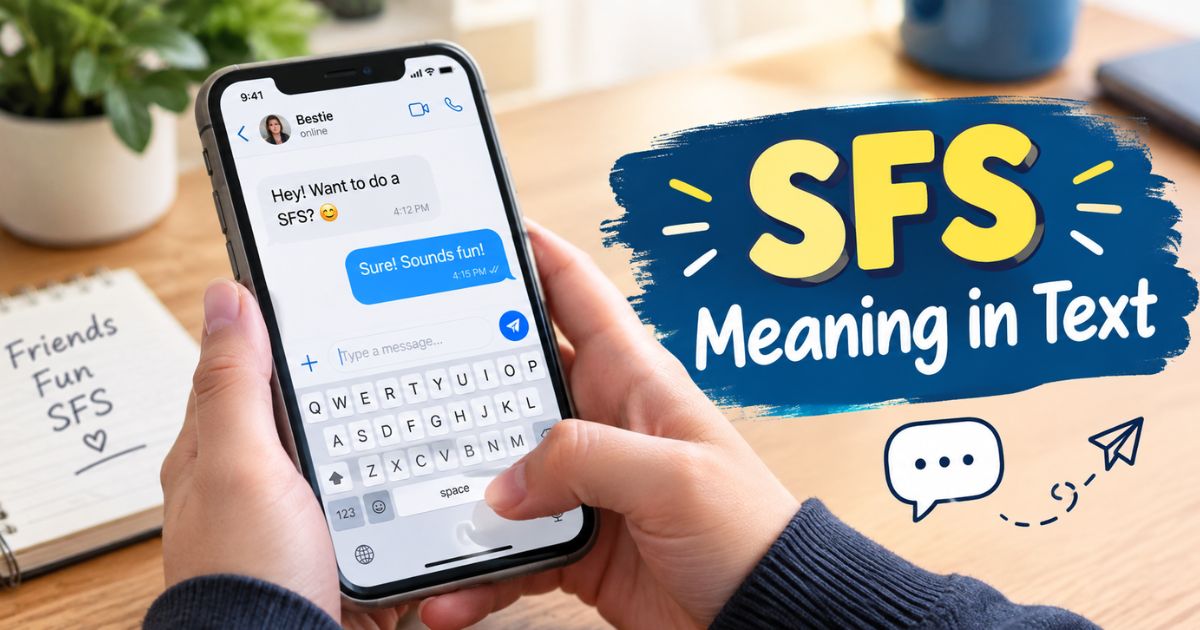

If you have ever seen the letters “SFS” pop up in a DM or a story reply, you probably paused for a second. What does it mean? Is it a code? Is someone asking you for something?
Good news. SFS is not complicated at all. It is one of those short social media terms that looks confusing at first but makes total sense once someone explains it in plain words. That is exactly what this guide will do.
By the end of this article, you will know what SFS means, where people use it, why it matters, and how to use it yourself without feeling awkward. Let’s get into it.
What Does SFS Mean in Text?
SFS stands for “Shutout For Shutout.” Sometimes people also use it to mean “Spam For Spam.” Both versions are used the same way, so do not worry too much about which one is the “correct” one.
In simple words, SFS is a trade. One person shares or promotes another person’s profile, and in return, that person does the same thing back. It is a two-way favor between social media users.
Think of it like this. If you tell your friend, “I’ll share your post if you share mine,” that is basically SFS. It is a small deal that helps both people get more attention on their profile.
People usually type it in lowercase or all caps, so you might see it as “sfs,” “SFS,” or even “Sfs.” The meaning stays the same no matter how it is written.
A Simple Example (Like You’re 5 Years Old)
Let’s make this super easy to understand.
Imagine two kids at school. One kid has a cool sticker collection. The other kid also has a cool sticker collection. They agree to show each other’s stickers to their friends. Kid A shows Kid B’s stickers to their group. Kid B shows Kid A’s stickers to their group. Now both kids have more friends looking at their stickers.
That is exactly what SFS is, but online instead of at school.
- You post something and tag your friend.
- Your friend posts something and tags you back.
- Now both of your posts get seen by more people.
No stickers involved, just usernames and follower counts. Simple as that.
Where Do People Use SFS?

SFS is not stuck to just one app. It moved around and became popular on several platforms because the idea is so simple.
Here is where you will most commonly spot it:
- Instagram – in stories, captions, and DMs
- Snapchat – in snaps and chat messages
- TikTok – in comments and video captions
- WhatsApp – in group chats and status updates
- Twitter/X – in replies and quote posts
The term started mostly on Instagram and Snapchat, but since people use similar habits across apps, it naturally spread to other platforms too.
Why Do People Use SFS?
There are a few honest reasons people use SFS, and none of them are complicated.
To grow their following Everyone wants more followers, especially when starting a new account. SFS gives a quick and free way to reach new people without spending money on ads.
To support friends Sometimes SFS has nothing to do with growth. It is simply a way to say, “I support you.” Sharing a friend’s post is a small, kind gesture.
To build community Small creators, artists, and page owners often use SFS to build a circle of similar accounts. This creates a support system where everyone helps each other.
To boost engagement When two accounts do an SFS, both posts usually get more likes, comments, and views. This can help posts perform better in the app’s algorithm.
SFS Meaning Instagram: What It Means on Instagram
On Instagram, SFS usually happens in stories. Someone posts a picture or a highlight reel and writes “SFS” with a swipe-up link or a tag to another account. The other account does the same thing back.
Instagram SFS is extremely common among:
- Meme pages
- Fan pages
- Small businesses
- Content creators
- Influencer accounts
It works because Instagram stories only last 24 hours, which makes it a low-pressure way to promote someone without cluttering your main feed.
📊 Instagram SFS Example Table
| Situation | What Happens |
| Two meme pages do SFS | Both pages post each other’s content in their story |
| Small business does SFS | Two shops promote each other to reach new customers |
| Friends do SFS | They tag each other in a story just for fun and support |
| Influencers do SFS | They mention each other to combine their audiences |
Instagram SFS is casual. Most people do not overthink it. It is just a normal part of using the app for many users.
SFS Meaning Snapchat: What It Means on Snapchat
Snapchat SFS works almost the same way, but it fits the app’s style a little differently. Since Snapchat is built around quick photos and short videos called snaps, SFS often happens through:
- Posting a snap that says “SFS” with a friend’s username
- Adding someone to your Snapchat story and asking them to do the same
- Sending a direct snap asking for SFS
Snapchat SFS is very popular among teenagers and young users because the app is heavily based on daily streaks, stories, and quick sharing.
One small difference is that Snapchat SFS sometimes leans more toward making new friends rather than pure follower growth. Since Snapchat feels more personal, SFS there can feel more like “let’s connect” rather than “let’s promote.”
SFS meaning in whatsapp
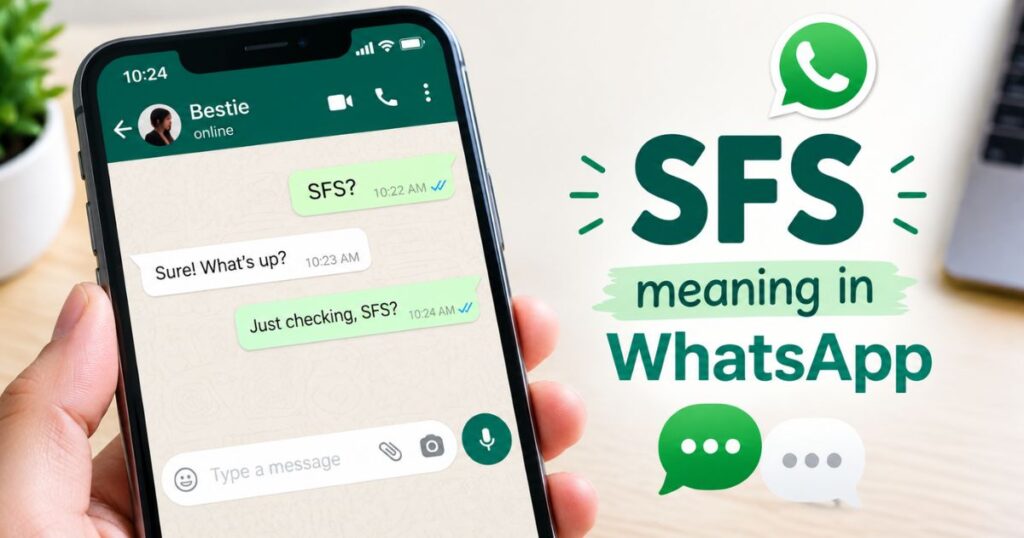
WhatsApp does not have “followers” the same way Instagram or Snapchat does, so SFS looks a little different here.
On WhatsApp, SFS often means:
- Sharing someone’s status and asking them to share yours back
- Promoting a WhatsApp group or channel in exchange for the same favor
- Forwarding a business post in a group chat in return for the same support
Since WhatsApp status works a lot like Instagram stories, many people simply copy the SFS habit into their status updates. It is still the same idea, just moved into a different app.
Is SFS Only About Followers?
No, not at all. This is one of the biggest misunderstandings about SFS.
While follower growth is the most common reason, SFS is also used for:
- Supporting a friend’s new post
- Helping someone reach more views on a video
- Promoting a small business or side project
- Sharing a fundraiser or important cause
- Helping a new creator get noticed
So SFS is really about mutual support. Followers are just one possible outcome, not the only goal.
Can SFS Have Other Meanings?
Yes. Like many short internet terms, SFS can shift meaning slightly depending on where you see it.
Here are a few other ways SFS gets used:
- Spam For Spam – commenting or liking a bunch of posts together
- Sub For Sub – mostly seen on YouTube, where subscribing counts instead of following
- Follow For Follow (similar spirit) – even though this is technically “F4F,” people sometimes mix the terms casually
If you are ever unsure which meaning someone means, look at the context of the conversation. Most of the time, it is still about promoting each other in some way.
Problems People Face With SFS
SFS sounds simple, but it does come with a few common issues.
Fake or low-quality accounts Sometimes people ask for SFS just to boost numbers, not because they actually care about your content. This can lead to followers who never engage with your posts.
Also Read This: YWW Meaning in Text
Uneven trades One person may have a much bigger account than the other. This makes the trade feel unfair since one side benefits way more.
Spam messages Some accounts send SFS requests to hundreds of people at once, which can feel annoying or pushy.
Broken promises Occasionally, someone asks for SFS, receives the shoutout, and then never gives one back.
Solutions to SFS Problems
Thankfully, these problems are easy to avoid with a bit of care.
- Only do SFS with accounts that feel genuine and active.
- Check if the other account actually posts real content, not just spam.
- Agree on clear terms first, like “I’ll post yours if you post mine within 24 hours.”
- Politely decline if someone’s request feels pushy or one-sided.
- Keep it friendly. If the other person does not follow through, simply move on.
A little bit of caution goes a long way in making SFS a positive experience instead of a frustrating one.
SFS meaning from a girl

When a girl sends SFS in a message, it almost always means the exact same thing as when anyone else sends it. It is not a secret hint or a hidden meaning. It simply means she wants to trade shoutouts, spam, or story shares with you.
However, tone can matter here. Depending on how well you know her, SFS could mean:
- A genuine request to support each other’s pages
- A friendly way to interact more with someone she follows
- A simple, casual message with zero deeper meaning behind it
If you are unsure how to take it, the safest approach is to just treat it normally. Reply kindly, do the shoutout if you want to, and keep the conversation light.
Good Messages to Send:
- “Sure! Sending it now.”
- “Of course, tagging you in my story.”
- “Yes! Let’s do it.”
- “Thanks for asking, done!”
Keeping replies short and friendly makes the whole exchange smooth for both sides.
How to Ask for SFS (Kind and Friendly Way)
Asking for SFS does not need to feel awkward. A polite and simple message works best.
Here are a few examples you can use:
- “Hey! Love your page. Want to do an SFS?”
- “Your content is great! Would you be up for a shoutout swap?”
- “I’m growing my account and would love to support each other. SFS?”
A few quick tips:
- Be polite, not pushy.
- Only ask people whose content you genuinely like.
- Keep your message short and clear.
- Do not send the same message to too many people at once, since that can feel like spam.
A friendly tone always gets a better response than a demanding one.
When Should You Say No to SFS?
SFS is optional, and it is completely fine to say no. You should consider declining when:
- The account looks fake or inactive.
- The content does not match your page’s style or values.
- You feel pressured rather than asked.
- The person has a history of not returning shoutouts.
- You simply do not want to, and that is a good enough reason on its own.
A polite decline can sound like, “Thanks for asking, but I’ll pass this time.” Short, kind, and clear.
Is SFS Allowed by Instagram or Snapchat?
Yes, SFS itself is allowed. It is just two people sharing content, which both platforms fully support.
However, there are limits to keep in mind:
- Spamming too many people with SFS requests can get flagged as spam behavior.
- Buying fake followers through SFS-style trades goes against platform rules.
- Excessive tagging or mass messaging can trigger temporary restrictions.
As long as SFS stays natural and is not abused, it fits comfortably within normal platform use.
SFS vs Other Social Media Slangs (Comparison Table)
Social media is full of short terms like SFS. Here is how it compares to a few similar ones.
| Term | Full Meaning | Common Platform | Main Purpose |
| SFS | Shoutout For Shoutout / Spam For Spam | Instagram, Snapchat | Mutual promotion |
| F4F | Follow For Follow | Instagram, Twitter/X | Growing followers |
| S4S | Sub For Sub (similar to SFS) | YouTube | Growing subscribers |
| L4L | Like For Like | Instagram, TikTok | Boosting engagement |
| C4C | Comment For Comment | Instagram, TikTok | Boosting comments |
While these terms look different, they all share the same basic idea: help each other grow by trading a small favor.
Final Thoughts
SFS is one of those small internet terms that feels confusing until someone breaks it down simply. At its heart, it is just people helping people. One person shares, the other shares back, and both sides get a little extra attention on their page.
Whether you see it on Instagram, Snapchat, WhatsApp, or anywhere else, the meaning stays the same. It is about support, connection, and a bit of teamwork in the online world. Now that you know what SFS really means, you can use it confidently, ask for it politely, or simply say no when it does not feel right for you.