

You are scrolling through a group chat. Someone types, “I’m tired asf.” You know it is about being tired. But what does the “asf” part actually do?
The short answer is simple. In text, ASF stands for “as f***.” It is a slang intensifier. It makes the word before it stronger. “Tired” becomes “very tired.” “Happy” becomes “extremely happy.”
This guide breaks it all down. You will see what ASF means, where it came from, how Gen Z uses it, and what it means outside of texting. You will also learn how tone can change everything.
So, What Does ASF Actually Mean in Text?
ASF means “as f*.”** People use it at the end of a phrase to add emphasis. It works like the word “very,” but with more attitude.
Here is how it works in a sentence:
- “That movie was funny asf.”
- “I’m broke asf this month.”
- “She looks good asf in that jacket.”
In each case, ASF pushes the feeling to the max. It can describe good things or bad things. It is neutral on its own. The word before it sets the mood.
ASF is a casual term. You will see it in texts, DMs, comments, captions, and memes. It is written in lowercase most of the time. Typing “asf” feels relaxed. Typing “ASF” in capitals can feel louder.
Many people also write it as “af.” The two mean the same thing. “Asf” just spells out the extra letter.
| Form | Full Phrase | Meaning | Common Use |
| asf | as f*** | Very, extremely | Texts, DMs, captions |
| af | as f*** | Very, extremely | Texts, social media |
| ASF (caps) | as f*** | Very, extremely, with extra volume | Loud or dramatic posts |
Quick tip: ASF always follows an adjective or a feeling. If you see it after a noun, it may mean something else. We will get to that below.
Real-Life Text Examples That Make It Click
Examples help more than definitions. Here are some realistic chats.
Example 1: Feeling tired
Maya: Are you coming to the gym? Jordan: Nah, I’m exhausted asf. Long shift.
Here, ASF means “extremely exhausted.”
Example 2: Giving a compliment
Sam: Just got my hair done. What do you think? Riley: It looks fresh asf. Love it.
Here, ASF adds a strong, friendly boost.
Example 3: Complaining
Chris: How was the exam? Priya: Hard asf. I think I failed.
Here, ASF shows how tough the test felt.
Example 4: Being funny
Leo: Did you see his outfit? Zara: Yes. Bold asf. I respect it.
Here, ASF makes the comment playful.
Notice something? None of these examples use ASF alone. It always sits next to a describing word. That is the pattern to remember.
Where Did ASF Come From? The Origin Story
ASF did not appear out of nowhere. It comes from the older phrase “as f***.” People have used that phrase in speech for a long time. It works like other comparisons, such as “as cold as ice.”
The difference is that the second half got dropped. People just said “cold as f***” and everyone understood.
Online spaces then shortened it. Social media loves short words. Typing “as f***” takes more effort than typing “af” or “asf.” Twitter, Tumblr, and later TikTok helped spread the short form in the 2010s.
Much of this slang grew out of online communities that shaped internet language. Over time, it moved into mainstream chat. By the early 2020s, it was everywhere. In 2026, it is a normal part of casual texting.
Here is a simple timeline:
| Stage | What Happened |
| Spoken era | “As f***” used in everyday speech |
| Early social media | Shortened to “af” in tweets and posts |
| Mid 2010s | “asf” spread as a spelled-out variation |
| 2020s | Common in texts, TikTok captions, and memes |
| 2026 | Standard casual slang for young adults and teens |
ASF in the Gen Z Vocabulary Why It Hits Different
Gen Z loves short, punchy language. ASF fits that style perfectly. It is fast to type. It carries strong emotion. It also sounds relaxed.
That is why it “hits differently.” A plain sentence like “I’m hungry” feels flat. Add ASF and the sentence has a voice. It sounds real and personal.
Here are a few reasons Gen Z leans on it:
- It saves time. Three letters do the work of a full phrase.
- It adds emotion. Text lacks tone of voice. ASF fills that gap.
- It builds belonging. Using shared slang signals that you are part of the group.
- It is flexible. It works for jokes, praise, and complaints.
You will often see ASF paired with other Gen Z terms. For example, “That party was lit asf” or “This song is a vibe asf.” Slang tends to stack together.
One more point. Slang changes fast. Words can feel fresh one year and dated the next. ASF has stayed strong for years, which makes it more durable than most. Still, use it in the right places. Friends and peers will get it. Older relatives may not.
ASF meaning in business

Slang like “as f***” does not belong in most business writing. Think about who reads your message. A client or manager expects clear and polite language.
Still, ASF appears in some business settings. Here is where you might see it:
- Team chats. Casual Slack or Discord channels sometimes use it between close coworkers.
- Social media marketing. Brands that target young audiences may write “cozy asf” or “cute asf” in posts.
- Creator businesses. Influencers and small shops often talk in a very casual voice.
Even so, brands need to be careful. A slang term can feel fun to one audience and rude to another. A company that sells to families or professionals would likely skip it.
Also, ASF can be an internal acronym for something else in a company. Businesses create their own short forms all the time. If you see “ASF” in a formal email, check the context. It may not be slang at all. When in doubt, ask.
A good rule for the workplace: if you would not say it in a meeting, do not type it in a work email.
The Other Side: ASF in Professional and Technical Fields
Here is the twist. ASF has several serious meanings outside of texting. The right meaning depends on the setting.
| Field | ASF Stands For | What It Refers To |
| Technology | Apache Software Foundation | A nonprofit that supports open-source software projects |
| Veterinary and farming | African swine fever | A deadly viral disease that affects pigs |
| Casual texting | As f*** | Slang used for emphasis |
In the tech world, the Apache Software Foundation is a big name. It supports many open-source projects that developers use every day. A developer who says “ASF” is almost certainly talking about this group.
Other fields may use ASF for their own terms too. Many organizations share the same three letters. This is why context matters so much.
So how do you tell them apart? Look at where you are reading it:
- In a group chat with friends? It is slang.
- In a developer forum or software document? It is likely the Apache Software Foundation.
- In an agriculture or news report about livestock? It is African swine fever.
A Quick Comparison: ASF vs. Similar Slang Terms
ASF is not the only intensifier out there. Many slang words do a similar job. Here is how they compare.
| Term | Meaning | Tone | Example |
| asf | Very, extremely | Casual, bold | “I’m happy asf.” |
| af | Very, extremely | Casual, slightly shorter | “I’m happy af.” |
| hella | A lot of, very | Friendly, relaxed | “That was hella fun.” |
| mad | Very, a lot | Casual, regional | “It’s cold outside.” |
| lowkey | Slightly, quietly | Soft, subtle | “I’m lowkey tired.” |
| highkey | Very, openly | Strong, honest | “I’m highkey excited.” |
| fr | For real | Honest, direct | “That was great fr.” |
| ngl | Not gonna lie | Honest, casual | “Ngl, I loved it.” |
The main difference is strength and style. ASF and AF are the boldest. Lowkey is softer. Highkey is open and enthusiastic. Fr and ngl are about honesty, not intensity.
Try mixing them if you like. “Ngl, I’m tired asf” sounds natural to most young speakers.
Asf meaning in Gen Z
For Gen Z, ASF is more than a shortcut. It is a mood marker.
Young people use it to show strong feelings in a light way. It lets them say “I really mean this” without sounding too serious. It also helps them sound honest and unfiltered.
Here is a quick guide to how Gen Z tends to use it:
- Praise: “Your room is aesthetic asf.”
- Humor: “This meme is funny asf.”
- Stress: “I’m stressed about finals.”
- Hype: “This concert is going to be insane asf.”
Gen Z also plays with the spelling. You may see “asffff” for extra drama. Some people add emojis to change the mood. A laughing face can make it silly. A crying face can make it dramatic.
Age matters, too. Teens and young adults use it the most. Older adults may still find it strange or rude. That gap is normal. Every generation has slang that others do not fully share.
The Unique Layer People Miss: Tone and Sarcasm
Here is something most guides skip. ASF does not carry one fixed tone. It takes the tone of the sentence.
Look at these two lines:
- “I’m proud of you asf.” (warm and sincere)
- “Oh great, another Monday. I’m thrilled.” (sarcastic)
Both use ASF the same way. But the feeling is very different. The second one means the opposite of what it says.
How can you spot sarcasm? Watch for these clues:
- The words do not match the situation.
- There is an eye-roll or upside-down face emoji.
- The person used a dry or exaggerated style before.
- The message follows something annoying.
Text has no voice or face. So readers must guess the tone. That is why friends sometimes misread each other. A joke with ASF can sound harsh if the reader is having a bad day.
A simple fix: add a light emoji or a short clarifier. “I’m mad at you asf, just kidding” avoids confusion.
ASF meaning in pigs
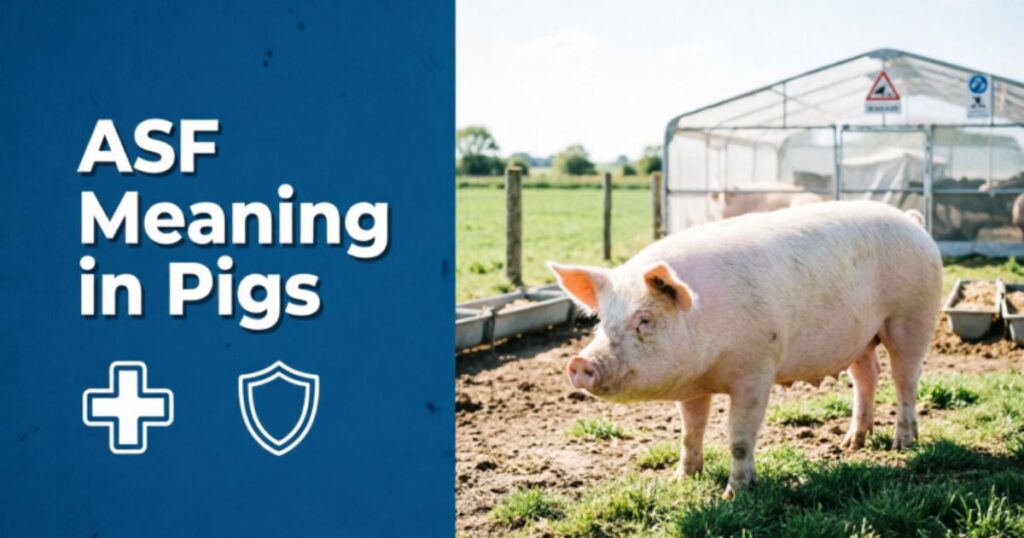
Now for the strangest use of ASF. In farming and veterinary science, ASF means African swine fever.
This is a serious viral disease. It affects domestic pigs and wild boars. It spreads through contact with infected animals, contaminated feed, and even farm equipment or clothing.
Key facts to know:
- It does not infect humans.
- It is often deadly for pigs.
- There is no widely available cure. Control depends on strict biosecurity and quick response.
- Outbreaks can hurt farmers and trade in pork products.
Because of this, ASF is a big topic in agriculture news. Governments and farm groups watch it closely. If you read a headline about ASF and pigs, it has nothing to do with slang.
This is a great example of why context is king. Same three letters. A totally different world.
Common Misunderstandings About ASF
Many people get ASF wrong. Here are the most common mistakes.
Myth 1: ASF always means something rude. It comes from a strong phrase, but most people use it lightly. It is rarely meant as an insult.
Myth 2: ASF is only negative. Not true. People use it for praise and joy all the time. “Proud asf” and “grateful asf” are common.
Also Read This: LCR Meaning in Text
Myth 3: ASF and AF are different. They mean the same thing. “asf” and “af” are just two spellings.
Myth 4: ASF has only one meaning. It has several. Slang, software, and swine fever all use the same letters.
Myth 5: It is fine in any setting. It is not. Casual slang can look unprofessional in the wrong place.
Here is a quick reference:
| Belief | Reality |
| ASF is always an insult | It is usually used for emphasis |
| ASF is only negative | It works for positive and negative feelings |
| ASF and AF are different | They mean the same thing |
| ASF has one meaning | It has several, depending on context |
| ASF is fine everywhere | Best kept for casual chats |
Why Knowing This Actually Matters in 2026
Language moves fast. Being able to read it well helps you in daily life.
Imagine you are a parent reading your teen’s texts. Knowing ASF helps you understand the tone. You will not assume they are angry when they are just excited.
Imagine you are a manager. You see “ASF” in a message. Is it slang or a project code? A quick check saves a misunderstanding.
Imagine you are a brand writer. You want to sound young and fresh. Knowing when ASF fits, and when it does not, protects your reputation.
It also helps with safety and news. If you read about ASF in farming, you know it is about a pig disease, not a trend.
Here is what this knowledge gives you:
- Better understanding of online conversations
- Fewer awkward mistakes at work
- Stronger connection with younger people
- Sharper reading of news and tech content
Language skills are life skills. A few extra minutes learning slang can prevent a lot of confusion.
Examples of Asf Used Across Different Situations
Here are more examples for real-world use. Each one shows a different mood.
Friendly praise
- “You did amazing today. Proud of you asf.”
Casual complaint
- “This traffic is annoying asf.”
Excitement
- “I got the job! Happy asf right now.”
Playful teasing
- “You’re late again. Classic asf.”
Honest feelings
- “I miss you asf. Come home soon.”
Sarcasm
- “Another meeting at 8 a.m. Fun asf.”
Not slang at all
- “The Apache Software Foundation released a new update.” (Often shortened to ASF in tech circles.)
- “Officials are working to stop African swine fever.” (Also shortened to ASF in farm news.)
Here is a fast way to choose the right meaning:
| Situation | Likely Meaning |
| Group chat, DM, or comment | As f*** (slang) |
| Developer or open-source page | Apache Software Foundation |
| Farm, livestock, or veterinary news | African swine fever |
| Unclear formal message | Ask the sender |
Key Insights
Here is everything you need to remember in one place.
- ASF means “as f***” in text. It boosts the word before it.
- It is a casual intensifier, similar to “very” or “extremely.”
- ASF and AF mean the same thing.
- It grew out of spoken language and spread through social media.
- Gen Z uses it for praise, humor, stress, and hype.
- It suits casual chats and not most formal writing.
- Tone matters. ASF can be sincere or sarcastic.
- Outside of slang, ASF can mean the Apache Software Foundation.
- In farming, ASF means African swine fever.
- Context always decides the right meaning.
Final Thoughts
ASF is a small word with a big job. In texting, it means “as f***,” and it adds strong emphasis to almost any feeling. It is quick, casual, and full of personality. That is why it has lasted so long in online talk.
But the story does not stop there. The same three letters can point to a software group or a pig disease. So always check the setting before you decide what it means. When you read the room, you read the word.


One thought on “ASF Meaning in Text: What It Really Means in 2026, Decoded”