

If you have seen the letters “DW” pop up in a text and wondered what it means, you are definitely not alone. It is one of those small abbreviations that shows up everywhere, from texts and WhatsApp chats to TikTok comments and dating app conversations, yet many people still pause for a second when they first come across it.
The good news is that DW has a simple, friendly meaning behind it, and once you know it, you will start noticing it everywhere. This guide walks you through exactly what DW means, where it came from, how people use it in different situations, and how you can reply to it naturally.
Texting is full of short codes that save time. One of the most common ones you will see today is DW. If you have ever received a message with DW in it and felt confused, you are not alone. This guide breaks down everything you need to know about DW, from its meaning to its history, its use across platforms, and how to reply when someone sends it to you.
What Does DW Mean in Text?
DW is a short way of saying “don’t worry.” People use it to calm someone down, brush off a small mistake, or let a friend know that everything is fine. It is casual, friendly, and quick to type.
You will usually see DW at the start or end of a sentence. For example, someone might text “DW, I got it covered” or “It’s fine, DW about it.” Both versions carry the same relaxed tone.
DW is part of a large family of internet shorthand that includes terms like NP (no problem) and IDC (I don’t care). These abbreviations exist because typing full sentences on a phone takes time, and casual chats do not need formal grammar.
The meaning stays mostly the same no matter where you see it. Whether it is a text message, a comment on social media, or a quick reply in a group chat, DW almost always means “don’t worry” or “it’s not a big deal.”
DW Meaning in Text and Chat
In everyday chat, DW works as a small comfort word. It softens a message and shows the other person that there is nothing to stress about. People use it in personal chats, group conversations, and even customer support style messages between friends.
Here are a few common ways DW shows up in chat:
- “DW, I’ll handle it.”
- “You’re late? DW, we haven’t started yet.”
- “DW about the typo, I understood you.”
The tone of DW is light and reassuring. It is rarely used in a sarcastic or negative way, which makes it one of the friendlier abbreviations in modern texting.
Some people also use DW as a quick way to end a topic before it turns into a longer discussion. If someone apologizes for something small, replying with just “DW” often closes the conversation politely without needing more words.
DW Full Form and Abbreviation
The full form of DW is simple: Don’t Worry. It is a two-word phrase shortened into two letters, which is a common pattern in text slang.
| Abbreviation | Full Form | Common Meaning |
| DW | Don’t Worry | Reassurance, no big deal |
| NP | No Problem | Acknowledging thanks |
| NBD | No Big Deal | Downplaying an issue |
| IDC | I Don’t Care | Indifference |
Unlike some abbreviations that have multiple unrelated meanings, DW is fairly consistent. It almost always ties back to comfort or reassurance, no matter the context in which it appears.
Occasionally, in specific niches such as gaming or forums, DW can stand for something else entirely, like a person’s username or a nickname. But in general chat and messaging, “don’t worry” is by far the most common meaning.
Background and History of DW
Text abbreviations like DW grew out of the early days of mobile texting, when phones charged per message or limited characters per text. People needed to say more with less, so they started shortening common phrases.
DW became popular alongside other classics like LOL, BRB, and TTYL. As texting moved from basic phones to smartphones, these shortcuts did not disappear. Instead, they carried over into apps like WhatsApp, Instagram, and Snapchat.
Younger generations picked up these abbreviations from older texting culture and kept using them, even though character limits are no longer a real concern. The habit stuck because short texts still feel faster and more casual than full sentences.
Today, DW is used across almost every age group that texts regularly. It has become part of everyday digital language rather than a passing trend.
DW meaning in whatsapp
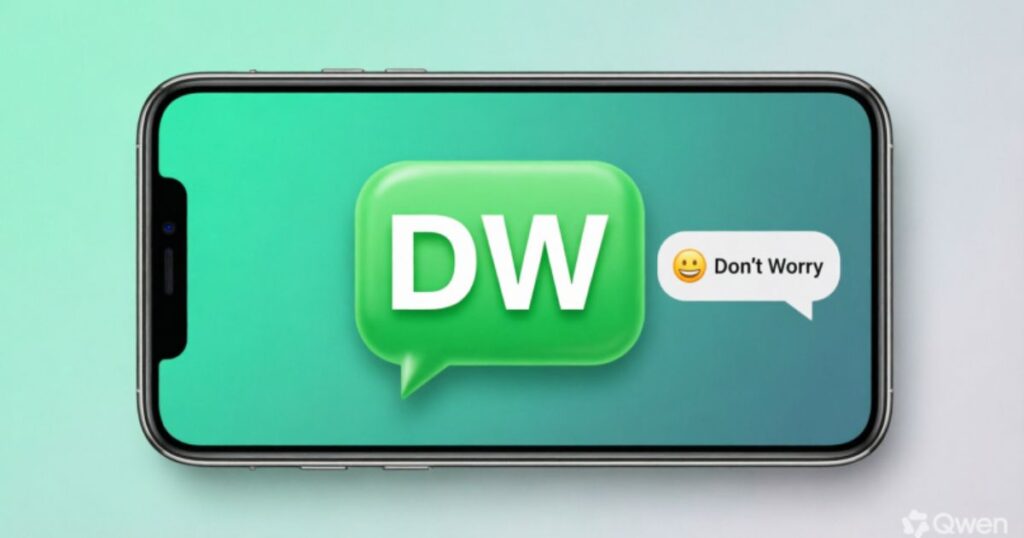
On WhatsApp, DW keeps the same meaning as in regular texting: “don’t worry.” Since WhatsApp is often used for both casual chats and quick work updates, DW shows up in a wide range of conversations.
For example, in a family group chat, someone might write “DW, I’ll pick up the groceries.” In a friend group, it could appear as “DW, we can reschedule the plan.” The tone remains warm and easygoing.
WhatsApp users often pair DW with emojis to add more warmth, such as a smiley face or a thumbs up. This combination makes the message feel even more relaxed and friendly.
Because WhatsApp supports voice notes and quick replies, some people also say “DW” out loud in voice messages, treating it almost like a spoken phrase rather than just written slang.
How Is DW Used in Different Situations?
DW fits into many everyday situations, but the tone can shift slightly depending on the context. Below are a few common scenarios.
Between friends:
- “DW, I’m not mad about it.”
- “DW, we’ll figure something out.”
In group chats:
- “DW guys, I already booked the tickets.”
- “DW, I’ll explain the plan again.”
In light work chats:
- “DW, I’ll send the file by tonight.”
- “DW about the delay, it happens.”
In more serious situations, such as formal emails or important business discussions, DW is rarely used because it can feel too casual for the tone required.
Common Misconceptions About DW
Some people assume DW always means the same thing everywhere, but a few misunderstandings are worth clearing up.
One common misconception is that DW is rude or dismissive. In most cases, it is the opposite. It is meant to comfort the other person, not to shut down the conversation in a cold way.
Another misconception is that DW is only used by teenagers. In reality, people of many age groups use it, especially in casual digital communication like messaging apps and social media comments.
Some also think DW has a hidden negative meaning, but in almost every everyday context, it simply means “don’t worry” and nothing more.
Similar Terms and Alternatives
If you want to express the same idea as DW but in different words, there are several alternatives you can use depending on the tone you want.
| Alternative | Meaning | Tone |
| NP | No problem | Casual, quick |
| It’s all good | Everything is fine | Friendly |
| No worries | Similar to DW | Relaxed |
| All good | Nothing to worry about | Simple |
| Chill | Relax, it’s fine | Very casual |
These alternatives can be swapped in depending on how formal or casual the conversation feels. “No worries” is probably the closest match to DW in both meaning and tone.
How to Respond to DW
Replying to DW is simple since it usually ends a small concern rather than starting a big discussion. A short, friendly reply works best.
Some good responses include:
- “Thanks, appreciate it.”
- “Okay, cool.”
- “Got it, thanks.”
- A simple thumbs up emoji.
There is usually no need for a long reply. Since DW is meant to close a minor issue, matching that same short and relaxed tone keeps the conversation natural.
If the other person seems genuinely reassuring you about something bigger, you can add a small thank you to show you noticed their effort, like “Thanks for saying that, means a lot.”
Regional and Cultural Differences
DW is widely understood in English speaking countries such as the United States, the United Kingdom, Australia, and Canada. It fits naturally into casual texting culture in all of these regions.
In some countries where English is a second language, DW may be less common in daily texting but still understood by younger, internet-savvy users who are active on global social media platforms.
Also Read This: ICL Meaning Explained
There are no major negative or offensive meanings tied to DW in different regions, which makes it a safe abbreviation to use internationally in casual chats.
Cultural texting habits do vary though. In some cultures, people prefer full sentences even in casual chats, so DW might feel too informal in certain settings, especially with older relatives or in more traditional communication styles.
DW Compared With Similar Abbreviations
DW is often grouped with other reassurance-based abbreviations. Comparing them side by side helps highlight small differences in tone.
| Abbreviation | Meaning | Best Used When |
| DW | Don’t worry | Comforting someone |
| NP | No problem | Responding to thanks |
| NBD | No big deal | Downplaying importance |
| IKR | I know, right | Agreeing strongly |
While DW and NP might seem similar, DW is more about calming a concern, while NP is more about accepting thanks or a small favor without making it a big deal.
DW in Online Communities and Dating Apps
On forums, gaming chats, and online communities, DW keeps its usual meaning of “don’t worry,” often used to reassure someone during a group activity or conversation.
On dating apps, DW is commonly used to ease tension or awkwardness. For example, if someone apologizes for a late reply, the other person might say “DW, I was busy too.” This keeps the conversation light and comfortable.
Dating app users also use DW to downplay small mismatches in expectations, such as “DW if you’re not into hiking, we can do something else.” It helps keep early conversations relaxed and low pressure.
In gaming communities, teammates often use DW to reassure each other after a mistake during a match, such as “DW, we can still win this round.”
Dw meaning in tiktok
On TikTok, DW appears frequently in comments and captions. It usually means “don’t worry,” matching its meaning everywhere else.
You might see comments like “DW, everyone messes up sometimes” under a video where the creator made a small mistake. It is a quick way for viewers to show support in a friendly, low-effort way.
Because TikTok comments are short and fast-paced, abbreviations like DW fit perfectly into that style of communication. Creators sometimes also reply to comments using DW to reassure their audience about small issues, like video quality or missed details.
The meaning does not change based on trends or viral content. Even as new slang appears on TikTok regularly, DW has remained stable in meaning for years.
Does DW Have Any Hidden or Offensive Meaning?
In casual texting and chat, DW does not carry any offensive or hidden meaning. It is a friendly abbreviation used to comfort or reassure someone.
There are rare cases in specialized contexts, such as certain online communities or niche slang, where DW might refer to something unrelated, like an initialism for a name or an unrelated internal term used in a small group. These cases are uncommon and usually clear from context.
For the vast majority of everyday texting, DW is completely safe to use and does not carry any negative or hidden meaning that people need to worry about.
Is DW Appropriate for Professional Communication?
DW is generally too casual for formal professional communication, such as emails to clients, official reports, or communication with senior management. In these settings, it is better to use full sentences.
However, in more relaxed workplace chats, such as messages between coworkers on tools like Slack or Microsoft Teams, DW can be acceptable depending on the company culture. Some workplaces are informal enough that short abbreviations like DW fit naturally.
A safer approach in professional settings is to use slightly more formal alternatives such as “no worries” or “that’s completely fine” instead of DW, especially when communicating with people outside your immediate team.
If you are unsure about the tone of your workplace, it is best to observe how coworkers communicate before using abbreviations like DW in your own messages.
Final Thoughts
DW is a small abbreviation with a simple and comforting meaning: don’t worry. It shows up across texting apps, social media platforms, and casual chats because it captures a friendly tone in just two letters. Understanding DW helps you read modern conversations more clearly and respond in a way that matches the relaxed style of digital communication.
While DW works well in casual settings, it is best to judge the situation before using it, especially in professional or formal conversations. Knowing when to use full sentences instead of shorthand will help you communicate clearly in every type of conversation, whether it is with friends, coworkers, or new connections online.
One thought on “DW Meaning in Text, Explained: What It Really Means (2026) ”