

You get a text that says “DWU.” Nothing else. It looks short, but it leaves you guessing. Is it a code, a typo, or new slang from TikTok? Many people search for the DWU meaning in text because they want a fast, clear answer without digging through long pages.
Here is the good news. The meaning is simple once you know it. This guide explains what DWU stands for, where it came from, and how people use it in real chats. You will also learn how to reply, and when it is better to skip the slang.
Quick Answer Box
| Question | Short Answer |
| What does DWU mean in text? | Don’t Wait Up |
| What does it tell the reader? | Do not stay awake or hold off for me. |
| Is it formal or casual? | Very casual. Use it with friends, family, and partners. |
| How common is it? | Fairly rare today. It is older texting slang. |
| Best reply | “Okay, stay safe!” or “Got it, text me when you’re home.” |
In one line: DWU is short for “don’t wait up.” A person sends it to say they will be late, so you should not stay up or delay your plans for them.
What Does DWU Mean In Text?
DWU stands for “don’t wait up.” It is an internet acronym used in text messages, chats, and social media.
The phrase “don’t wait up” is much older than texting. People have said it for over a century. It usually means, “Do not stay awake until I get home.”
In text form, it became DWU. Now the whole message fits in three letters. That is why it spread among people who typed fast and wanted short messages.
Here is how it sounds in plain language:
- “I’ll be home late. Go to sleep.”
- “Don’t hold dinner for me.”
- “Don’t stress about me tonight.”
Each of these ideas sits inside those three letters.
Origin And Evolution Of DWU
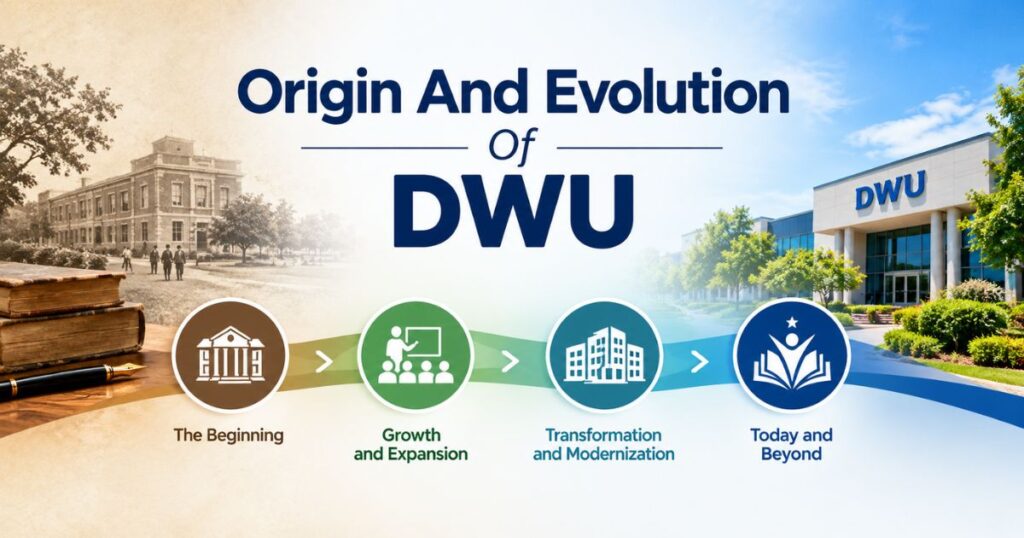
The full phrase has a long history. Old books and newspapers used “don’t wait up” long before phones existed. Back then, it was a simple line a person said at the door before leaving for the evening.
The short form DWU showed up in the 2000s. That was the age of flip phones, text limits, and shortcuts like “l8r” and “bbl.” Every letter costs time and effort. So people cut long phrases down.
Dictionary.com notes that DWU appeared as a “don’t wait up” acronym in an Urban Dictionary entry in 2007. Early posts on social platforms used it in the same way. Someone was out, and they told others not to wait.
Over time, the meaning stayed the same. What changed was how often people used it. Phone keyboards got better, autocorrect improved, and texting limits vanished. Many people started typing the whole phrase again.
Today DWU still exists. It just feels a bit retro, like a small piece of early texting culture.
Psychological And Emotional Meaning Of DWU
DWU is more than a schedule update. It carries a feeling.
When someone sends it, they often want to ease the other person’s worry. They are saying, “You do not need to carry this for me.” It is a small act of care.
It can also show independence. The sender is telling you they are fine and in control. That can feel reassuring, or it can feel a little distant, depending on the relationship.
Here are the common emotions behind it:
- Consideration: “I do not want you to lose sleep.”
- Reassurance: “I’m okay, so relax.”
- Excitement: “I’m having fun and might stay out.”
- Ease: “No pressure, do your own thing.”
The tone changes with the words around it. A smiley face makes it warm. A flat “dwu” with no other words may feel cold or rushed.
Communication Function Of DWU
Every slang term does a job. DWU does three jobs at once.
First, it sets an expectation. The reader learns that the sender may be late or may not return tonight.
Second, it frees the reader. They no longer need to wait, check the clock, or keep the porch light on.
Third, it saves time. Three letters replace a full sentence. That helps when someone is on the move, in a loud place, or short on battery.
Think of DWU as a small green light. It says, “Go ahead with your night.”
It is a one-way message. The sender does not expect a long answer. A short “ok” or “have fun” is enough.
Cultural And Generational Context Of DWU
DWU belongs mostly to the early texting generation. Many people who grew up in the 2000s used shortcuts like this all the time. They learned them from flip phones, chat rooms, and early social sites.
Younger users often write in a different style now. They lean on emojis, voice notes, and newer slang. Many teens type “don’t wait up” in full, or just say “I’ll be late.”
Older adults may not know DWU at all. They may read it as a typo or a random set of letters. Parents, in particular, may say the full phrase out loud but never see it in short form.
So the use of DWU often depends on age and habit:
| Group | How they usually handle it |
| Early texters (millennials) | May still use DWU with friends |
| Younger users | Prefer full words, emojis, or voice notes |
| Older adults | Usually say the full phrase, may not know the short form |
The idea behind it is universal, though. Almost every culture has a way to say, “Do not wait for me.”
Why DWU Became Popular
DWU spread for simple reasons.
It solved a real need. People often go out, stay late, or lose track of time. They needed a fast way to tell loved ones not to wait.
It was easy to type. Three letters are quicker than three words. Early phones made typing slow, so short forms won.
It fit social life. Nights out, parties, late work shifts, and long drives all called for this message.
It sounded friendly. Compared with a blunt “I’ll be late,” the phrase “don’t wait up” feels kind. It shows care for the other person.
It never became as famous as LOL or BRB. Still, it earned a steady place in texting shorthand.
Semantic Core Meaning Of DWU
Let’s look at the core idea. The phrase has three words, and each has a role.
- Don’t: a soft command that says “no need.”
- Wait: to hold still or pause for someone.
- Up: in this phrase, it means staying awake, out of bed.
Put together, “wait up” means “stay awake for someone.” Adding “don’t” flips it into “no need to stay awake for me.”
The core meaning is release from waiting. The sender lets the other person off the hook.
That is why the phrase can stretch beyond sleep. People also use it to mean “do not hold dinner,” “do not save me a seat,” or “do not plan around me.”
Most Common DWU Meaning In Text (Deep Dive)
The most common DWU meaning in text is “don’t wait up.” It works on three levels at once.
| Level | What it means | Example thought |
| Literal | Do not stay awake for me | “Go to bed.” |
| Practical | Carry on without me | “Eat first. I’ll join later.” |
| Emotional | Do not worry about me | “I’m fine, promise.” |
Most people use it in one main situation. They are out, the night is running long, and someone is at home who might wait.
Common scenarios include:
- Going to a party, concert, or dinner
- Working a late shift
- Traveling and arriving at night
- Staying at a friend’s place
- Running errands that take longer than planned
Some websites list other meanings, such as “do what you understand” or “did you understand.” These claims are weak and hard to trace to real usage. In everyday texting, the safe and trusted answer is “don’t wait up.”
Meaning Based On Context
The right meaning depends on who sent it, when, and why. Here is how context shifts the message.
| Context | Likely meaning | Example |
| Late evening, sender is out | Don’t wait up for me | “At Sam’s party, dwu” |
| Between partners | Go to sleep, I’m coming later | “Working late, dwu babe” |
| Parent to child or child to parent | I’ll be home late, no worries | “Movie ran long, dwu” |
| Roommates | Lock up if you need to | “Might crash at a friend’s, dwu” |
| Work chat | I will finish this on my own | “Still on the report, dwu” |
Ask yourself three quick questions:
- What time is it?
- Where is the sender?
- Who is the sender to me?
If the answers point to a late night and someone who might be waiting, the meaning is clear.
How DWU Is Used In Real Conversations
Real examples make the meaning easier to see. Here are common texting scenarios.
Example 1: A night out
Jay: Just got to the concert. Line is huge lol. Jay: dwu Mom: Okay, be careful. Text me when you’re home.
Example 2: A late shift
Sara: Manager wants me to stay until close. Sara: dwu, eat without me Leo: Ok, I’ll save you some pasta.
Example 3: Between partners
Ali: Traffic is awful. Might be back after midnight. Ali: dwu 😘 Nina: Ok, I’ll try to stay awake. Drive safe.
Example 4: Friends making plans
Zoe: Heading to Maya’s after dinner. dwu Ben: Cool. Have fun!
Example 5: A joking tone
Chris: Going out with the guys tonight. Don’t wait up, Dad 😂 Dad: I will absolutely wait up.
Notice how short and light each message is. DWU works best when it is quick and friendly.
DWU Meaning On Different Platforms
DWU has one core meaning everywhere. The vibe changes by platform.
Snapchat
Snapchat is fast and casual. People send quick snaps and short chats, often with a photo of where they are. A message like “out with the crew, dwu” fits well here. It is playful and quick.
On Instagram, DWU shows up in direct messages. It is common between close friends or partners. It rarely appears in public captions, since the message is meant for one person.
WhatsApp is popular for family and group chats, so DWU works well here. A person might text family, “Dinner runs late, dwu.” Because parents and relatives read these chats, many people write the full phrase instead.
Discord
On Discord, users chat with gaming friends and communities. Someone may say “gotta go do something, dwu” when leaving a voice call or a long session. Time zones vary, so the phrase can also mean “don’t stay online for me.”
TikTok
TikTok is mostly video, so DWU is rare in comments and appears more in DMs. You might see it as a trend caption, like a funny “night out” clip with the words “don’t wait up” on screen. The full phrase is more common there than the acronym.
When To Use Vs When To Avoid DWU
DWU is handy, but it does not suit every moment. Here is a simple guide.
| Use DWU when | Avoid DWU when |
| Texting close friends or family | Writing to a boss or client |
| You will be out late | You need to explain something important |
| The other person knows the slang | The reader is older or unfamiliar with slang |
| You want a quick, casual message | The situation is serious or emotional |
| You are short on time | You are canceling plans |
A few tips will help:
- Add a friendly word or emoji. It softens the tone.
- Give a reason. “At the airport, dwu” is clearer than “dwu” alone.
- Use the full phrase if you are unsure the person will understand.
A message that says only “dwu” can feel abrupt. A little extra context shows respect.
Hidden Or Risky Meanings Of DWU
Most of the time, DWU is harmless. Still, it can cause confusion or worry in a few cases.
Safety worries. If someone sends DWU and then goes silent, the other person may worry. A quick “made it home” message helps a lot.
Mixed signals in relationships. Between partners, a short DWU can feel like the sender is pulling away. A warm note like “miss you, dwu” prevents that.
Vague plans. DWU does not say when the person will be back. “Don’t wait up” can mean 11 p.m. or 4 a.m.
Look-alike letters. Sometimes DWU may be someone’s initials, a username, or a school name, such as Dakota Wesleyan University. The chat around it will tell you.
Unreliable definitions. Some low-quality websites invent meanings for slang. If you see a strange definition, check a trusted dictionary.
The best habit is simple. If a DWU message worries you, ask. A short “Are you okay?” solves it.
Variations And Forms Of DWU
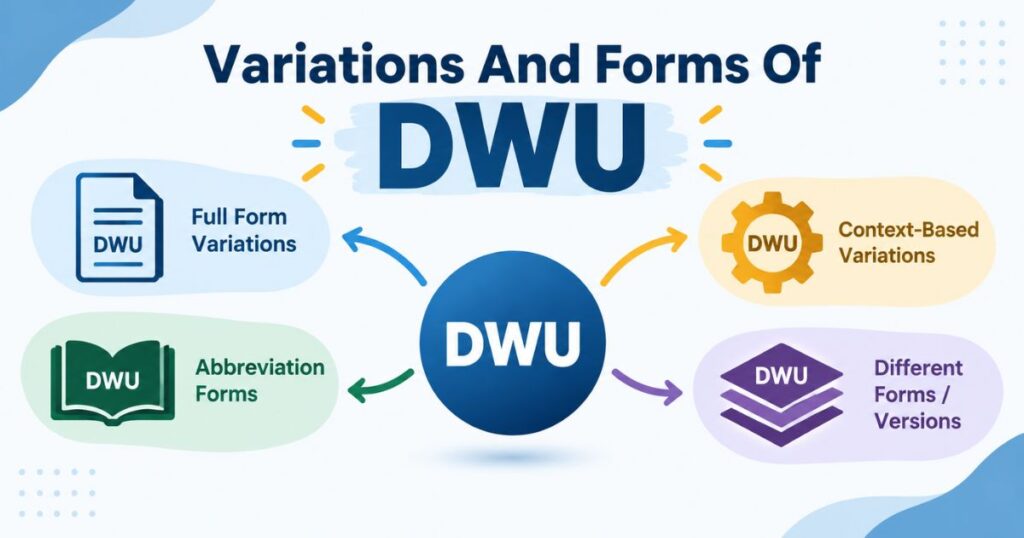
People write DWU in many ways. The meaning stays the same.
| Form | Notes |
| DWU | The standard acronym |
| dwu | Lowercase, the most common in casual chats |
| D.W.U. | Rare, more formal-looking |
| DWU! | Adds energy or humor |
| dwu 😊 | Softer, friendlier tone |
| Don’t wait up | The full phrase |
| dont wait up | Full phrase with no apostrophe |
| Dwu tonight | Adds a time |
| DWU, I’ll text u | Adds a promise to update |
Some people mix it with other slang, like “bbl, dwu” (be back later, don’t wait up). Others write it in playful, mixed-case styles. All these forms carry the same message.
DWU Vs Similar Slang
DWU looks like other short texting terms. But each one does a different job. Here is a quick comparison.
| Slang | Full form | Meaning | How it differs from DWU |
| DWU | Don’t wait up | I will be late, do not wait | Frees you from waiting |
| DW | Don’t worry | Relax, no stress | About worry, not waiting |
| BRB | Be right back | I’ll return very soon | Short pause, and you should wait |
| GTG | Got to go | I need to leave now | Ends the chat |
| TTYL | Talk to you later | We’ll chat again | Ends chat with a plan to talk |
| AFK | Away from keyboard | I’m not at my device | Common in gaming |
| IDC | I don’t care | No preference, or dismissive | Shows attitude, not timing |
| NVM | Never mind | Forget what I said | Cancels a message |
The biggest contrast is with BRB. BRB says “wait, I’ll be back soon.” DWU says “no need to wait at all.”
DW is the closest in look. But DW eases worry, while DWU eases waiting. They can appear together, as in “dw, dwu.”
Also Read This: NGL Meaning in Chat
How To Decode The Correct Meaning
When you see DWU, you can decode it in a few easy steps.
- Check the time. Late at night? “Don’t wait up” is almost certain.
- Look at the sender’s plans. Are they out, traveling, or working late?
- Read the message before it. Earlier lines often give the reason.
- Consider your relationship. A parent, partner, or roommate is the typical reader.
- Look at the tone. Emojis and punctuation hint at mood.
If you still feel unsure, use these quick tests:
- Replace DWU with “don’t wait up.” Does the message make sense?
- If yes, you have the answer.
- If no, look for other clues, such as a name or a group of initials.
When nothing helps, ask. A friendly “wait, what does DWU mean here?” is fine. Most people are happy to explain.
How To Respond To DWU
You do not need a long reply. The best answer is short and kind.
Simple replies:
- “Okay, have fun!”
- “Got it. Stay safe.”
- “No problem. See you tomorrow.”
Caring replies:
- “Text me when you get home.”
- “Call if you need a ride.”
- “Drive safe, okay?”
Playful replies:
- “Too late, I’m already waiting 😄”
- “Fine, I’ll take the bed then.”
Replies to avoid:
- Guilt trips, such as “You never think about me.”
- Long lectures late at night
- No reply at all, if the sender may worry
A good rule: acknowledge, wish them well, and ask for a quick check-in if you care about their safety.
Common Misunderstandings About DWU
Several myths about DWU float around online. Here are the most common ones.
Myth 1: DWU means “do what you understand.” Some websites claim this, but there is little proof of real-world use. Trusted sources define DWU as “don’t wait up.”
Myth 2: DWU is rude. It is not rude by itself. It is casual and often kind. A cold tone might make it seem rude, but the phrase is polite.
Myth 3: DWU means the person is leaving for good. No. It only means they will be late. It has nothing to do with ending a relationship or friendship.
Myth 4: DWU is brand new slang. It is not. It dates back to the 2000s, and the phrase behind it is much older.
Myth 5: Everyone knows it. Many people, especially older adults, have never seen it. When in doubt, spell it out.
Regional And Cultural Usage Of DWU
The phrase “don’t wait up” is used across English-speaking regions. You will hear it in the United States, the United Kingdom, Canada, Australia, and more. English speakers in other countries also use it in chats and messages.
The acronym DWU follows the same path. It appears wherever people text in English, but the way they use it can differ.
Some small differences show up:
- In family-centered cultures, the phrase may be used with parents and elders, so people often write the full version to sound polite.
- In fast social scenes, friends may use the short form, since it feels natural.
- In multilingual chats, users may mix DWU with words from another language.
- Time habits differ. In places where late nights are common, “don’t wait up” may be heard more often.
The idea itself, “do not wait for me,” is common everywhere. Only the words change.
Final Thoughts
Slang like DWU shows how people shape language to fit fast, everyday talk. Three letters carry a full message, plus a bit of care. That is the charm of texting shorthand.
Next time you see DWU, you will know what to do. Read the context, reply kindly, and enjoy the small human touch behind the message. And if you are the one sending it, a warm word or a quick “home safe” text goes a long way.

One thought on “DWU Meaning in Text: Don’t Wait Up Explained With Examples”