
You get a text back that just says “idc” and you are not sure how to take it. Is the person annoyed? Bored? Actually fine with anything? That three letter reply shows up everywhere, from group chats to Instagram comments, and it can change tone depending on who sends it and when.
This guide breaks down what IDC really means, where it came from, how it is used across different apps, and how you should respond when someone sends it to you. You will also find real chat examples, common mix ups people make with similar slang, and a look at how the tone of IDC can shift depending on who says it and why, so you never have to second guess a short reply again.
What Does IDC Mean in Text & Chat?
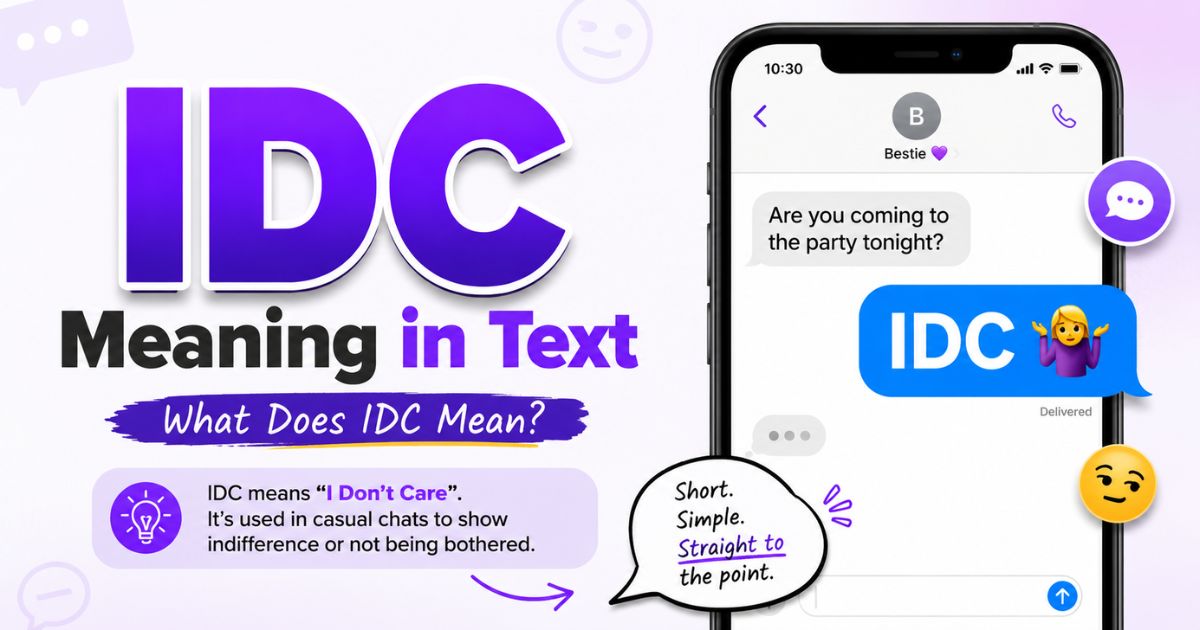
IDC stands for “I don’t care.” It is used when someone has no strong opinion, no preference, or simply does not want to get involved in a decision.
In most chats, IDC is neutral rather than harsh. Someone asking “pizza or burgers?” and getting “idc” back usually just means both options work fine for them.
The tone depends heavily on context. The same word can read as relaxed and easygoing in one chat and dismissive or cold in another.
Because text messages strip away tone of voice and facial expressions, a short reply like IDC can land differently than it was meant. This is why the same word can feel warm from a close friend but blunt from someone you barely know.
Full Form, Stands For & Short Meaning of IDC
| Term | Full Form | Short Meaning |
| IDC | I Don’t Care | No preference or interest |
| IDC (rare) | I Don’t Understand | Occasionally used, less common |
| IDC (formal) | International Data Corporation | Used in business and tech contexts |
In everyday texting, IDC almost always means “I don’t care.” The other meanings show up only in specific formal or technical settings, not in casual chat.
Origin, History & First Known Use of IDC
Text abbreviations like IDC grew out of early SMS messaging, when phones limited messages to 160 characters and every letter counted.
Around the same time, terms like LOL, BRB, and OMG became common shorthand. IDC followed the same pattern, shrinking a full phrase into something fast to type.
As messaging moved to smartphones and social apps, character limits stopped being a real issue. IDC stuck around anyway because it fits the fast, low effort tone people use in casual digital conversation.
It also spread because it works everywhere. The same abbreviation fits a group chat, a comment section, or a private message, which made it easy for the term to move across platforms without losing its meaning.
How People Use IDC in Daily Conversations
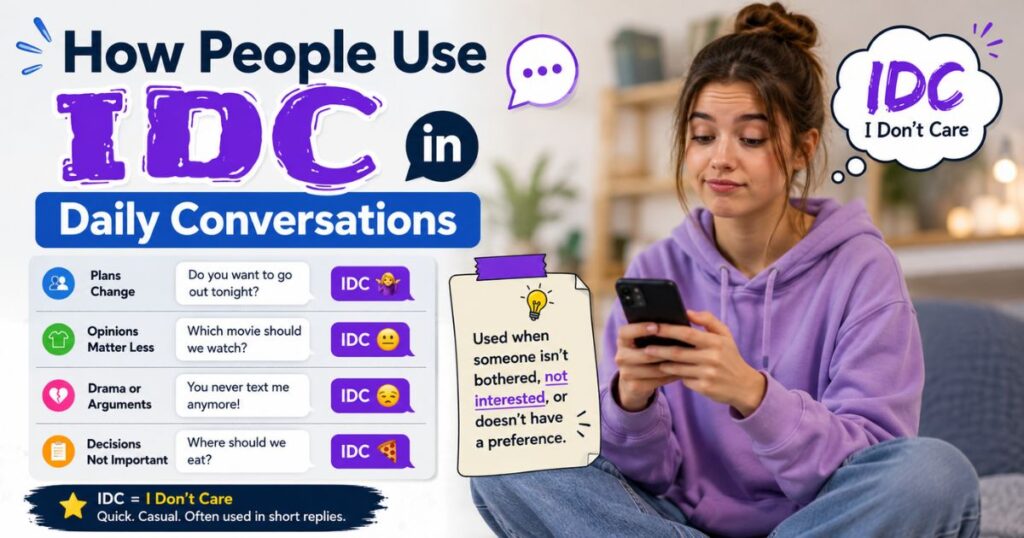
IDC shows up constantly in everyday texting for a few common reasons:
- Answering a question where the person genuinely has no preference
- Brushing off a topic they do not want to discuss further
- Responding to gossip or drama without picking a side
- Reacting to a joke or opinion without much emotional investment
- Showing confidence or indifference about criticism
Most of the time, it is not about anger. It is closer to a shrug in text form.
IDC Meaning Across WhatsApp, Instagram, TikTok & Snapchat
The meaning of IDC stays consistent across platforms, but the way it feels can shift slightly depending on where it is used.
| Platform | Common Usage |
| Casual replies in personal chats, often between friends or family | |
| Used in captions and comments to show confidence or indifference to opinions | |
| TikTok | Common in comment sections reacting to trends, opinions, or debates |
| Snapchat | Used in quick chat replies, often paired with emojis to soften the tone |
On Instagram and TikTok, IDC often carries a slightly bold or confident tone, especially in captions like “idc what people think.” In private chats like WhatsApp or Snapchat, it usually stays closer to its plain meaning of no preference.
Different Meanings of IDC in Other Fields
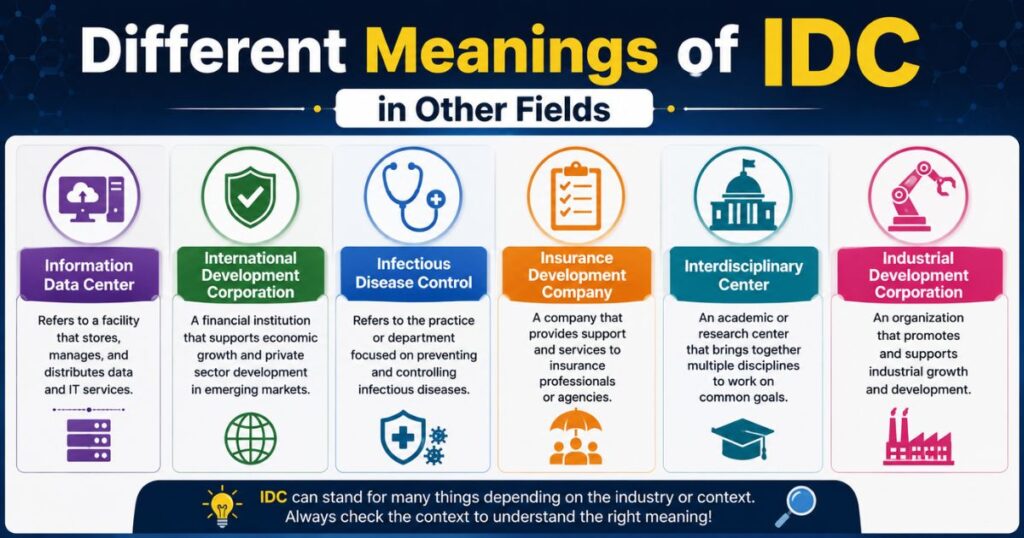
Outside of texting, IDC can stand for different things depending on the industry.
- International Data Corporation, a well known market research and tech analysis firm
- Internet Database Connector, a term used in older web development contexts
- In some medical settings, IDC can refer to indwelling catheter
These meanings are specific to professional or technical writing. In normal text messages and social media, IDC refers to “I don’t care” almost every time.
Also Read This:Alr Meaning in Text
Common Confusions, Mistakes & Wrong Interpretations
A few misunderstandings come up often with IDC:
- Assuming IDC always means the person is upset, when it is often just neutral
- Confusing IDC with IDK (I don’t know), which is a different response entirely
- Reading IDC as rude in every context, even when tone and emojis suggest otherwise
- Thinking IDC is only used by teens, when it appears across all age groups online
Reading the full conversation, not just the three letters, is the best way to avoid misreading the message.
Similar Terms, Alternatives & Related Slang
| Term | Meaning | How It Differs From IDC |
| IDGAF | I don’t give a f*** | Much stronger and more aggressive |
| IDK | I don’t know | Shows uncertainty, not indifference |
| NVM | Never mind | Retracts a statement or drops a topic |
| Meh | Mild indifference | Softer and less direct than IDC |
| Whatever | Dismissive agreement | Can sound more annoyed than IDC |
IDC sits in the middle of this group. It is more direct than “meh” but noticeably softer than “idgaf.”
Examples of IDC in Real Chat Situations
Example 1 Friend: “Should we watch a movie or go out tonight?” You: “idc, either works for me.”
Example 2 Friend: “People are talking about you online.” You: “idc, not worth my time.”
Example 3 Partner: “Do you mind if I hang out with my friends this weekend?” You: “idc, have fun.”
Example 4 Group chat: “What restaurant should we pick?” You: “idc lol you guys choose.”
In each case, the meaning shifts slightly based on the situation, but the core message stays the same: no strong opinion either way.
How to Reply When Someone Says IDC
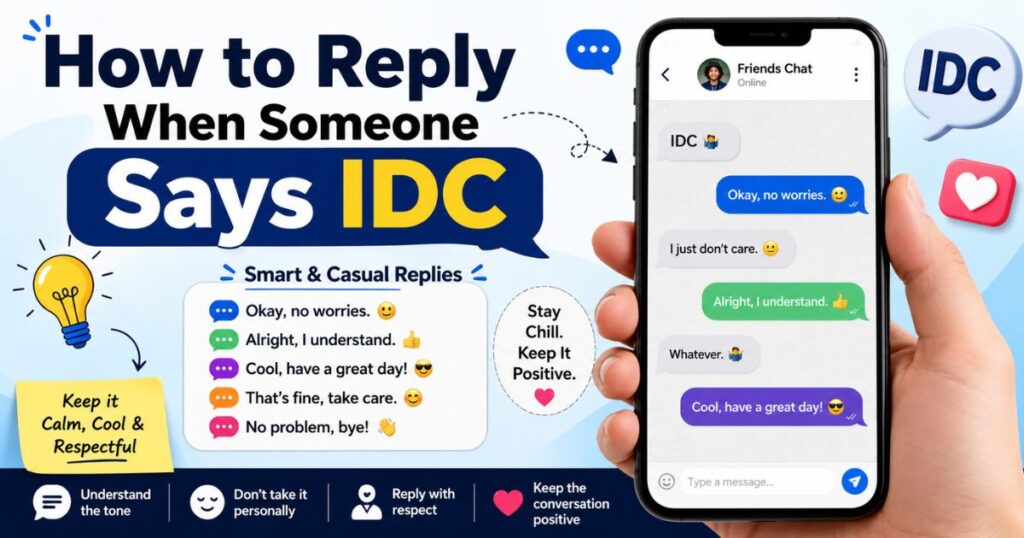
Your response should match the context of the conversation.
- Casual decision: Just move forward and decide for them, since they already said it does not matter
- Emotional topic: Ask a follow up question like “are you sure you’re okay with that?”
- Flirty or playful chat: Respond with light teasing, such as “you always say that”
- Serious conversation: If IDC feels dismissive, it is fair to ask them to clarify how they actually feel
If IDC comes up during a sensitive conversation, it sometimes hides frustration rather than true indifference. Checking in shows you are paying attention to more than just the words on screen.
Idc Meaning in Text From a Girl
When a girl sends “idc,” the meaning usually depends on the relationship and the topic being discussed.
- In a casual friendship, it typically means exactly what it says: no preference
- In a flirty or dating context, it can sometimes signal she is testing your response or downplaying interest
- If it follows a disagreement, it may reflect frustration rather than genuine indifference
Tone, emojis, and the surrounding messages matter more than the single word itself. A plain “idc” reads very differently from “idcc lol” or “idc 🙄.”
The same logic applies when a guy sends it, though many people notice it comes up slightly more often in flirty exchanges involving girls, usually as a light, low pressure way to keep a conversation casual without committing to a strong opinion.
Is IDC Still Popular? Trends & Online Usage
IDC remains one of the most commonly used text abbreviations today. It is short, instantly recognizable, and works across nearly every messaging platform and age group.
While new slang terms appear constantly, IDC has stayed relevant because it expresses something universal: indifference. That makes it easy to keep using without feeling outdated.
Quick Facts
- IDC most commonly means “I don’t care”
- It is considered informal and not suited for professional writing
- The tone can range from relaxed to dismissive depending on context
- IDC has other meanings in business and technical fields, but not in texting
- It remains widely used across WhatsApp, Instagram, TikTok, and Snapchat
Conclusion
IDC is a small abbreviation that carries more nuance than it first appears. In most cases, it simply means someone has no strong opinion or preference about a topic. The real meaning often comes from tone, punctuation, and the conversation around it rather than the three letters alone.
Understanding this kind of digital shorthand makes everyday texting easier to read, whether you are chatting with friends, replying on social media, or trying to figure out exactly what someone meant by a quick “idc.”