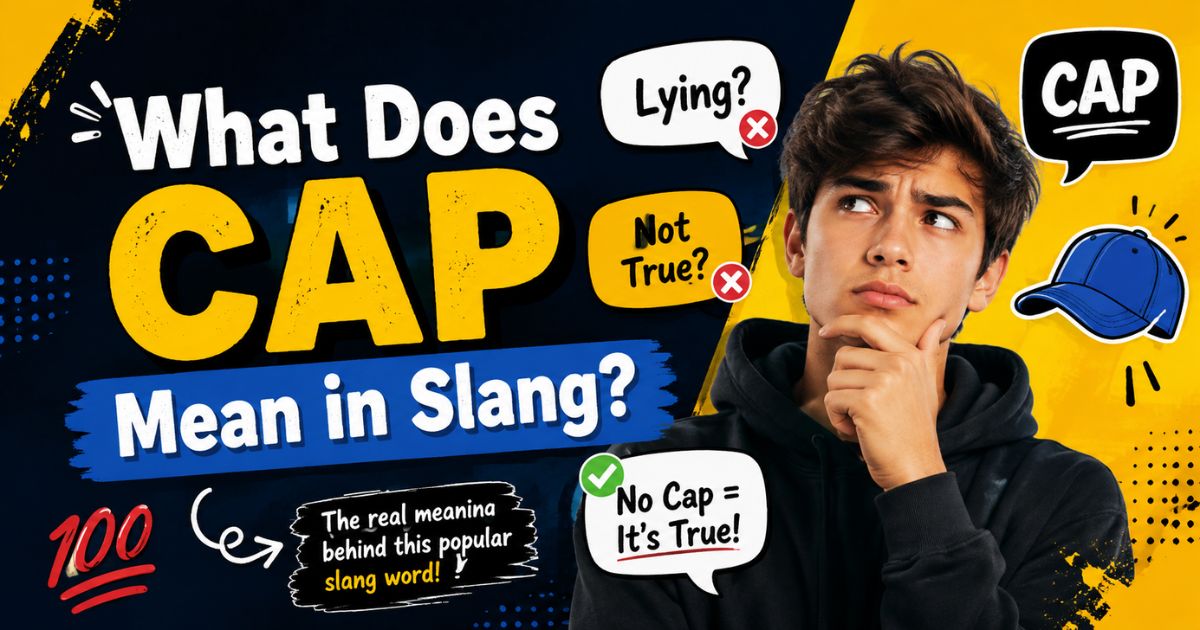

Slang evolves faster than most people can keep track of, and one word that has taken over conversations, comment sections, and group chats is “cap.”If you have scrolled through TikTok or texted a younger friend recently, you have probably seen this word thrown around.
But what does it actually mean, and where did it come from? This article breaks down everything you need to know about the word “cap,” its origins, its everyday use, and why it has become such a staple of modern internet language.
What Does Cap Mean?
In slang, “cap” means a lie or an exaggeration. When someone says something untrue, calling it “cap” is a quick way of saying it is fake or dishonest. The phrase “no cap” works as the opposite, meaning something is completely true or genuine.
This word has become a fast, casual replacement for longer phrases like “that’s not true” or “I’m not lying.” It fits naturally into short text messages, social media captions, and spoken conversation among younger generations.
Understanding “cap” is useful because it shows up constantly in digital communication. Whether you are reading comments, watching videos, or texting with someone younger, this term carries real weight in how people express honesty or disbelief.
| Slang Term | Meaning |
| Cap | A lie or exaggeration |
| No cap | No lie, being serious |
| Capping | The act of lying |
| You’re capping | You’re lying |
Origin and History of “Cap”
The word “cap” as slang for lying did not appear overnight. It has roots in African American Vernacular English (AAVE), a dialect that has shaped much of modern slang used across the internet today. Many popular slang terms, including “lit,” “fam,” and “salty,” trace back to this same linguistic tradition.
Some language researchers believe the phrase connects to older expressions like “capping” in hip hop culture, where boasting or exaggerating stories was common. Over decades, this evolved into a shorthand for dishonesty in general conversation, not just boastful storytelling.
The rise of social media accelerated the spread of “cap” far beyond its original communities. Platforms like Vine, Twitter, and later TikTok introduced the term to a much wider, global audience, turning a regional expression into a phrase used by millions of people worldwide.
What does cap mean in slang urban dictionary
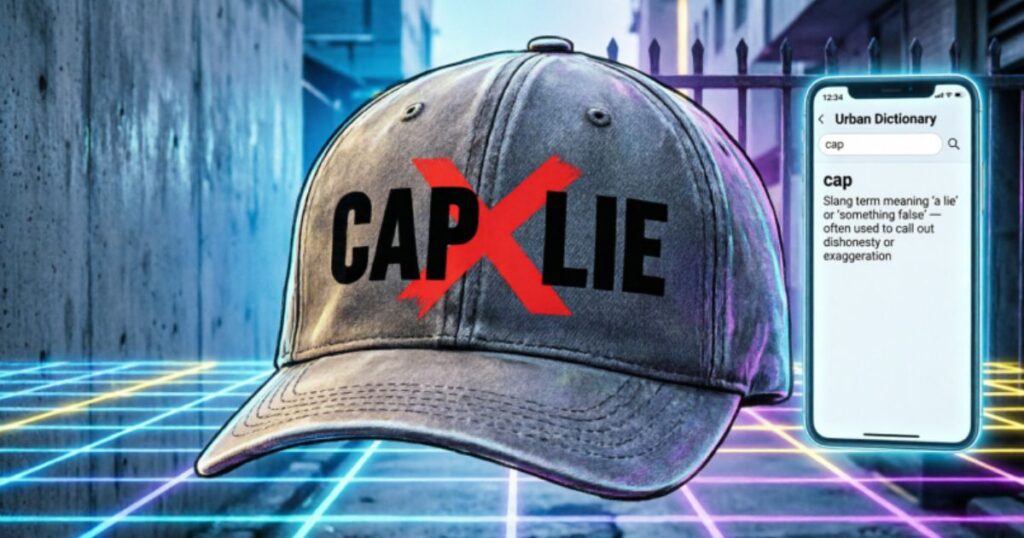
Urban Dictionary, the crowd-sourced slang reference site, defines “cap” in a way that matches its everyday use: a lie, a false claim, or an exaggerated statement. Many entries also highlight “no cap” as a way to emphasize sincerity or truthfulness.
Because Urban Dictionary is community edited, definitions can vary slightly between entries. However, the core meaning stays consistent across nearly every submission related to this term.
Here is a simple breakdown often seen on Urban Dictionary style definitions:
- Cap = lie
- No cap = no lie, telling the truth
- Capping = lying or exaggerating
- Big cap = a huge or obvious lie
This consistency across definitions is part of why the word spread so easily. People did not need to guess its meaning once they saw it used a few times online.
How “Cap” Is Used on Different Platforms
“Cap” shows up differently depending on where you see it. On social media, it often appears as a quick reaction in comments. In gaming chats, players use it to call out unrealistic claims about skill or achievements. In group texts, it becomes a playful way to challenge a friend’s story.
Each platform adds its own flavor to how the word gets used, but the core meaning rarely changes. It is almost always tied to truth versus dishonesty.
| Platform | Common Usage Example |
| TikTok | “That’s cap, bro” in video comments |
| Captions like “no cap this happened” | |
| Twitter/X | Quick replies calling out false claims |
| Gaming chats | “You’re capping about that win” |
| Text messages | “Stop capping, I saw the receipts” |
Because the phrase works well in short bursts, it fits naturally into fast-paced digital communication where brevity matters.
Cap in Texting vs. Real Life
In texting, “cap” is often used casually and quickly, sometimes even shortened further or paired with emojis like the 🧢 cap emoji, which visually represents the word itself. This emoji has become a recognizable symbol tied directly to the slang meaning.
In spoken conversation, the word carries a similar tone but often feels more playful or teasing. Friends might say “no cap” to reassure someone they are being honest, especially when sharing surprising or unbelievable news.
The main difference lies in delivery. Texting allows for visual reinforcement through emojis and quick replies, while spoken use relies on tone and timing to convey sincerity or sarcasm.
What does cap mean in slang TikTok
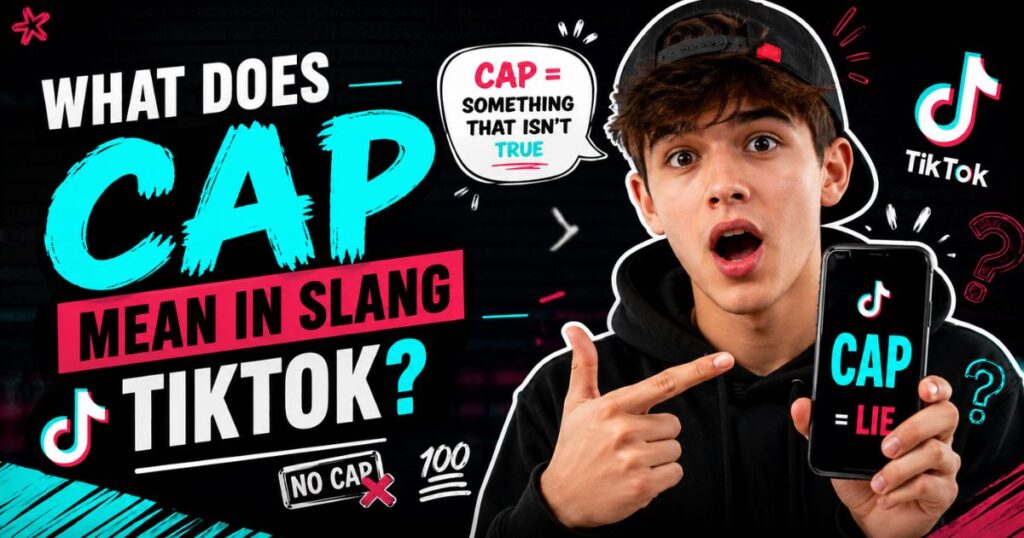
TikTok played a major role in pushing “cap” into mainstream slang. Creators frequently use the term in captions, video commentary, and comment replies to question the truthfulness of a story or claim.
Trends around “cap” have included duets where users challenge exaggerated claims, comment sections filled with “cap” reactions, and even entire videos built around calling out obvious lies in a humorous way.
Also Read This: BBFS Meaning in Slang
Because TikTok has a massive, diverse, and largely younger user base, the platform acted almost like a launchpad. A phrase that started in specific communities quickly became a globally recognized piece of internet vocabulary.
Examples of “Cap” in Sentences
Seeing the word used in real sentences makes its meaning much clearer. Below are some everyday examples showing how flexible this slang term can be.
- “You said you ran a marathon in two hours? That’s cap.”
- “No cap, this is the best burger I’ve ever had.”
- “Stop capping, I know you didn’t finish that project alone.”
- “He’s capping if he thinks he beat that game in one try.”
- “No cap, I studied all night for this test.”
Notice how the word fits naturally into casual speech, replacing longer explanations with a single, punchy term.
Variations and Related Slang
Slang rarely stays static, and “cap” has produced several related terms and phrases that build on its original meaning. These variations add nuance and let speakers express different levels of dishonesty or emphasis.
| Variation | Meaning |
| Big cap | An obvious or major lie |
| Straight cap | Completely false, no truth at all |
| Cap city | A place or situation full of lies (used jokingly) |
| Deadass no cap | Extremely serious, absolutely true |
| Facts, no cap | Confirming something is true |
These related phrases show how a single slang word can branch into a whole mini-vocabulary once it becomes popular enough.
What does cap mean in slang urban
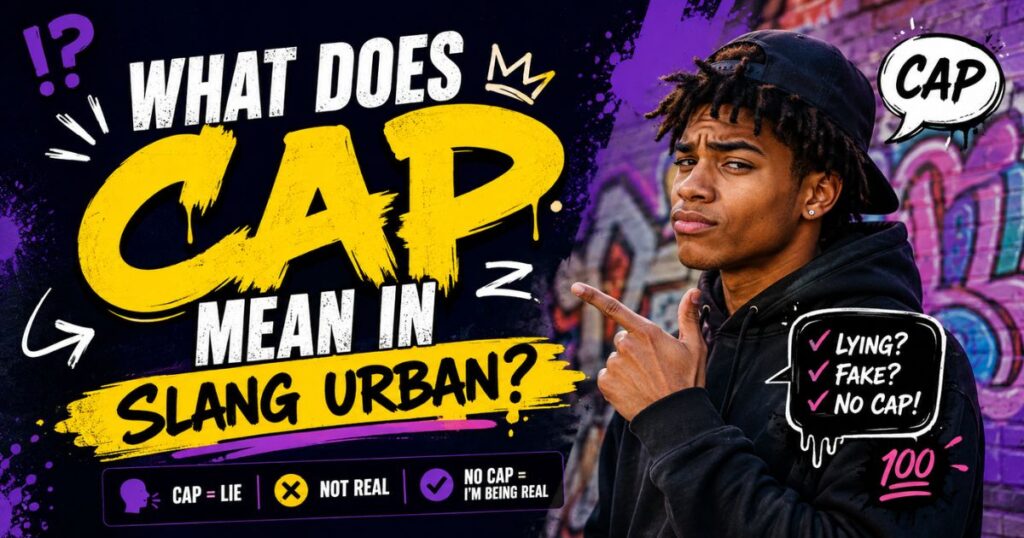
When people search “what does cap mean in slang urban,” they are usually looking for the same core definition found across urban slang dictionaries: a lie or exaggeration. The word “urban” in this context often refers to slang rooted in urban culture and communities, which historically originate many widely used modern expressions.
This connection matters because it explains why “cap” feels natural in casual, streetwise conversation rather than formal writing. It belongs to a broader family of expressive, community-driven language that thrives in spoken and digital communication.
Recognizing this cultural context also helps people use the term respectfully, understanding where it comes from rather than treating it as a random internet trend with no history.
Is “Cap” Safe for Kids?
Generally speaking, “cap” is considered mild slang. It does not carry offensive or inappropriate meaning, making it relatively safe for younger audiences compared to many other slang terms circulating online.
Parents and teachers may still want to understand the term simply to keep up with how children and teens communicate. Knowing common slang can make conversations easier and help adults stay connected to youth culture without feeling lost.
Since the word essentially just means “lie,” it can even be a helpful tool in conversations about honesty, especially when children explain situations using language they already understand and use daily.
When to Use (and Avoid) “Cap”
Like most slang, “cap” fits best in casual settings. It works well in texts, social media posts, and relaxed conversations among friends. It captures attention quickly and adds a modern, relatable tone.
However, it should generally be avoided in formal writing, professional emails, school assignments, or workplace communication. Using slang in these settings can come across as unprofessional or unclear to audiences unfamiliar with the term.
- Use “cap” when texting friends or chatting casually online
- Use “cap” in social media captions or comments
- Avoid “cap” in resumes, cover letters, or business emails
- Avoid “cap” in academic papers or formal presentations
Knowing the right context ensures the word adds charm to conversation rather than confusion in serious situations.
Positive and Negative Words Associated with “Cap”
Understanding both the positive and negative sides of this slang term helps paint a fuller picture of how people use it in daily conversation.
Positive associations:
- Honest
- Genuine
- Trustworthy
- Sincere
- Real
Negative associations:
- Dishonest
- Fake
- Exaggerated
- Misleading
- Untrustworthy
When paired with “no,” the word shifts entirely into positive territory, signaling truth and sincerity. Without “no,” it usually leans negative, pointing toward dishonesty or exaggeration. This simple flip is part of what makes the slang so easy to use and understand.
Final Thoughts
“Cap” has grown from a regional expression into one of the most recognizable slang terms used across social media and everyday conversation. Its simple, flexible meaning, a lie or exaggeration, makes it easy to understand and even easier to use in fast-paced digital communication. From TikTok comments to casual texts among friends, this word captures a specific kind of honesty check that resonates strongly with younger generations.
Whether you are trying to keep up with modern slang, understand what your kids or students are saying, or simply want to use trending language correctly, knowing the meaning behind “cap” and “no cap” gives you a clearer window into how language continues to evolve online. As internet culture keeps shaping the way people talk, terms like this one remind us how quickly language can shift, spread, and stick around in everyday life.