

You saw the word “opp” in a text, a TikTok comment, or a group chat, and you had no idea what it meant. You are not alone. This little word shows up everywhere online now, and if you do not know the context, it can sound confusing or even a bit alarming.
The good news is that OPP is easy to understand once you break it down. It is not a secret code or a red flag by itself. It is slang that has grown out of hip hop culture and spread into everyday texting, gaming, and social media.
In this guide, you will learn exactly what OPP means, where it came from, and how people use it today. You will also see how the meaning shifts depending on where you spot it, whether that is TikTok, a video game chat, or a dating app bio.
Defining the Core Meaning of OPP
At its simplest, OPP is short for “opposition” or “opponent.” Most people today just say “opp” to mean an enemy, a rival, or someone they do not get along with.
The word can describe a real person you have beef with, a rival in a game, or even someone you are joking about in a lighthearted way. Tone and context matter a lot here.
Here is a quick breakdown of the core meaning:
| Term | Short For | Common Meaning |
| OPP | Opposition/Opponent | An enemy, rival, or someone on the other side |
| Opps | Plural of opp | A group of enemies or rivals |
| Opp block | Opposition’s territory | An area controlled by rivals |
It is worth noting that OPP does not always mean something serious. Sometimes it is used playfully between friends, almost like calling someone a “hater” in a joking way. Other times, especially in certain music and street culture contexts, it carries a heavier, more serious weight.
The Historical Evolution of the Term
The word “opp” has roots that go back decades, but it really took off through hip hop music. Many people trace the modern slang use back to drill and rap scenes in the UK and US, where rappers used “opps” to talk about rival gangs or enemies.
Before it became internet slang, “opposition” was already common in sports and military language. Calling the other team or army “the opposition” is nothing new. Slang culture simply shortened it and gave it a sharper edge.
Over time, drill music helped push “opp” into mainstream vocabulary. Songs and lyrics repeated the word so often that younger listeners picked it up naturally, even if they were not deep into the music scene themselves.
By the time TikTok and other short video apps became huge, the word had already spread far beyond music. It became a normal part of everyday online slang, used in comments, captions, and casual conversations.
Here is a simple timeline of how the term grew:
- Early roots in sports and military language as a word for “the other side”
- Adoption into hip hop and drill music as slang for rivals or enemies
- Spread through song lyrics and social media clips
- Everyday use in texting, gaming, and casual online chats
- Continued evolution in 2026 with lighter, joking uses alongside serious ones
Usage Across Different Social Contexts
OPP does not mean the exact same thing everywhere. The setting changes how serious or playful the word feels. Understanding this helps you avoid misreading a message.
In casual friend groups, calling someone an “opp” is often just teasing. It might mean a friend who beat you in a game or who is on the other side of a joke. There is no real hate behind it.
In more serious contexts, especially connected to drill music culture or real rivalries, the word can point to genuine conflict. This is where people need to read the room and understand the full conversation before assuming the worst.
A few common social settings where you might see the word:
- Friend groups: light teasing, no real hostility
- Sports and competitions: describing the rival team or player
- Music and lyrics: referencing real or symbolic enemies
- Online arguments: labeling someone you disagree with
- Gaming communities: naming the enemy team or player
The safest approach is to look at the full message, the relationship between the people involved, and the platform. A joke between friends looks very different from a heated comment on a serious post.
What does opp mean on TikTok
On TikTok, “opp” is almost always used in a lighter, trend-driven way. You will see it in captions, comments, and duets, often tied to memes or reaction videos.
People on TikTok might call an ex an “opp,” joke about a sibling being their “opp,” or use it to describe anyone standing in the way of their goals, even in a funny, exaggerated sense. It rarely means real danger.
Common TikTok uses include:
- Calling a rival creator or account an “opp” in a joking rivalry
- Labeling a friend who “betrayed” them in a small, silly way as an opp
- Using “opp era” to describe a phase of drama or conflict, often humorously
- Adding “no opps here” in captions to show a video is friendly and drama free
Because TikTok trends move fast, the tone of “opp” can shift from video to video. Reading the caption, sound, and comment section together usually makes the meaning obvious right away.
Addressing Common Misconceptions
A lot of people assume “opp” always means something dangerous or hateful. That is one of the biggest misunderstandings around this slang term.
In reality, most everyday uses of “opp” online are playful. Friends toss the word around the same way they might say “rival” or “hater,” without any real animosity behind it.
Here are a few misconceptions worth clearing up:
- Misconception: OPP always means a violent enemy. Reality: Most modern uses are casual or joking, especially online.
- Misconception: Only people involved in gang culture use the word. Reality: The term has spread widely into mainstream slang, used by teens and adults with no connection to that background.
- Misconception: Calling someone an opp is always meant as an insult. Reality: It can be affectionate teasing, competitive banter, or even a joke among close friends.
Context really is everything with this word. The same three letters can mean a harmless joke or something more serious, depending on who is saying it and why.
What does opp mean in gaming
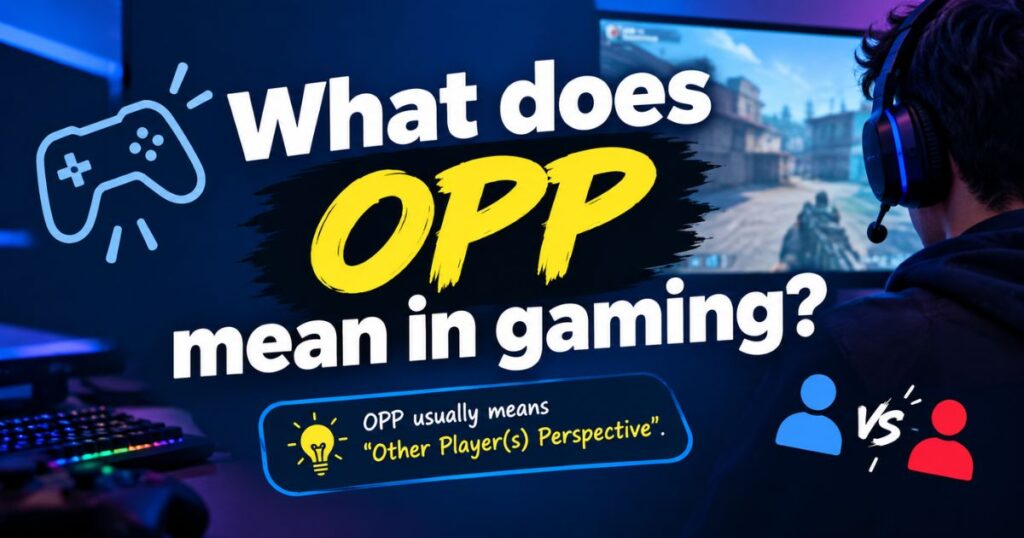
In gaming spaces, “opp” almost always means the opponent or enemy team. This is one of the more straightforward uses of the word, since gaming culture already relies heavily on competitive language.
Players might type “watch your opp” to warn a teammate about an enemy player nearby, or say “opps are camping” to describe rivals waiting in a specific spot. It works almost exactly like saying “enemy” or “the other team.”
Typical gaming examples include:
| Gaming Phrase | Meaning |
| “Opp spotted” | An enemy player has been seen |
| “Opps pushing” | The rival team is advancing |
| “Watch that opp” | Pay attention to a specific enemy player |
| “Opp down” | An enemy player has been eliminated |
This gaming use overlaps closely with the original meaning of “opposition,” since games are literally built around teams competing against each other. It is one of the clearest, least confusing versions of the slang.
Similar Terms and Alternative Expressions
OPP is not the only slang word people use to describe rivals or enemies. Several similar terms pop up in the same online spaces, and knowing them helps you understand slang conversations better overall.
Some common alternatives include:
- Enemy: the plain, traditional word for someone against you
- Rival: often used in sports, business, or friendly competition
- Hater: someone who criticizes or dislikes you, often unfairly
- Beef: used to describe an ongoing conflict or disagreement
- Foe: a more old fashioned or dramatic word for enemy
Compared to these, “opp” feels more modern and more tied to music and internet culture. It carries a specific tone that words like “enemy” or “rival” do not always capture, especially among younger audiences.
Choosing between these words often comes down to tone. “Opp” tends to sound more casual and trend aware, while “enemy” or “rival” can feel more neutral or formal.
How to Respond to the Term
If someone calls you an “opp,” the right response depends completely on the situation. Reading the tone of the conversation matters more than the word itself.
If it is clearly a joke between friends, playing along or laughing it off usually works best. Many people even embrace the label jokingly, especially in competitive games or friendly banter.
Also Read This: SH Meaning in Text
If the situation feels more serious or hostile, it is smart to stay calm and avoid escalating things. Responding with anger often makes online conflicts worse, not better.
A few simple response ideas:
- In a joking context: respond with humor or a playful comeback
- In a competitive gaming context: treat it as normal trash talk
- In a serious or hostile context: disengage calmly instead of arguing
- If unsure of the tone: ask directly what they mean before reacting
Staying level headed almost always leads to a better outcome than reacting emotionally, especially online where tone is easy to misread.
Regional and Cultural Variations
The word “opp” carries slightly different weight depending on where you are and which online community you are part of. UK drill culture, US hip hop scenes, and general internet slang all shape the word a bit differently.
In the UK, especially within drill music culture, “opp” often carries a heavier, more serious connotation tied to real rivalries. In casual American slang, especially among teens on social media, it frequently feels lighter and more joking.
A simple comparison:
| Region/Context | Typical Tone |
| UK drill culture | Often serious, tied to real rivalries |
| US mainstream slang | Frequently casual or joking |
| Global gaming communities | Neutral, simply means enemy player |
| General TikTok/Instagram use | Mostly lighthearted and trend based |
Because slang spreads so quickly online, these lines blur constantly. Someone in one country might use the word exactly the way it trends in another, without realizing the original cultural weight behind it.
Usage in Dating Apps and Online Communities
On dating apps, “opp” sometimes shows up in bios or profile jokes. People might write something like “no opps allowed” to signal they want positivity and no drama in their matches.
In broader online communities, forums, and comment sections, the word often gets used to describe someone who consistently disagrees or causes friction. It becomes shorthand for “someone I do not get along with online.”
Some examples of this kind of use:
- A dating bio that says “here for good vibes, no opps”
- A comment calling a troll or negative commenter an “opp”
- A group chat joke about someone being the “opp of the week”
These uses stay mostly playful, fitting the lighter, everyday version of the slang rather than anything serious or threatening.
Addressing Potential Offense and Professionalism
While “opp” is common in casual spaces, it is not appropriate everywhere. Using slang like this in professional settings, formal writing, or serious conversations can come across as unprofessional or confusing to people unfamiliar with it.
Some people may also find the word offensive if it is used to label them without context, especially if they do not use or understand the slang themselves. It is worth being mindful of your audience before using it.
A few tips for staying appropriate:
- Avoid using “opp” in professional emails, resumes, or formal writing
- Skip the term when talking with people unfamiliar with internet slang
- Use plain words like “rival” or “competitor” in business contexts
- Reserve “opp” for casual chats, social media, or gaming spaces
Knowing your audience keeps communication clear and avoids unnecessary confusion or offense, especially with people from different generations or backgrounds.
Conclusion
OPP is a slang term that stands for “opposition” or “opponent,” and it usually means an enemy, rival, or someone on the other side of a conflict or competition. Its meaning shifts depending on where you see it, from playful TikTok captions to serious drill music lyrics to straightforward gaming chat.
Understanding the context around the word is the key to reading it correctly. A joke between friends looks nothing like a serious online conflict, even if both use the exact same three letters.
One thought on “What Does OPP Mean? Decode Slang Before You Reply”