
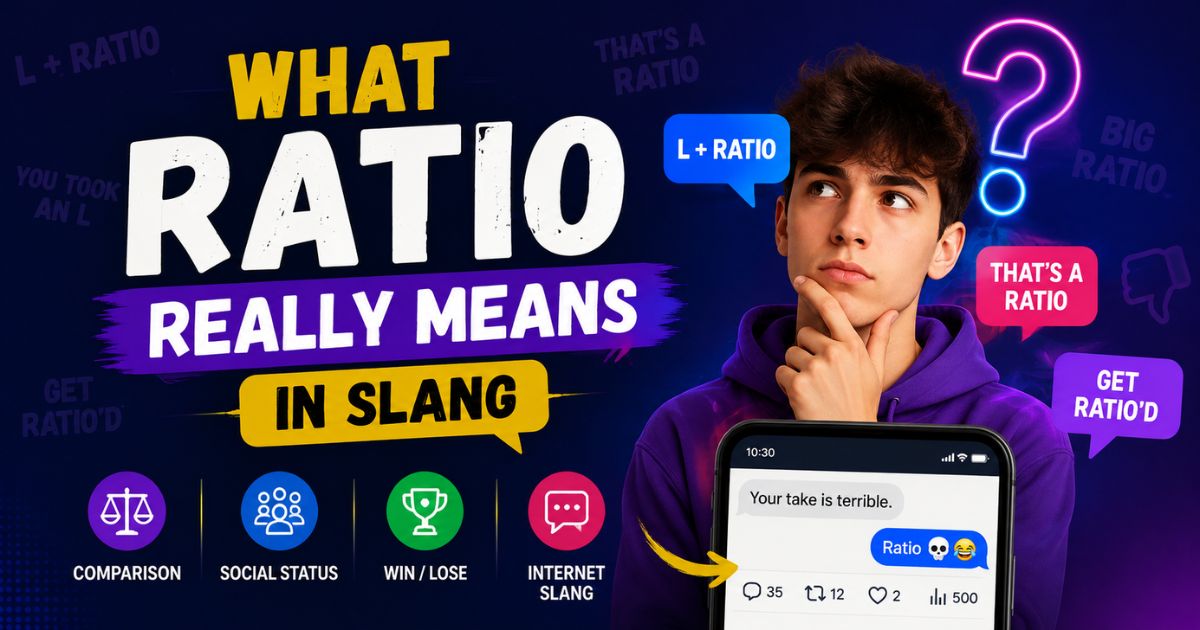

If you spend any time on X, TikTok, or Instagram, you have probably seen someone comment a single word: ratio. It shows up under celebrity tweets, viral takes, and even friendly group chat arguments. But what does it actually mean, and why does one word carry so much weight online?
In slang, ratio describes a post or comment that gets more negative reactions, replies, or disagreement than actual support. When someone says a post got ratioed, they mean the internet pushed back on it hard. This guide breaks down the meaning, the tone shifts, real examples, and how to respond when someone hits you with it.
Meaning & Explanation of Ratio in Slang
The word ratio started as a math term describing the relationship between two numbers. Online, it took on a completely different job.
In simple terms, a post gets ratioed when the reply count or the criticism it receives outweighs the likes or support it gets. It signals that a large chunk of the audience disagreed with what was said, or found it worth mocking.
A few quick examples of how it plays out:
- Someone tweets an unpopular opinion, and the replies pile on faster than the likes.
- A comment section fills with pushback instead of agreement.
- A witty reply outperforms the original post in likes, effectively stealing the spotlight.
The core idea stays the same across platforms: engagement numbers are being used as a scoreboard, and the original poster is losing.
Tone & Context Variations
Ratio does not always mean the same thing. The tone behind it changes the entire message.
Playful tone Friends toss the word around during harmless debates, like arguing about pizza toppings or which show is better.
Sarcastic tone Someone messes up in a small, everyday way, and a friend jokingly says they got ratioed for it, even without real numbers involved.
Confrontational tone This version shows up during actual online disagreements, where the word is used to signal that someone lost an argument publicly.
Flirty or teasing tone In casual chats between people who know each other well, ratio can be a light jab that has nothing to do with real social media metrics.
Reading the tone matters more than the word itself. The same sentence can feel like a joke or an insult depending on who says it and how.
What does ratio mean in slang urban
On urban slang lists and community-driven dictionaries, ratio is generally defined as a reply or comment that earns more engagement than the post it responds to, which is treated as proof the original point was weak or unpopular.
This urban definition leans slightly more aggressive than everyday chat usage. It often gets paired with dismissive phrases, treating the ratio as a kind of public scorecard for who won an online exchange.
Key points from the urban slang interpretation:
- It is tied directly to visible numbers like likes and replies.
- It carries a sense of public embarrassment for the person being ratioed.
- It is almost always used against someone, rarely for a neutral observation.
Real Chat Examples (Natural & Relatable)
Seeing the word in context makes it easier to understand than any dictionary definition. Here are some realistic exchanges.
Example 1 A: I think remote work is overrated. B: That’s about to get ratioed.
Example 2 A: My tweet flopped hard. B: Yeah, you got ratioed within an hour.
Example 3 A: Why is everyone replying instead of liking my post? B: Because you just got ratioed.
Example 4 A: Mondays are actually my favorite day. B: Ratio. A: Fair enough, I take it back.
Example 5 A: He argued with half his followers today. B: Big ratio energy.
Example 6 A: I posted my honest movie review. B: How’d it go? A: Ratioed instantly.
These examples show the pattern: someone states an opinion, the crowd disagrees loudly, and a friend labels it with the single word.
Grammar & Language Role
Ratio works differently depending on where it lands in a sentence, which is part of why it feels so flexible in casual writing.
As a noun “That whole thread was a ratio.”
As a verb “You got ratioed after that comment.”
Standing alone Just typing “Ratio.” as a full reply is common and understood without extra context.
It almost always stays informal. You will not see it in professional emails, reports, or anything meant to sound polished. It belongs in texting, comment sections, and casual conversation, not formal writing.
How to Reply When Someone Says Ratio
Getting hit with a ratio comment does not require a long explanation. Short, confident replies usually work best.
- “Numbers don’t decide who’s right.”
- “I’ll take that as a compliment.”
- “Fair point, I see it now.”
- “Doesn’t change my opinion.”
If the tone is playful, matching that energy keeps things light. If it feels more serious or mean-spirited, a calm one-line reply usually shuts down the pile-on faster than getting defensive.
What does ratio mean on social media
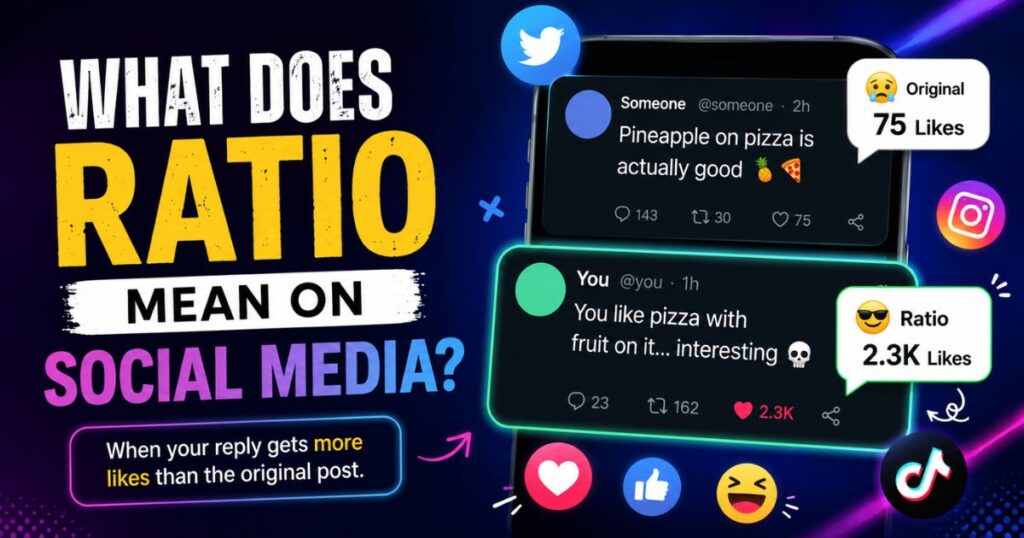
On platforms like X, Instagram, TikTok, and even YouTube comment sections, ratio refers specifically to engagement metrics. A post is considered ratioed when replies or quote posts outnumber the likes it receives, or when a reply gets more likes than the post it is responding to.
This matters because social platforms display these numbers publicly. Anyone scrolling past can see the imbalance and instantly understand that the post did not land well with the audience.
Common places you will spot the term:
- Under tweets or posts with a controversial opinion
- In quote replies that outperform the original post
- In comment sections where criticism outweighs praise
- In screenshots shared specifically to mock a bad take
Comparison Table
| Term | Meaning | Common Platform | Tone | Formality |
| Ratio | Post got more disagreement than support | X, TikTok, Instagram | Confrontational or playful | Informal |
| L | A loss or failure | All platforms | Mocking | Informal |
| Cooked | Someone is in trouble or embarrassed | TikTok, group chats | Playful or serious | Informal |
| Mid | Average, unimpressive | TikTok, X | Dismissive | Informal |
| IDK | I don’t know | Texting | Neutral | Informal |
Who Uses This Term?
Ratio is most common among teens and young adults who are active on social media, particularly those who follow meme culture and online debates closely.
By generation
- Gen Z uses it frequently and casually, often as a reflex reaction to any opinion they disagree with.
- Millennials understand the term but use it less often, usually only when discussing something happening online.
- Older generations are less familiar with it unless they spend regular time on platforms like X or TikTok.
By platform X remains the birthplace and most active home of the term, followed closely by TikTok comment sections and Discord servers built around gaming or meme communities.
Origin & Internet Culture Insight
Ratio traces back to Twitter culture, where users started noticing that some tweets pulled in far more replies than likes or retweets. That imbalance became shorthand for public disapproval.
Also Read This:What Does Green Mean in Slang
Over time, the word spread beyond just describing numbers. It became a tool people used proactively, replying with just “ratio” to predict that a post would get backlash before it even happened.
A few things fueled its spread:
- Meme accounts turned ratio moments into shareable content.
- TikTok creators reused the term outside of Twitter, applying it to any situation involving public disagreement.
- Group chats adopted it loosely, even without any actual metrics involved.
What does ratio mean in slang urban dictionary
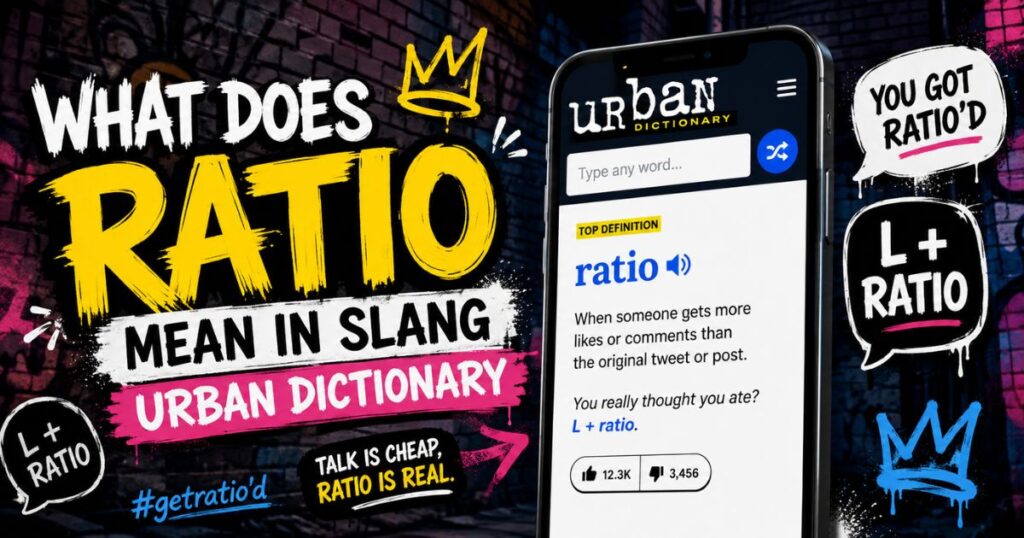
Urban dictionary style defines frame ratio as a way of declaring that a reply beat the original post in engagement, which is treated as proof that the reply won the exchange.
These definitions tend to emphasize the competitive side of the term. Getting ratioed is framed almost like losing a match, with the numbers acting as the final score. Some entries also note that people say it preemptively, predicting a ratio before it actually happens, almost daring the crowd to prove them right.
Safety & Appropriateness
Ratio is not considered offensive or explicit, but context still matters.
- It is fine among friends in casual conversation.
- It can feel dismissive or mocking when used against strangers online.
- It is not appropriate for formal settings like school assignments, workplace messages, or professional communication.
Parents and educators generally do not need to worry about the term itself, though it is worth knowing it can be part of online teasing or mild public shaming when used aggressively.
Experience-Based Insight
Spend enough time scrolling comment sections, and the pattern becomes obvious. People do not always use ratio because a post genuinely failed. Sometimes it is just a quick way to disagree without writing out a full argument.
What stands out is how the word functions as social shorthand. Instead of explaining why an opinion is wrong, one word does the job, backed by visible numbers that everyone can see. That is part of why it spread so fast. It turns disagreement into something measurable, even when the measurement itself is informal and often exaggerated.
Conclusion
Ratio has grown from a mat term into one of the most recognisable words in online culture. At its core, it simply means a post or opinion pulled in more disagreement than support, and the internet turned that into a quick way to call it out.
Whether it shows up as a joke between friends or a sharp jab in a comment section, the meaning stays tied to one idea: public reaction speaks louder than the original post. Once you know the tone behind it, the ratio becomes easy to spot, easy to use, and easy to shrug off when it lands on you.