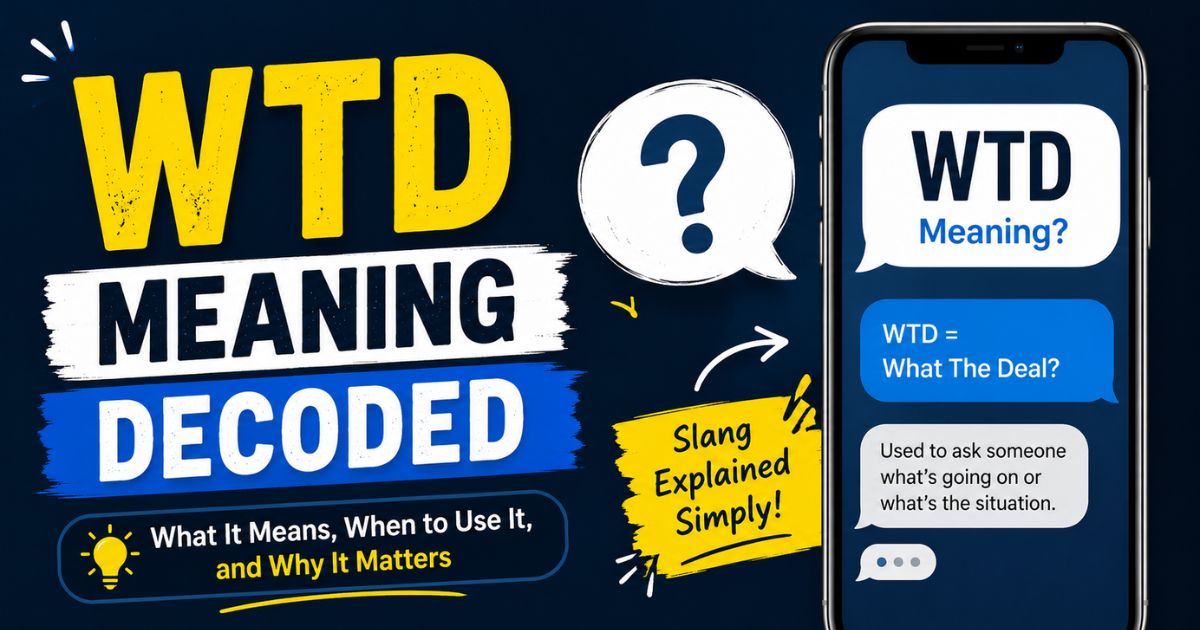

You saw “WTD” in a text and got lost for a second. It happens to everyone. Three letters can carry three totally different jobs depending on who sent them, what platform they’re on, and what was said right before.
WTD is one of those abbreviations that changes personality based on context. A friend texts me and says “What should we do?” A coworker types it in a report and it means “Week-To-Date.
What Does WTD Mean? Quick Answer
WTD most commonly means “What To Do.” People use it when they’re bored, stuck, or looking for plans. In workplaces, WTD usually stands for “Week-To-Date,” a term used in sales and finance reports. Less often, it means “What’s The Deal” when someone’s confused about a situation.
| Meaning | Where You’ll See It | Example |
| What To Do | Texting, Snapchat, group chats | “Bored. WTD tonight?” |
| Week-To-Date | Business reports, dashboards | “WTD revenue is up 12%” |
| What’s The Deal | Casual chats, mild confusion | “You’ve been quiet. WTD?” |
The Bored Version: “What To Do”
This is the meaning you’ll run into the most. Someone’s got nothing going on and wants ideas.
- “Nothing planned tonight. WTD?”
- “The movie got canceled. WTD now?”
- “It’s been quiet lately. WTD?”
This version carries a low-key, casual tone. Nobody’s stressed. They just want suggestions, and they don’t want to type a full sentence to get there.
WTD Meaning in Company

Here’s where things shift completely. In a business setting, WTD stands for Week-To-Date, a tracking term used in sales, revenue, and performance reports.
Managers and analysts use it to compare current-week numbers against past performance. You’ll spot it in:
- Sales dashboards (“WTD sales: $42,000”)
- Weekly team reports
- Finance and analytics tools
- Slack updates from a supervisor
If a manager sends “WTD numbers look strong,” they’re not asking what to do. They’re talking about performance data. Confusing the two meanings at work can make you look like you missed the point entirely.
The Confused Version: “What’s The Deal”
Sometimes WTD pops up when someone’s puzzled or slightly annoyed. It works as a shorter version of “what’s going on” or “what happened here.”
- “You’ve been acting distant lately. WTD?”
- “WTD with this app? It keeps crashing.”
This version leans a little more direct than the bored version. It often follows a situation that needs explaining, not just plans for the night.
Why WTD Became So Popular
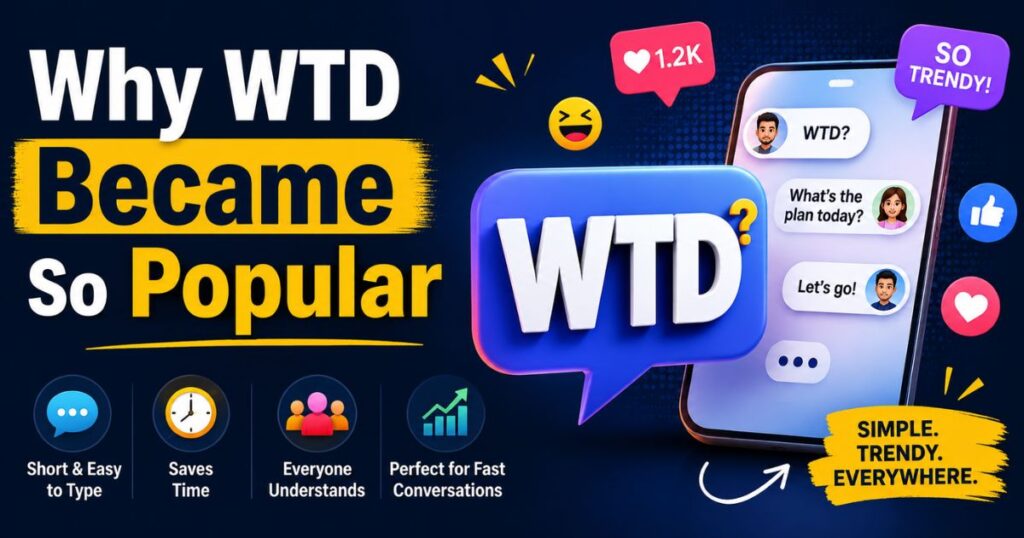
Short abbreviations like WTD spread because typing full sentences takes time, and casual conversations don’t need that much formality. A few reasons this one stuck around:
- Speed. Three letters beat typing “what should we do” every time.
- Casual tone. Slang keeps a conversation relaxed instead of formal.
- Platform habits. Snapchat, TikTok comments, and group chats all reward short replies.
- Generational spread. Younger users pick up abbreviations fast, and they carry over into everyday texting once they catch on.
None of that makes WTD complicated. It’s just a communication economy: saying the same thing with less effort.
How This Plays Out in Real Texts
Context decides everything with WTD. Read the message before it and the tone usually becomes obvious.
Friend 1: “Finished all my homework early.” Friend 2: “Nice! WTD now?”
Person A: “We got to the mall early.” Person B: “Cool. WTD first?”
Coworker: “WTD regarding the Q2 report?” (This one’s ambiguous, and that’s the problem.)
Notice how the first two examples read casually and clearly. The third could mean “what should we do” or accidentally sound like the Week-To-Date term, depending on the workplace.
When the Vibe Shifts
WTD isn’t always light. Tone depends heavily on what came before it.
- Genuinely stressed: “I don’t know what happened. WTD?” (asking for real advice)
- Playful: “Ugh, Friday already. WTD this weekend?”
- Slightly annoyed: “Oh, WTD now?” (can read as sarcastic)
Since text strips out tone of voice, the same three letters can land as caring or dismissive. That’s the biggest risk with this abbreviation.
WTD Meaning on Instagram
On Instagram, WTD shows up the same way it does in regular texting: mostly in DMs and comment replies when someone’s asking for plans or ideas. It’s common under casual posts, story replies, and quick back-and-forth conversations where speed matters more than full sentences.
What Does WTD Mean on Snapchat
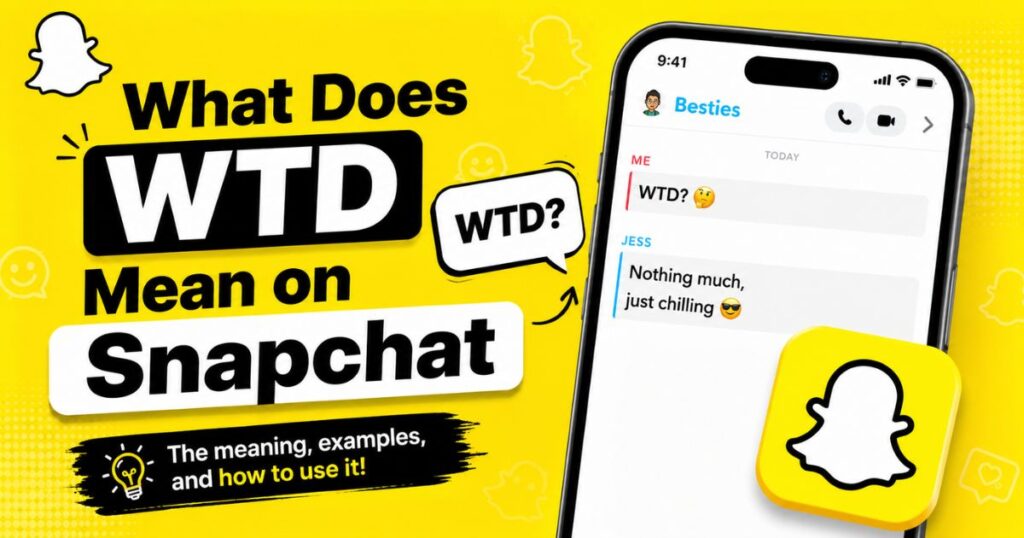
Snapchat usage matches the general texting meaning almost exactly. WTD on Snapchat typically means “What To Do,” sent when someone’s bored or looking for something to do with friends. Because Snapchat conversations move fast and disappear, short slang like WTD fits the platform’s pace.
Times to Absolutely Skip It
WTD works fine in casual chats. It does not belong everywhere.
- With your boss, unless the workplace culture is already very informal
- In first messages with someone new
- When someone shares something heavy. Responding to real problems with an abbreviation can feel dismissive
- In formal emails or reports where full sentences read as more professional
- With older relatives who may not know the slang at all
Say It Different Ways
If WTD doesn’t fit the moment, plenty of alternatives carry the same meaning without the ambiguity.
| Instead of WTD | Use This |
| Casual plans | “What’s the move?” |
| Confusion | “What’s going on?” |
| Business context | “Week-to-date” (spelled out) |
| Formal tone | “What would you like to do?” |
Real Messages People Actually Send
Seeing WTD in full conversations makes the meaning click faster than any definition.
- “Bored at home. WTD?” → “Let’s grab food.”
- “Game’s canceled. WTD instead?” → “Movie night?”
- “You okay? You’ve been off today. WTD?” → “Just tired, that’s all.”
Each example keeps a casual, friendly tone. That’s the natural home for this abbreviation.
Brief vs Debrief: Where WTD Fits
Understanding WTD also means understanding the difference between a brief and a debrief, since both show up around the same casual and work contexts where WTD gets used.
| Term | Meaning | Example |
| Brief | A short update given before something starts | “Quick brief before the meeting: sales are up.” |
| Debrief | A short review given after something ends | “Let’s debrief after the call.” |
| WTD (casual) | Asking what to do next | “The meeting’s over. WTD now?” |
| WTD (business) | Week-To-Date performance tracking | “WTD numbers are in the debrief.” |
A brief sets up what’s coming. A debrief reviews what already happened. WTD, in the business sense, often shows up inside both, since Week-To-Date numbers get mentioned at the start of a meeting and reviewed again during a debrief.
Also Read This:FNL Meaning in Text
The Work World Version, Explained Further
Since WTD carries real meaning in business, it’s worth breaking down exactly how it’s used.
Week-To-Date (WTD) measures performance from the start of the current week through today. It’s one of several time-based tracking terms used alongside:
- MTD – Month-To-Date
- QTD – Quarter-To-Date
- YTD – Year-To-Date
A manager comparing “WTD vs MTD sales” is looking at short-term versus longer-term performance trends. This version has nothing to do with plans or confusion. It’s strictly a reporting term.
Where You’ll See It Most
| Platform/Setting | Common Meaning |
| Texting | What To Do |
| Snapchat | What To Do |
| Instagram DMs | What To Do |
| Group chats | What To Do / What’s The Deal |
| Business reports | Week-To-Date |
| Sales dashboards | Week-To-Date |
WTD vs Similar Abbreviations
People often confuse WTD with other texting shorthand. Here’s how it stacks up against the closest lookalikes.
| Abbreviation | Meaning | Different From WTD Because |
| WYD | What are you doing | Asks about the present moment, not future plans |
| WTF | What the… | Expresses shock or frustration, much stronger tone |
| IDK | I don’t know | A response, not a question |
| TBD | To be determined | Used for scheduling, not casual chat |
| WTD | What to do / Week-To-Date | Depends entirely on context |
Mixing these up is easy since they all look like quick, three-or-four-letter fragments. The safest habit is checking the sentence before and after, since that’s what actually reveals the intended meaning.
Why People Get It Wrong
Mixing up the casual and business meanings causes most of the confusion around WTD. A few common mistakes:
- Reading business talk as slang. A coworker’s “WTD numbers” gets mistaken for “what to do.”
- Overusing it in texts. When every reply becomes “WTD,” conversations start to feel low-effort.
- Missing sarcasm or tone. “Oh, WTD now?” can sound mocking even when it isn’t meant that way.
- Using it with the wrong audience. Older relatives or formal contacts may not recognize it at all.
The Real Deal on WTD
WTD isn’t complicated once you separate the casual meaning from the business one. Among friends, it’s a quick way to ask for plans or ideas. At work, it’s shorthand for tracking weekly numbers. The confusion only happens when the wrong version shows up in the wrong conversation.
Conclusion
WTD earns its place in modern texting because it’s fast, easy, and gets the point across without extra typing. The trick is knowing your audience.
Save it for friends and casual chats, skip it with new contacts or formal settings, and remember that in a business report, those same three letters mean something entirely different. Read the room, match the tone, and WTD will never trip you up again.