
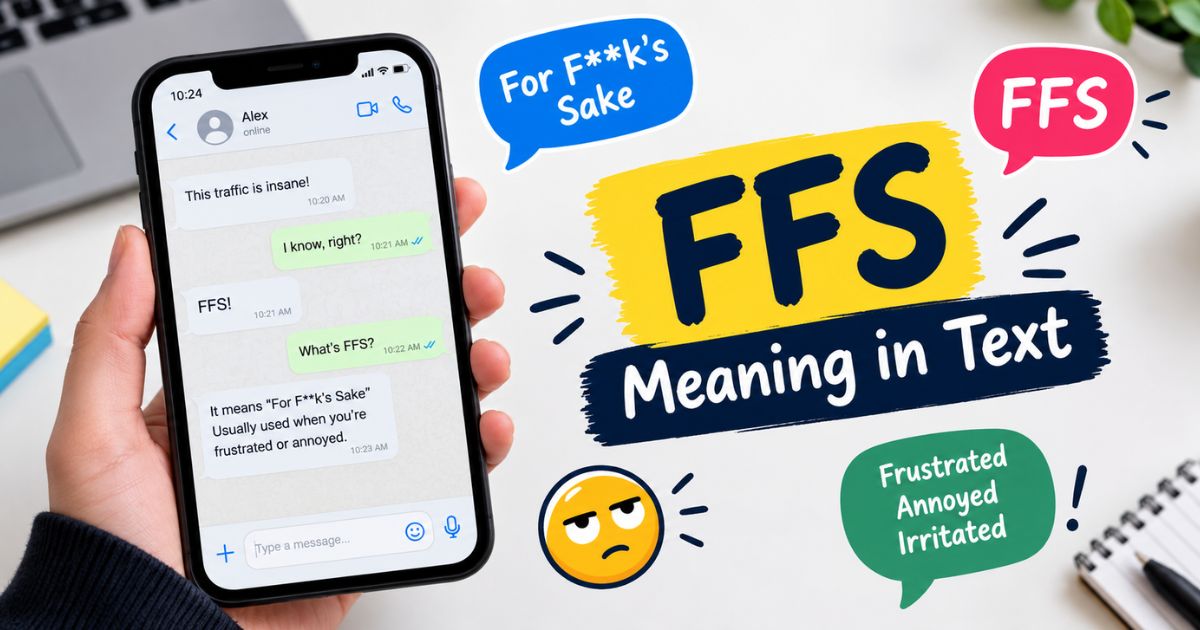

If you have seen “FFS” pop up in a text and wondered what it means, you are not alone. This short abbreviation shows up in group chats, comments, and DMs almost every day. It carries a lot of feeling in just three letters.
In this guide, you will learn what FFS means, where it came from, how people use it today, and when it can go wrong. By the end, you will know exactly how to read it and how to use it yourself, without any confusion.
Defining the Core Meaning of FFS
FFS stands for “For F***’s Sake.” It is a slang abbreviation used to express frustration, annoyance, or disbelief. People use it when something goes wrong, when they feel let down, or when a situation feels too much to handle.
Think of it as a text-based version of sighing loudly. It is not usually meant to be a polite phrase. It is a quick, sharp way to show that something is bothering you.
Here is a simple breakdown:
| Letter | Stands For |
| F | For |
| F | F***’s |
| S | Sake |
FFS is almost always informal. It fits casual conversations, not formal writing. It also carries a mild swear word, so tone and context matter a lot when you use it.
The Origins and Evolution of the Term
The full phrase “for f***’s sake” has been used in spoken English for many decades. It grew out of older, softer expressions like “for goodness’ sake” or “for pity’s sake.” Over time, people added a stronger word to make the phrase hit harder.
As texting and instant messaging became popular in the 2000s, people started shortening common phrases to save time and space. FFS became one of many abbreviations, alongside terms like OMG and WTF, that let people express big emotions in a few keystrokes.
Social media helped the term spread even faster. Twitter, and later platforms like TikTok and Instagram, made short reactions popular. FFS fit perfectly into this style of quick, emotional commentary.
Today, FFS is used across texting, gaming chats, comment sections, and even some casual workplace messages, though with less frequency in professional settings. Its meaning has stayed mostly the same, but its use has grown far beyond simple texting.
Usage in Various Contexts

FFS can shift meaning slightly depending on where and how it is used. The core feeling is frustration, but the intensity can range from mild annoyance to real anger.
Here are common situations where you might see FFS used:
- Reacting to bad news or a mistake (“FFS, my flight got cancelled”)
- Responding to something annoying a friend just said
- Commenting on a frustrating moment in a video game
- Reacting to slow service, traffic, or technical problems
- Expressing disbelief at someone’s behavior
In casual chats with friends, FFS is often used lightly, almost like a joke. In more heated conversations, it can carry real anger or frustration. The people involved and the tone of the conversation usually make the difference clear.
Common Misconceptions and Clarifications
Some people think FFS is a harmless, all-purpose expression. That is only partly true. Since the full phrase includes a swear word, using it in front of certain people, like coworkers, teachers, or older family members, can come across as rude.
Another common mix-up is confusing FFS with other similar-looking abbreviations. Some assume it is short for a name or a brand, especially if they see it out of context.
A few points worth clarifying:
- FFS is not sarcasm by default. It usually reflects genuine frustration.
- FFS does not always mean someone is angry at you. It often reacts to a situation, not a person.
- FFS is not appropriate for formal writing, even casual business emails.
Understanding the context around the message is more important than the letters themselves.
Similar Terms and Alternatives
If FFS feels too strong for a situation, there are softer alternatives that carry a similar meaning. These work well depending on who you are talking to and how casual the conversation is.
| Term | Meaning | Tone |
| FFS | For f***’s sake | Strong |
| OMG | Oh my god | Mild to strong |
| SMH | Shaking my head | Mild |
| UGH | General frustration sound | Mild |
| WTF | What the f*** | Strong |
| GAH | Frustration sound | Mild |
Choosing the right term depends on your relationship with the other person and the setting. Softer options like “ugh” or “smh” work better in mixed company, while FFS is better saved for close friends or private chats.
How to Respond to This Term
If someone sends you FFS, they are usually venting, not attacking you. The best response depends on the situation.
Also Read This: o7 Meaning In Text
Here are a few simple ways to reply:
- Acknowledge the frustration (“I know, that’s so annoying”).
- Ask what happened, if you are unsure (“What’s going on?”).
- Offer support or a solution, if it fits the moment.
- Use humor, if the tone feels light.
Avoid dismissing their feelings or brushing it off, especially if the frustration seems real. A short, caring reply usually works best.
Ffs meaning in text from a guy
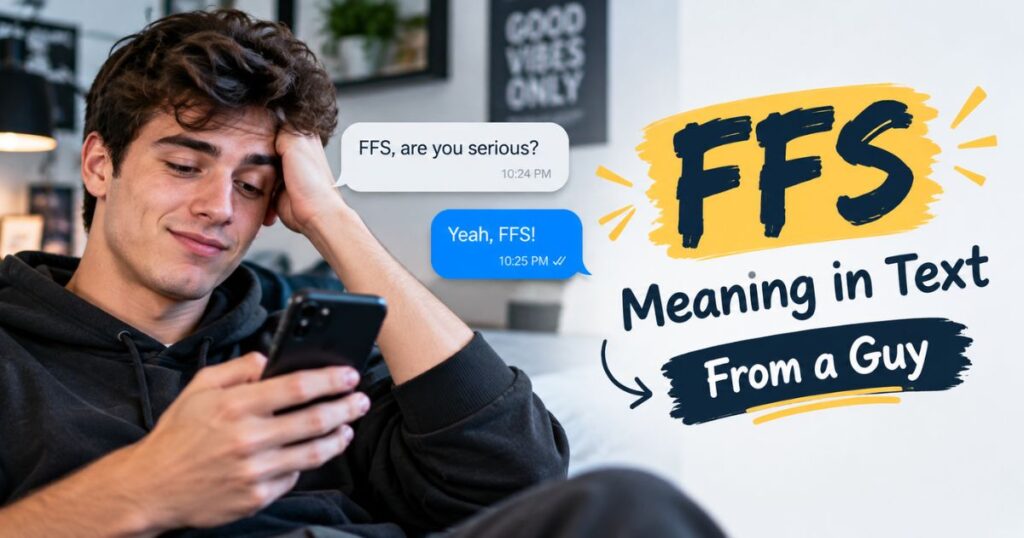
When a guy uses FFS in a text, the meaning does not usually change based on gender. It still points to frustration or annoyance. However, tone can differ slightly depending on personal texting habits.
Some guys use FFS casually, almost as a filler reaction to small annoyances, like a delayed reply or a minor inconvenience. Others use it only when something really bothers them, so it can carry more weight coming from someone who rarely uses strong language.
A few things to consider when a guy sends FFS:
- Look at what he is reacting to, not just the phrase itself.
- Check his usual texting style. Frequent use often means lower intensity.
- Consider the conversation’s overall tone before assuming anger.
Context always matters more than the specific word choice.
Regional and Cultural Differences
FFS is widely understood across English-speaking countries, but its intensity can vary. In the UK and Australia, casual swearing is often more accepted in everyday conversation, so FFS may feel less shocking there.
In the United States, reactions to swearing can vary more by region, age group, and personal background. Some people use FFS freely, while others avoid it completely, even in text.
Here is a general comparison:
| Region | General Attitude Toward FFS |
| UK | Common, often casual |
| Australia | Common, often casual |
| US | Mixed, depends on context |
| Canada | Similar to the US |
| Non-native English speakers | Sometimes unaware of the full meaning |
If you are texting someone from a different cultural background, it helps to consider how comfortable they might be with informal swearing before using FFS.
Usage in Online Communities and Dating Apps
On dating apps, FFS often shows up in bios, comments, or chats as a way to express personality or humor. Someone might use it to react to a bad date story or a frustrating dating app experience.
In online communities like Reddit, Discord, or gaming forums, FFS is extremely common. It fits fast-paced conversations where people react quickly to wins, losses, or mistakes.
Common uses in these spaces include:
- Reacting to a frustrating game loss
- Commenting on a bad match or ghosting experience
- Responding to an annoying post or comment
- Adding humor to a complaint
In these settings, FFS is rarely taken too seriously. It blends into the casual tone that these platforms are known for.
Hidden or Offensive Meanings
While FFS mainly means “for f***’s sake,” it is worth knowing that abbreviations can sometimes carry different meanings depending on the group using them. In rare cases, especially in niche online spaces, letters can be reused for other phrases.
However, in almost all everyday texting situations, FFS refers to the common frustrated expression discussed throughout this article. There is no widely recognized alternative meaning that most people use instead.
The main reason FFS can feel offensive is simply the swear word embedded in the phrase, not any hidden meaning. Sensitivity to swearing varies from person to person, so it is worth reading the room before using it.
FFS meaning in social media
On social media, FFS often appears in comments, captions, and quick reactions. It fits the fast, emotional style of platforms like Twitter, Instagram, and TikTok, where short reactions get attention quickly.
People use FFS on social media to react to:
- Frustrating news stories
- Annoying trends or comments
- Personal complaints shared in captions
- Reactions to viral videos or posts
Because social media posts are public, FFS used here often carries a slightly softer tone than in private texts. Many users treat it as a stylistic expression rather than a personal outburst, especially in memes or lighthearted posts.
Suitability for Professional Communication
FFS is not suitable for professional communication. Since it includes a swear word, using it in emails, work chats, or client messages can come across as unprofessional, even if you did not mean any harm.
Even in casual workplace chats with close coworkers, it is safer to avoid FFS unless you know the culture well and are certain no one will be uncomfortable. Miscommunication in writing is easy, since tone can be hard to read through text alone.
If you want to express frustration professionally, consider these alternatives:
- “This is frustrating, but let’s figure it out.”
- “That’s not ideal, but we’ll manage.”
- “This is a bit much, honestly.”
These options communicate the same feeling without any risk of sounding unprofessional.
Conclusion
FFS is a short, informal way to express frustration, annoyance, or disbelief. It stands for “for f***’s sake” and shows up often in texts, social media, gaming chats, and casual online spaces. While it is common and widely understood, it is not suited for formal or professional communication.
Reading FFS correctly comes down to context. Who sent it, what they are reacting to, and the overall tone of the conversation all shape what the message really means. Once you understand these signals, FFS becomes easy to read and, if you choose, easy to use in the right situations.





One thought on “FFS Meaning in Text: What It Really Means (2026 Guide)”