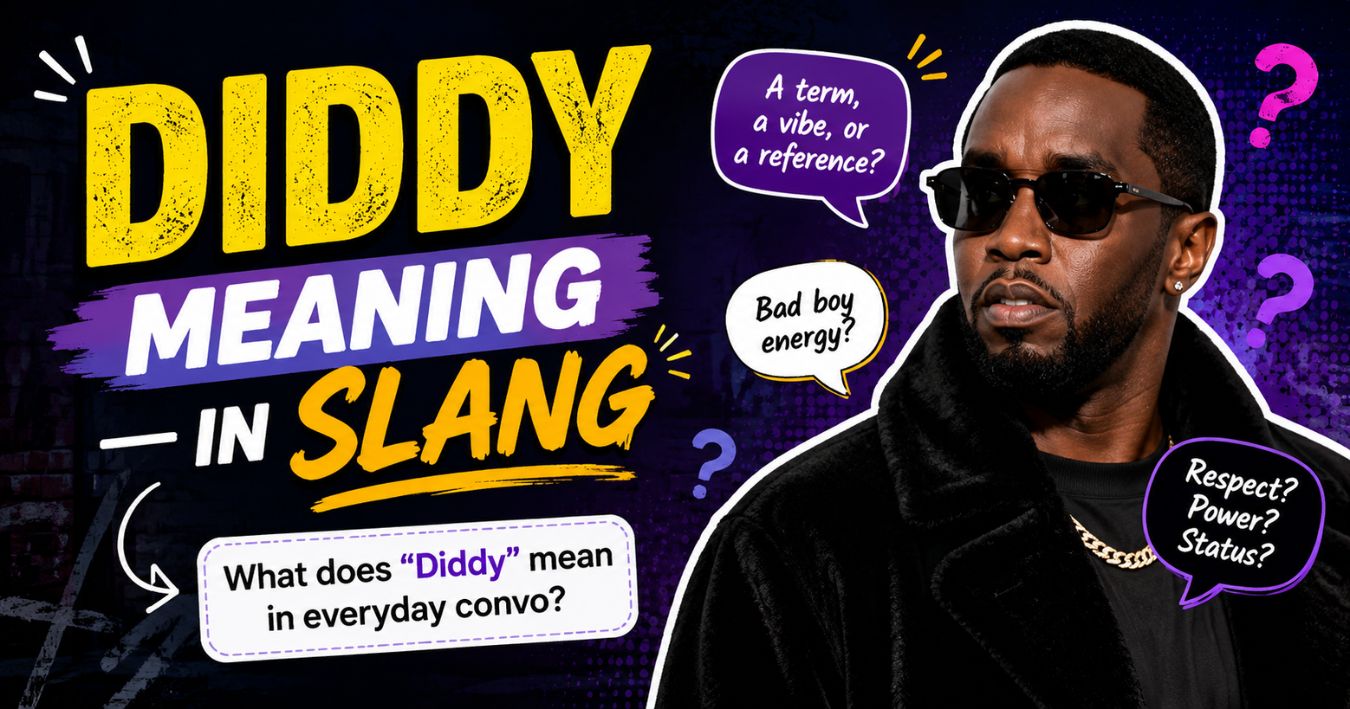

If you have scrolled through TikTok, Instagram, or a group chat recently, you have probably seen someone type “diddy” and wondered what it actually means. Sometimes it looks like an insult. Sometimes it looks like a joke. Sometimes it seems to have nothing to do with the celebrity at all.
The truth is, “diddy” is not one fixed word. Its meaning shifts depending on tone, platform, and who is saying it. This guide breaks down every common use of “diddy” in slang, how it shows up across chat apps and social media, and how to reply when someone sends it to you.
Diddy Meaning in Text, Chat, and Social Media
Diddy Meaning in Text
In a text message, “diddy” usually does one of two things. It either describes something as small, minor, or not a big deal, or it references the music mogul Sean Combs, better known by his stage name Diddy.
A message like “it’s just a diddy issue, don’t worry about it” means the problem is minor. A message like “he’s acting so diddy right now” is a jab at someone’s behavior, often implying it is shady, dramatic, or over the top.
Diddy Slang Meaning
As slang, “diddy” carries a few layered meanings:
- Small or minor the original, more literal British-English root of the word
- A stand-in phrase “No Diddy,” used the way people use “no cap,” as a quick way to clarify that a compliment or comment was not meant in a romantic or suggestive way
- A sarcastic tag “Nice try, Diddy,” aimed at someone who attempted something shady, overconfident, or transparently fake and failed
Most of these newer uses took off online starting around 2024, once meme culture began recycling the name into shorthand for a feeling rather than a direct reference to the person.
What Does Diddy Mean in Chat?
In group chats, “diddy” is typically used as a reaction word. Someone shares something questionable, and a friend replies “diddy” as a one-word joke, similar to how people drop “sus” or “cap.” It rarely needs explaining within the group because the meaning is understood from shared internet culture, not from the dictionary definition of the word.
Diddy Meaning on Snapchat
On Snapchat, “diddy” mostly appears in captions or chat replies as a playful jab. A snap captioned “this fit is diddy” pokes fun at an outfit, implying it is trying too hard or is a little much. It is casual, quick, and meant to get a laugh rather than start a serious conversation.
Diddy Meaning on Instagram, Ticktock, and Whats App
On Instagram, “diddy” shows up most often in comment sections. A caption might get a reply like “diddy behaviour 💀” when someone posts something that looks flashy, extra, or attention-seeking. It is comment-section shorthand, not something people usually put in a caption itself.
TikTok
TikTok is where most of this slang actually spread. Creators use “No Diddy” as an audio trend or a caption tag after a compliment, and “Nice try, Diddy” shows up in comment sections under videos where someone clearly failed at a bold attempt. TikTok’s fast-moving comment culture is largely responsible for turning the name into a meme template.
Also Read This: NPNC Meaning Explained
WhatsApp usage is more personal since it is mostly one-on-one or small group chats. Here, “diddy” is often used between friends who already share the joke, dropped as a quick reaction to a screenshot or a funny story rather than as a public comment.
Is “Diddy” an Acronym, Short Form, or Something Else?
“Diddy” is not an acronym. It is not built from initials, and it does not stand for a phrase the way terms like “IDK” or “BRB” do. It works two ways:
- As a nickname, referring to Sean Combs
- As standalone slang, meaning small, minor, or used as a meme-based reaction word
Because of this dual identity, context always decides which meaning applies.
Tone & Context Variations
| Tone | Typical Meaning | Example |
| Funny | Lighthearted jab at something small or extra | “This whole plan is so diddy” |
| Sarcastic | Mocking a failed or overconfident attempt | “Nice try, Diddy” |
| Romantic | Rare; usually used to deny romantic intent | “That’s so sweet, no diddy though” |
| Angry | Dismissive insult calling something petty | “Stop being diddy about it” |
| Playful | Teasing nickname among friends | “You’re being diddy right now lol” |
Funny Tone
Used to lightly roast a small mistake or an overly dramatic reaction. It is not meant to hurt, just to tease.
Sarcastic Tone
This is where “Nice try, Diddy” fits best. It dismisses an attempt with mock encouragement, pointing out that it clearly did not work.
Romantic Tone
“No Diddy” gets attached after a compliment between friends to clarify the comment was not meant romantically, similar to how “no homo” was historically used. It carries the same criticism many people raise about that older phrase.
Angry Tone
Here, “diddy” works as a dismissive label, implying someone is being petty, dramatic, or not worth taking seriously.
Playful Tone
Friends use it as a light nickname or teasing label without any negative intent behind it, purely for banter.
Real Chat Examples (Natural & Relatable)
Example 1 “Why are you stressing over this diddy problem?”
Example 2 “You did great on the interview, no diddy.”
Example 3 “He tried to skip the line. Nice try, Diddy.”
Example 4 “That outfit is diddy behavior lol.”
Example 5 “It’s a diddy fix, five minutes tops.”
Example 6 “Bro’s excuse was so diddy 💀”
Example 7 “Stop being diddy, it’s not that deep.”
Example 8 “That save was diddy, I could’ve made it too.”
Example 9 “Nice diddy attempt, try again.”
Example 10 “This whole group project is dirty compared to last semester’s.”
Example 11 “You’re kind of diddy for reacting like that.”
Example 12 “Diddy move, ngl.”
Grammar & Language Role
Part of Speech
“Diddy” mainly functions as an adjective (“that’s diddy”) or a proper noun when referring to the celebrity. In phrases like “No Diddy” or “Nice try, Diddy,” it acts more like an interjection or tag phrase.
Sentence Position
It typically appears at the end of a sentence as a tag (“no diddy,” “nice try, diddy”) or mid-sentence as a descriptor (“that’s a diddy problem”).
Can It Replace a Full Sentence?
Yes. On its own, “diddy” can act as a complete reaction, similar to replying “cap” or “sus” without any extra words needed.
Tone Impact
The word softens or sharpens a message depending on delivery. Paired with emojis like 💀 or 😂, it reads as playful. Without them, it can come across sharper or more dismissive.
Formal vs Informal Use
“Diddy” is strictly informal. It has no place in professional emails, reports, or formal writing, and using it in that context would read as out of place or unprofessional.
How to Reply When Someone Says “Diddy”
| Style | Sample Reply |
| Funny | “Lol true, that’s diddy energy” |
| Serious | “Fair point, I’ll fix it” |
| Flirty | “No diddy though, right? 😏” |
| Neutral | “Ok noted” |
Comparison Table With Similar Chat Terms
| Term | Meaning | Common Use |
| Diddy | Small, minor, or a meme-based reaction | Jokes, reactions, denials |
| No Cap | No lie, being serious | Confirming honesty |
| Sus | Suspicious | Calling out shady behavior |
| Cap | A lie | Calling someone out for lying |
| Extra | Overdramatic or excessive | Describing behavior |
Who Uses This Term?
Age Groups
“Diddy” as internet slang is used mostly by teens and young adults active on TikTok and Instagram, roughly ages 13 to 27.
Gen Z vs Millennials
Gen Z drives most of the newer meme usage (“No Diddy,” “Nice try, Diddy”). Millennials are more likely to use “diddy” in its older, literal sense meaning small or minor.
Regional Usage
In the UK, “diddy” has long been an informal word for small or little. In the US, it is more tied to celebrity nicknames and meme culture. In South Asia and other regions, usage mostly comes through imported meme trends rather than native slang roots.
Platforms Where It Appears
TikTok, Instagram comments, X (formerly Twitter), Snapchat captions, and group chats on WhatsApp or iMessage.
Origin & Internet Culture Insight
TikTok Influence
TikTok comment sections and trending audios are largely responsible for spreading “No Diddy” and “Nice try, Diddy” as recurring joke formats starting in 2024.
Meme Culture
Gen Z internet culture often takes a name or public figure and strips it down into shorthand for a feeling or reaction. That is exactly what happened here, turning a celebrity name into a flexible reaction word.
Fast Typing Culture
Short, punchy reaction words like “diddy,” “sus,” and “cap” thrive in fast-paced chat environments where a quick one-word reply gets the joke across faster than a full sentence.
Is “Diddy” Rude or Inappropriate?
Is It a Bad Word?
By itself, no. It is not classified as profanity. However, it references a public figure connected to serious, well-documented legal issues, so some uses of the slang can come across as tasteless depending on context.
Can It Be Misinterpreted?
Yes. Because the word carries multiple meanings, a message meant as a light joke about something being “small” can be read as a pointed reference to the celebrity, and vice versa.
Should You Use It in School or Office?
No. Even in its lighter, joking sense, “diddy” is casual slang and does not belong in classroom assignments, workplace messages, or any formal communication.
Experience-Based Insight
Anyone who spends time in TikTok or Instagram comment sections has likely seen “diddy” used as a quick punchline. The key to using it naturally is reading the room first. Among close friends who already share the joke, it lands fine. In mixed or professional settings, it is best left out entirely.
Conclusion
“Diddy” is one of those internet slang words that changes shape depending on where you see it. Sometimes it simply means something is small or minor. Other times it is a meme-coded reaction tied to a public figure’s name. Reading the tone, platform, and context around the word is the fastest way to understand exactly what someone means when they type it.
Once you know the difference between “No Diddy,” “Nice try, Diddy,” and the everyday meaning of small or minor, you will never be confused by this word in a chat again.